Runway Incursion Avoidance
This page covers Task C. Runway Incursion Avoidance from the FAA-S-ACS-25 Flight Instructor for Airplane Category Airman Certification Standards.
Definition
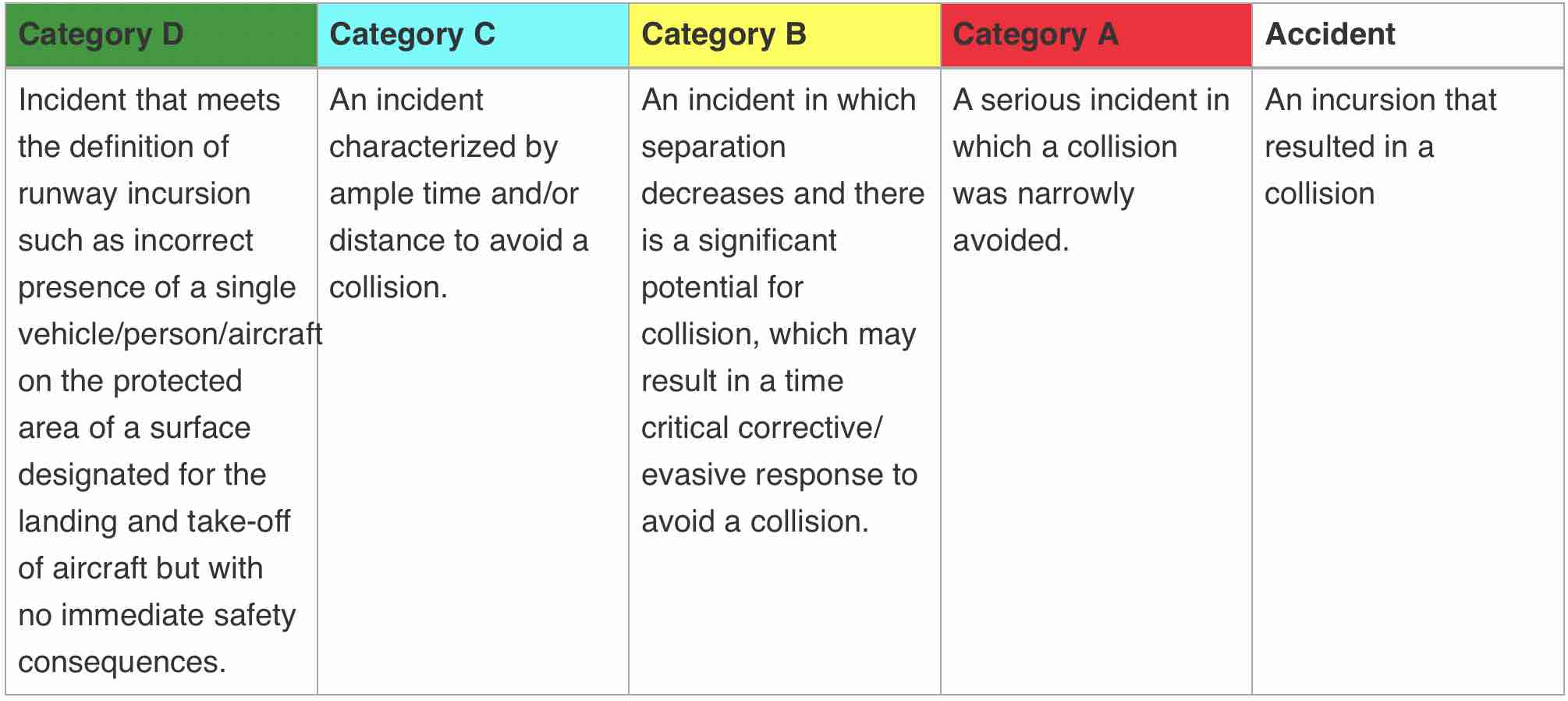
Runway incursion
Any occurrence in the airport runway environment involving an aircraft, vehicle, person, or object on the ground that creates a collision hazard or results in a loss of required separation with an aircraft taking off, intending to take off, landing, or intending to land.
- Preventing runway incursions is critical to safety
- Many examples of crashes due to runway incursions
- Example: Tenerife - KLM 747 took off while Pan Am 747 was on runway killing 583 people - deadliest in history
- General Aviation responsible for the majority of runway incursions (81%)
- Many examples of crashes due to runway incursions
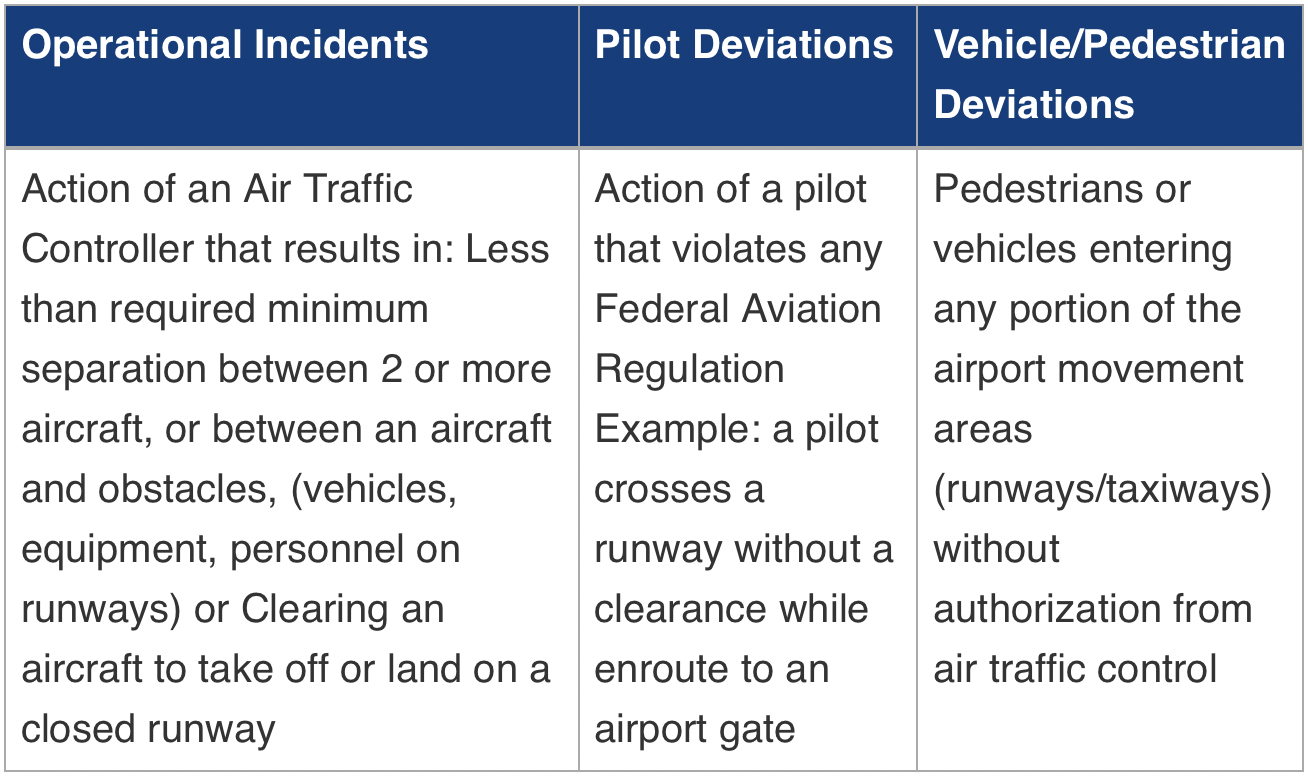
- Three types or classifications of runway incursion
- A Pilot Deviation (PD) - action of a pilot that violates any Federal Aviation Regulation.
- Vehicle/Pedestrian Deviations (V/PDs) - pedestrians, vehicles or other objects interfering with aircraft operations by entering or moving on the runway movement area without authorization from air traffic control.
- Operational Incident - action of an Air Traffic Controller that results in
- Less than required minimum separation
- Two or more aircraft
- An aircraft and obstacles (vehicles, equipment, personnel on runways)
- Clearing an aircraft to take off or land on a closed runway
- Less than required minimum separation
- Surface Incident - an unauthorized or unapproved movement within the designated movement area (excluding runway incursions) or an occurrence in that same area associated with the operation of an aircraft that affects or could affect the safety of flight.
- Ground deviations - (also called surface deviations) include taxiing, taking off, or landing without clearance, deviating from an assigned taxi route, or failing to hold short of an assigned clearance limit.
- In serious instances, any ground deviation (PD or VPD) can result in a runway incursion.
SAFETY
In this task, we'll focus on how to reduce and eliminate pilot deviations that result in runway incursions.
- We'll also cover ways we can be vigilent to avoid operational incidents
- Example: Las Vegas tower controller who became incapacitated (stroke?) while at work and was issuing bad clearances to taxi and cross runways
- VASAviation YouTube Las Vegas controller IMPAIRED / INCAPACITATED while on duty
Taxi Instructions / Clearances
Challenges During Taxi Operations
The airport environment has unique hazards that must be managed, including:
- Lots of signs, markings, and lighting to see, know, and follow
- Airport environments can be congested with other aircraft and vehicles
- There may be equipment and people on the ramp
- Movement in confined areas
- High workloads (e.g., stress and "heads-down" time)
- NOTAMs for closed taxiways and construction areas
- Controlled ramps and taxiways (e.g., complexity, responsibilities, and missed clearances)
- Uncontrolled ramps and taxiways (e.g., no-radio aircraft, obstructions, unimproved surfaces)
- Aircraft moving nearby (e.g., collisions, runway incursions, and propeller/jet blast)
- Tie-down ropes and loose debris that can be picked up by a propeller
- Aircraft design characteristics (e.g., tailwheel, castering nosewheel, wing length)
- Aircraft aren't particularly graceful ground vehicles
- No autopilot to use for taxiing
- Crosswinds or tailwinds that can cause a wing to rise
- Weather
- Taxiing on a snow-covered or icy taxiway
- Low visibility operations (LVO)
- We can't taxi solely by reference to flight instruments as if IFR
Cockpit Activities Before and During Taxiing
- One of the most important things to do is plan ahead
- Pilots should plan for the airport surface movement portion of the flight just as they plan for the other phases of flight.
- Others include clear communications, and enhanced situational awareness during airport surface operations
- Make sure to know and comply with airport surface markings, lighting, and signage
- Always make sure to get familiar with the airport environment where you'll be taxiing in advance
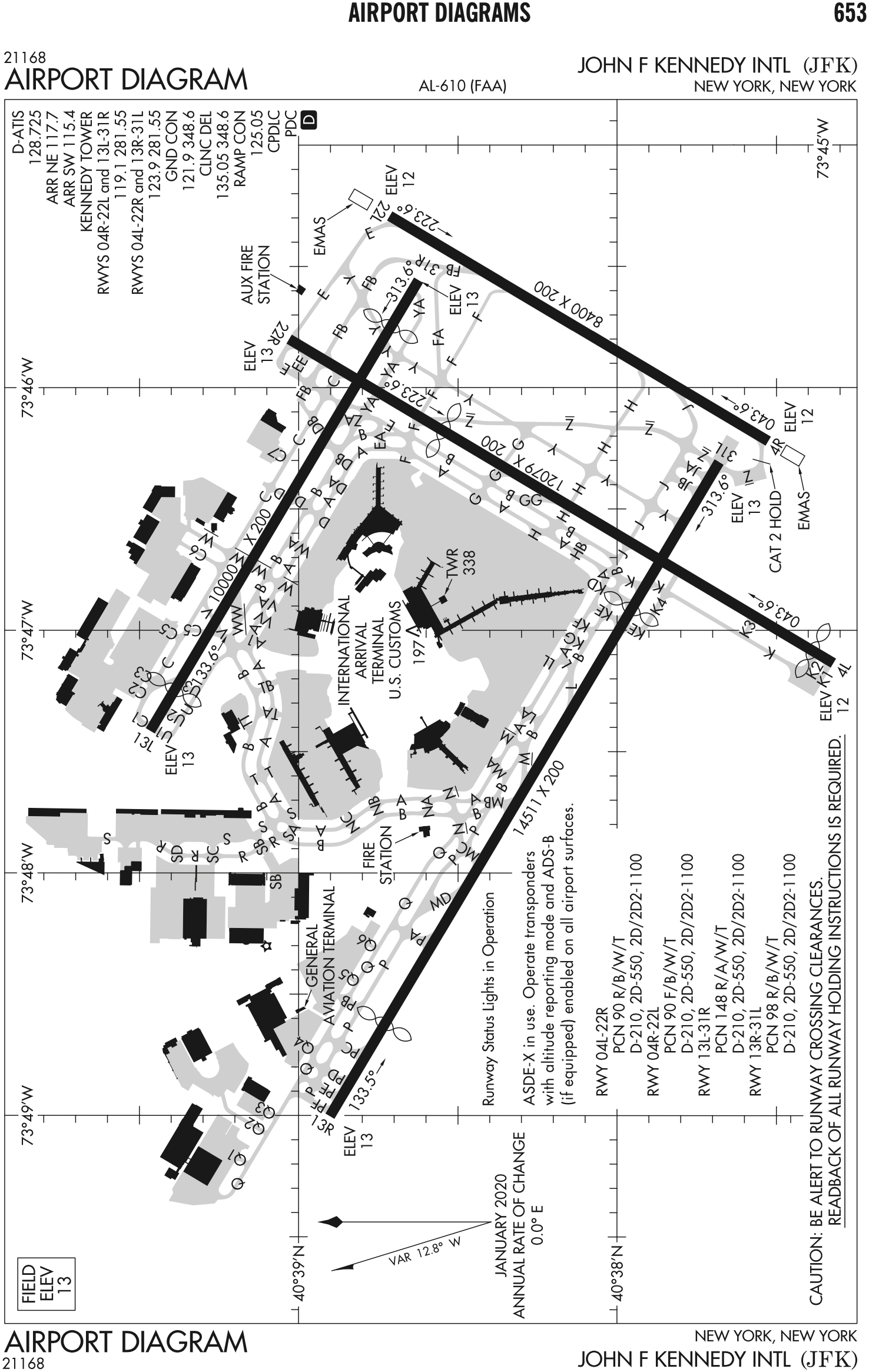
- Know where to find taxi diagrams and airport information in Chart Supplements
- Importance of using current charts
- Use of satellite imagery to enhance familiarity with an airport environment
- Brief the location of hot spots
- More on hot spots below
- LAHSO
- Know where to get information
- Accept only if able to comply
- Review NOTAMs for information on runway/taxiway closures and construction areas.
- Know where on the airport you will begin taxiing / where on the airport you want to go when landing (e.g. FBO)
- Know where to find taxi diagrams and airport information in Chart Supplements
- ATC communication
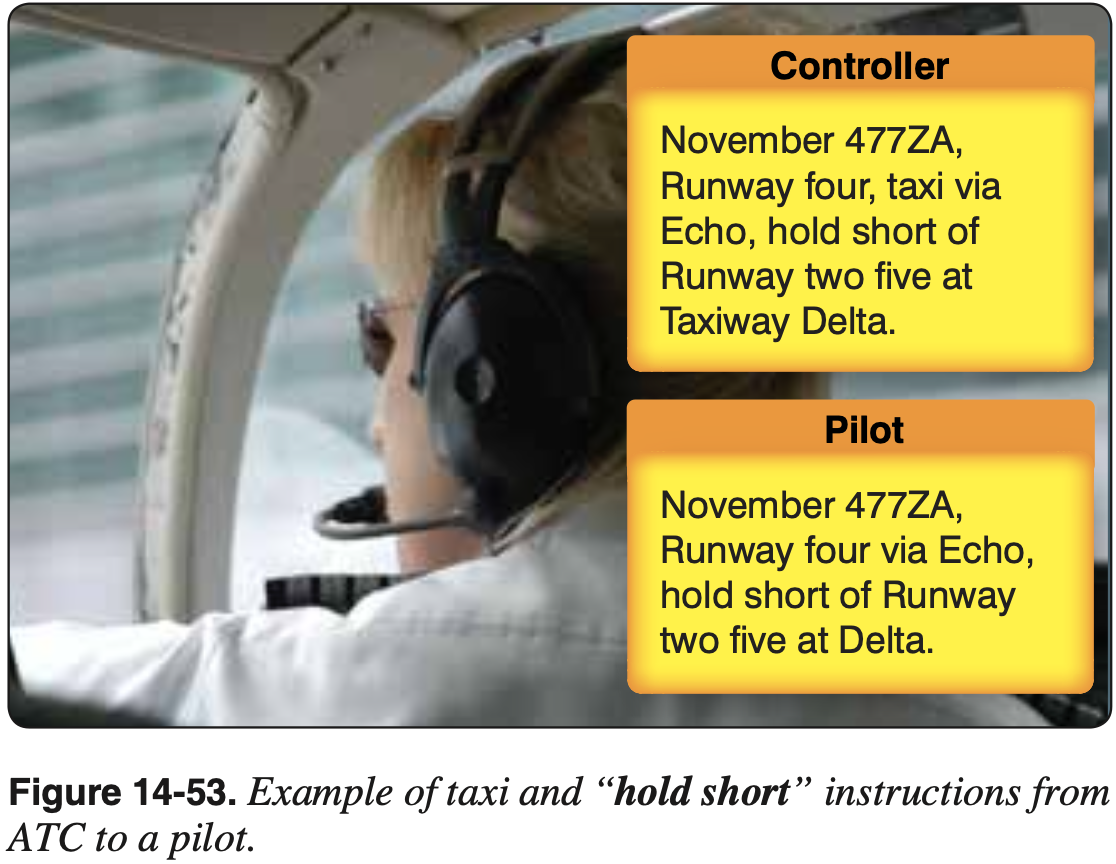
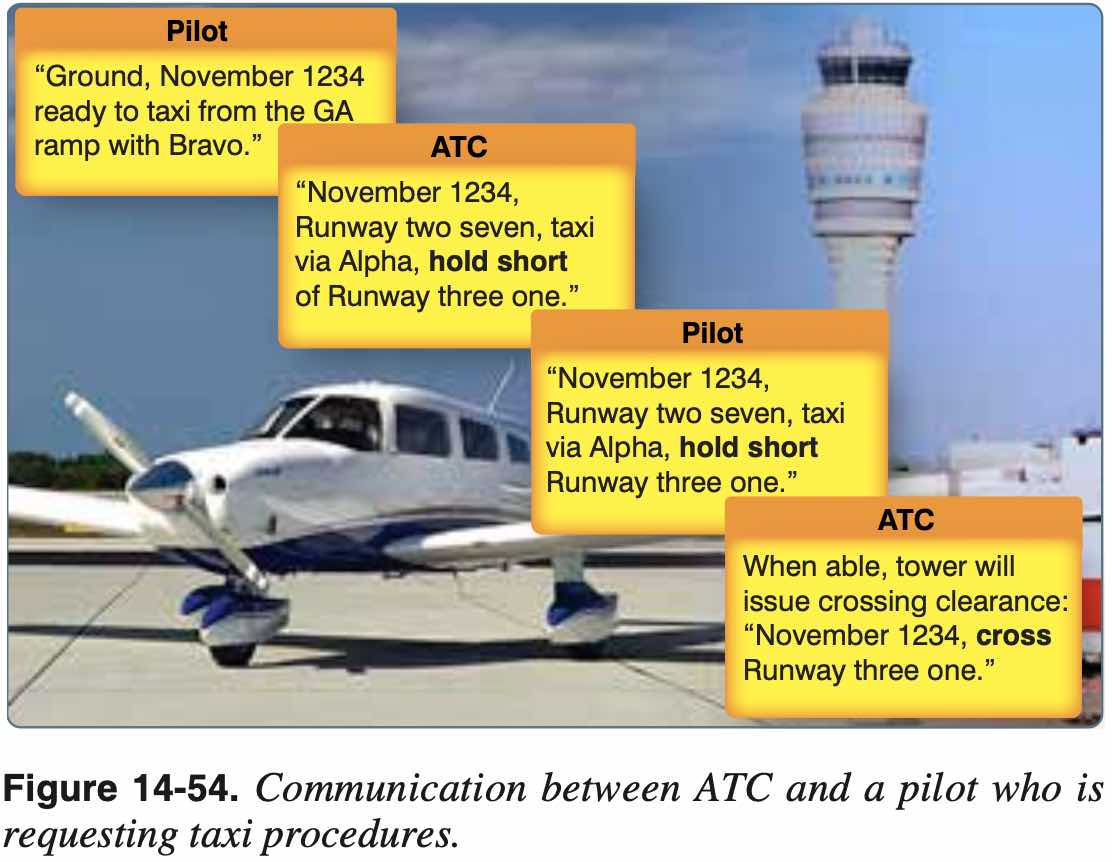
- Read back of all hold short instructions
- Be extra vigilent if another aircraft on frequency has similar call sign
- Communicate clearly
- Be certain of clearances, write them down, and request clarification if necessary
Writing Instructions and Reviewing Routes
- Always write taxi instructions down
- Even if it seems like a simple instruction, or one you are used to getting
- Build the habit
- Draw taxi route on airport diagram if helpful
- Reading back taxi clearances
- Reading back of runway hold short instructions is required
Airport Diagrams
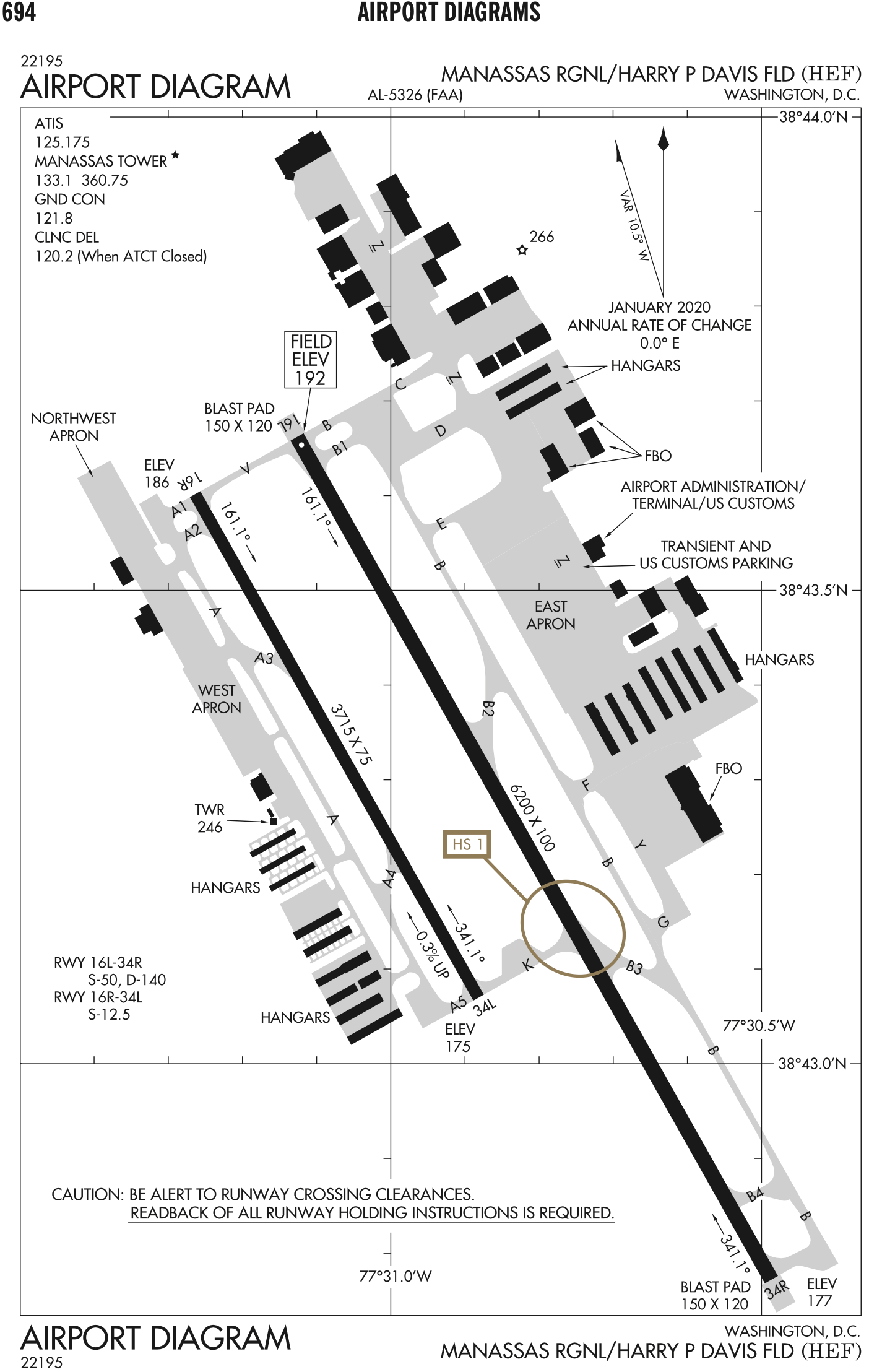
- Knowing how to read airport diagrams is critical to operate safely at airports both big and small
- Smaller airports may not have a published Airport Diagram
- Airport diagrams and other information can be found in
- Have current charts
- Include alternates so you don't end up at an airport without proper information
- This should include more than just a planned alternate in case an unplanned diversion is required
- Know symbology associated with aiport diagrams, and where to find the legend in case there is a symbol or marking you don't recognize

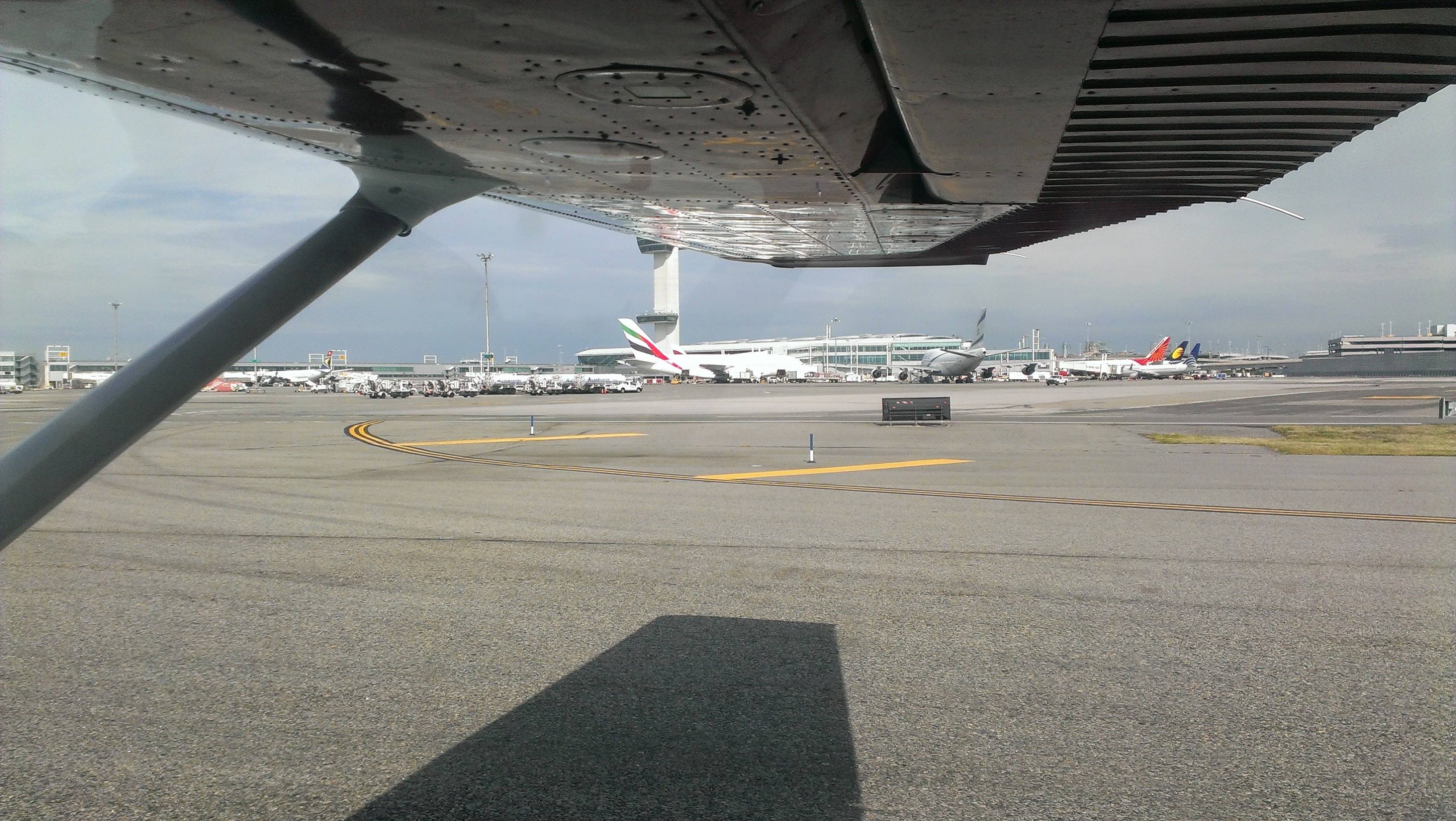
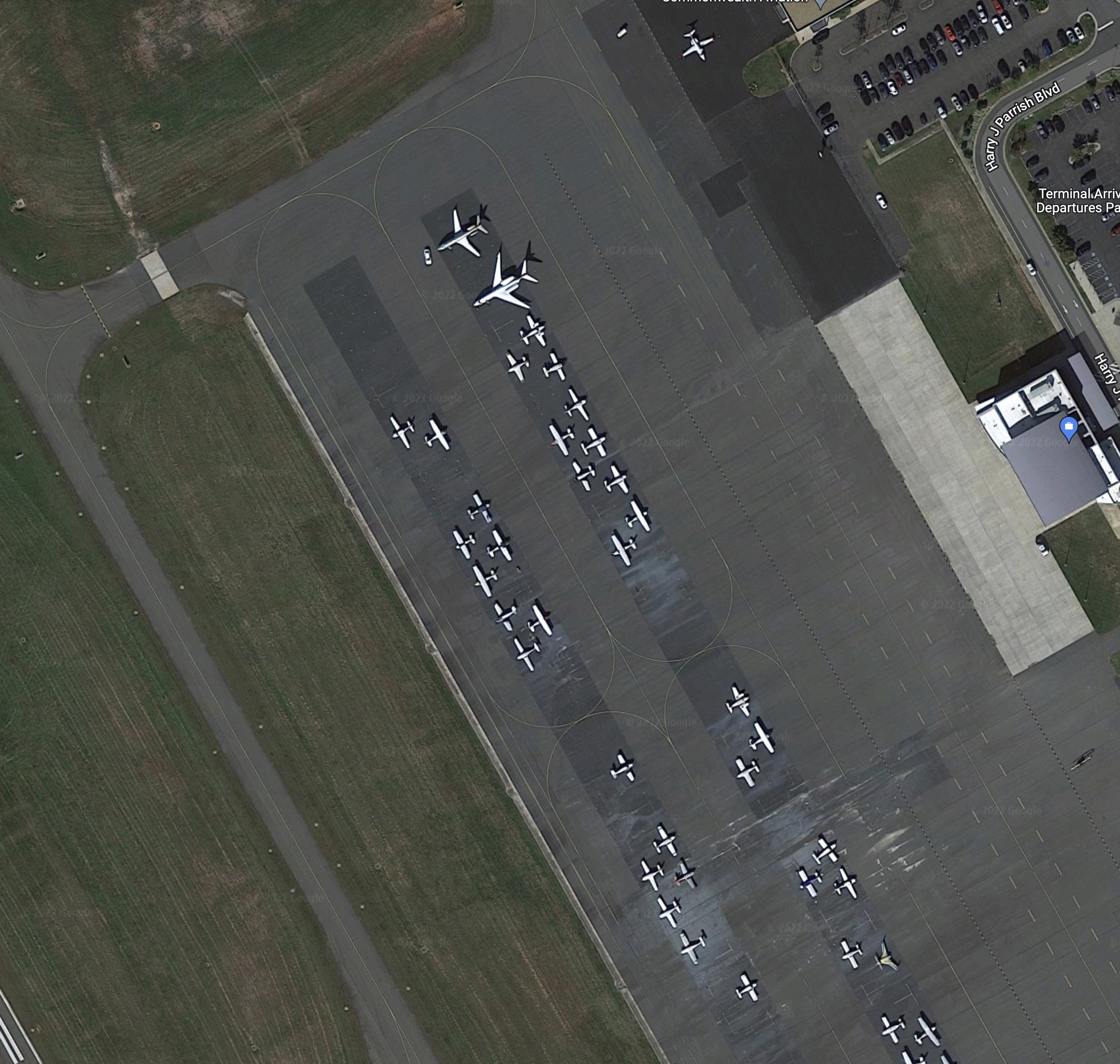
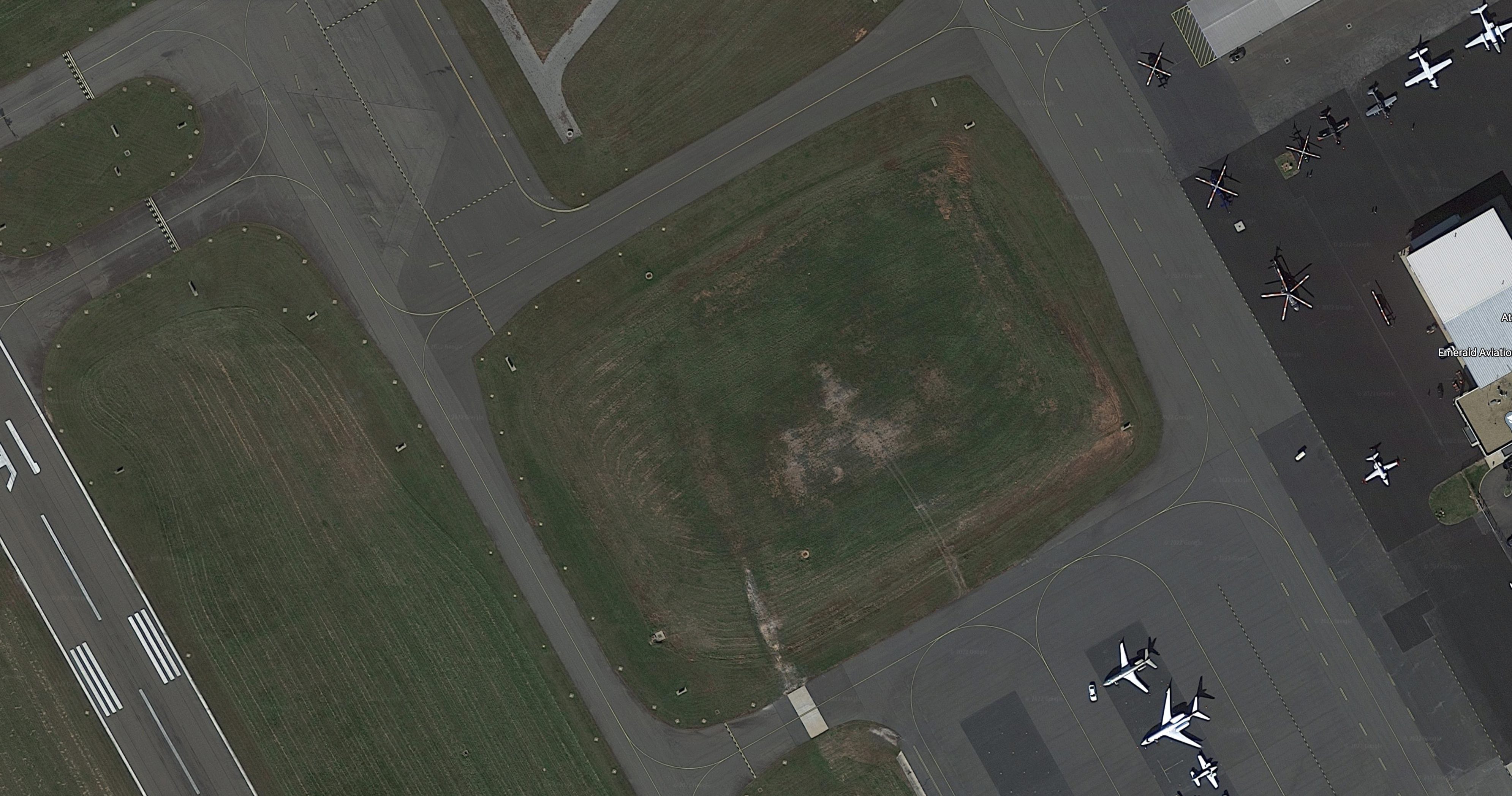
Satellite Imagery
- Whether or not there is an FAA Airport Diagram, satellite imagery is a valuable tool to use during preflight planning to help understand the airport environment at your destination.
- adip.faa.gov has satellite imagery with basic airport information
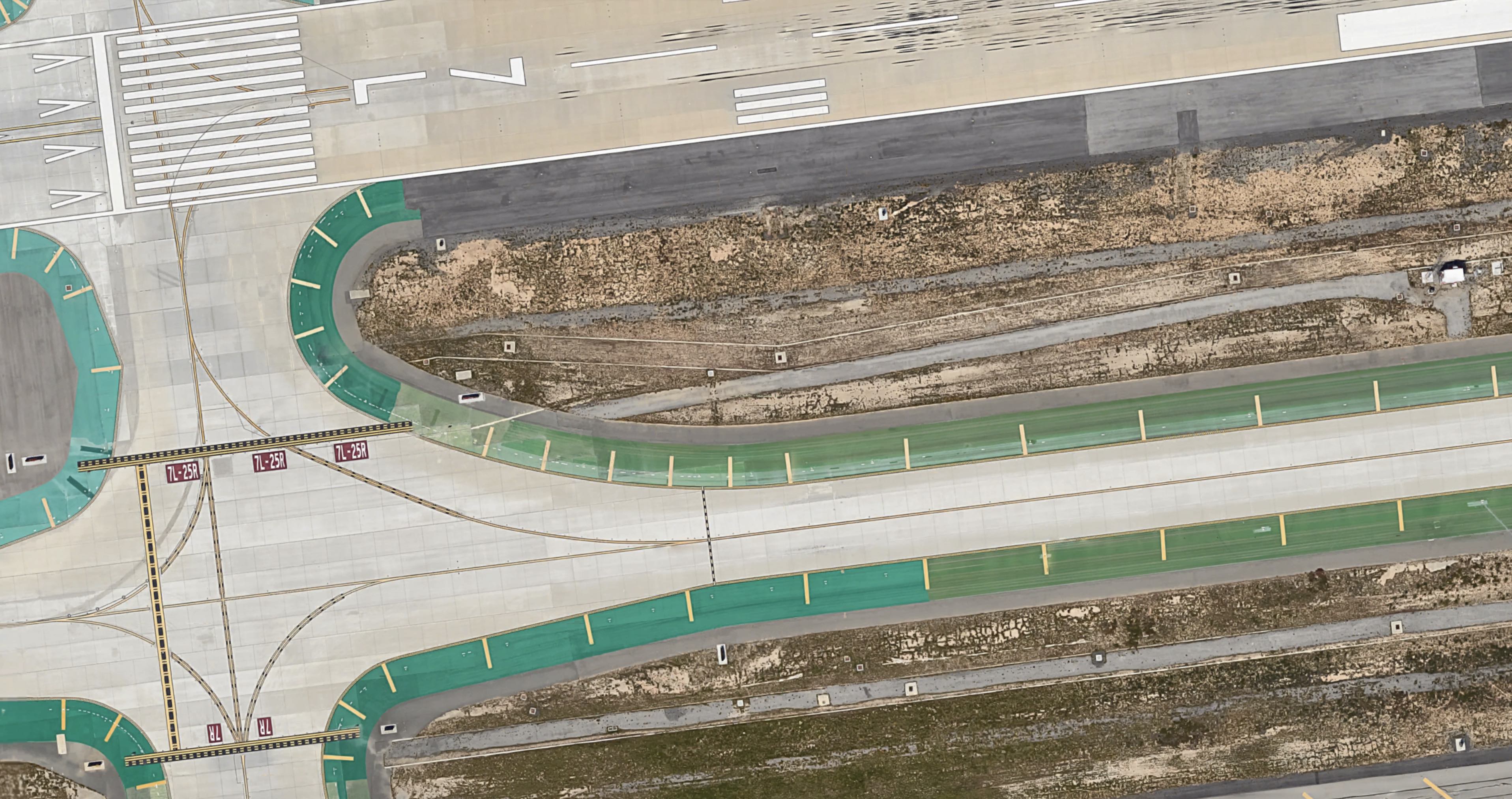
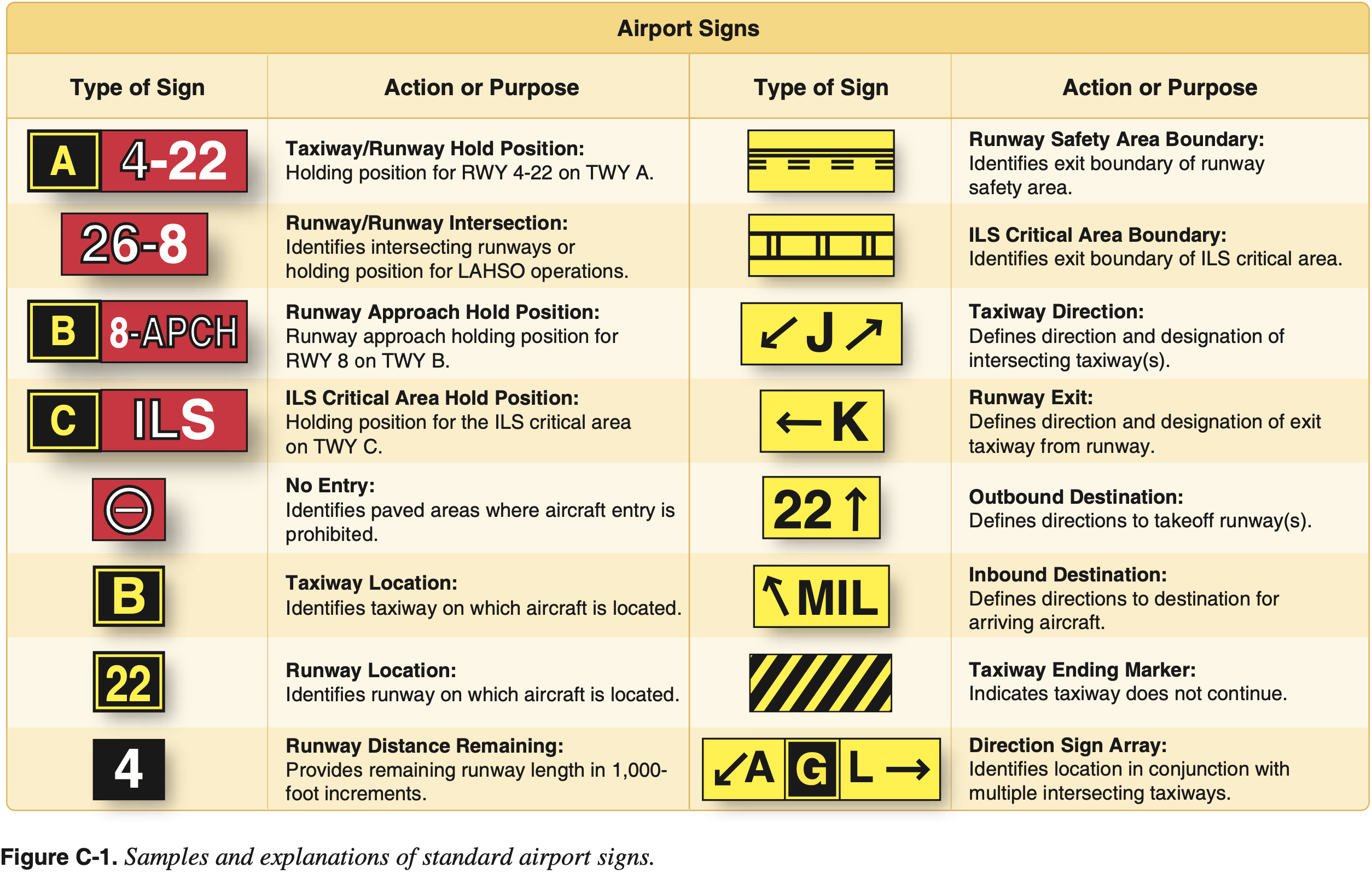
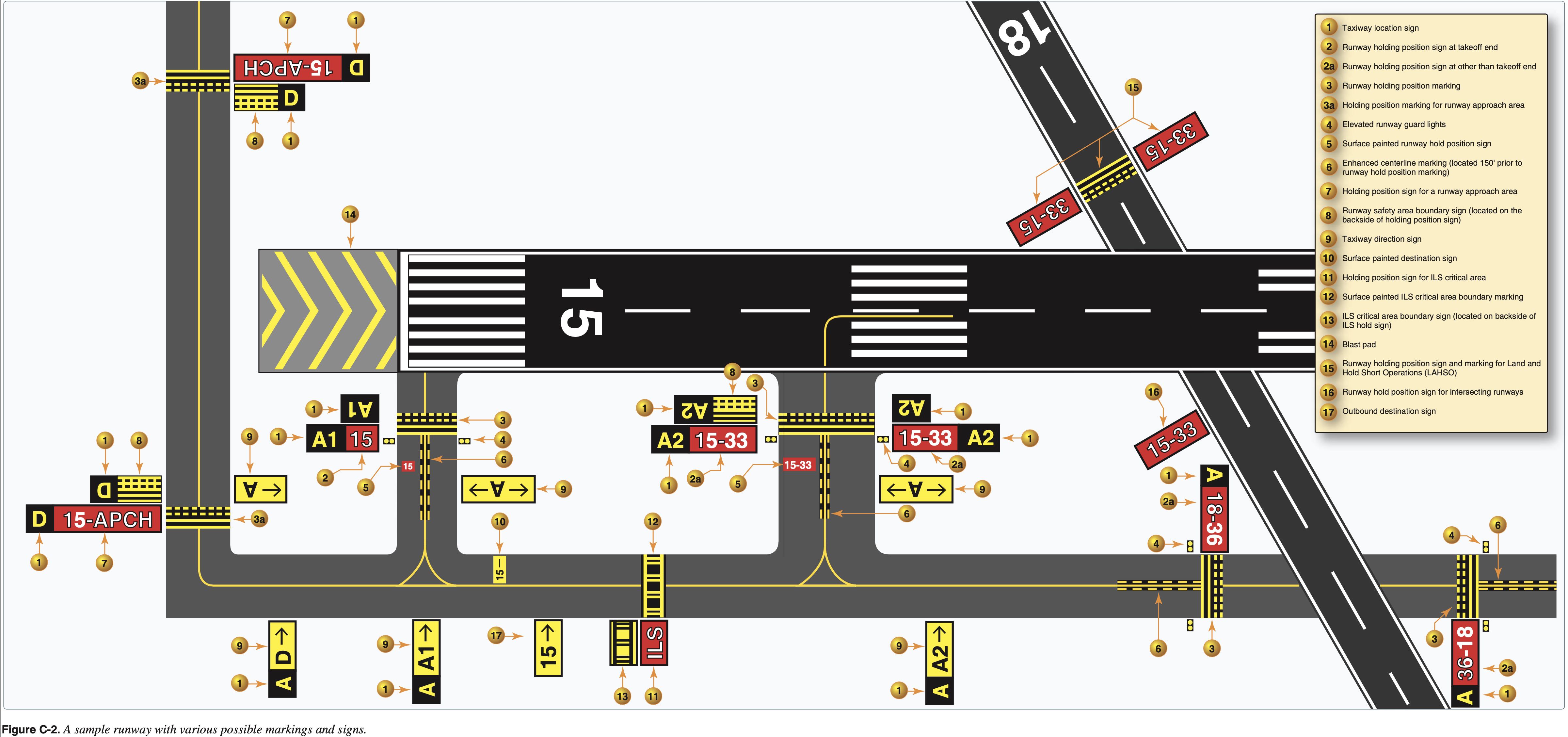
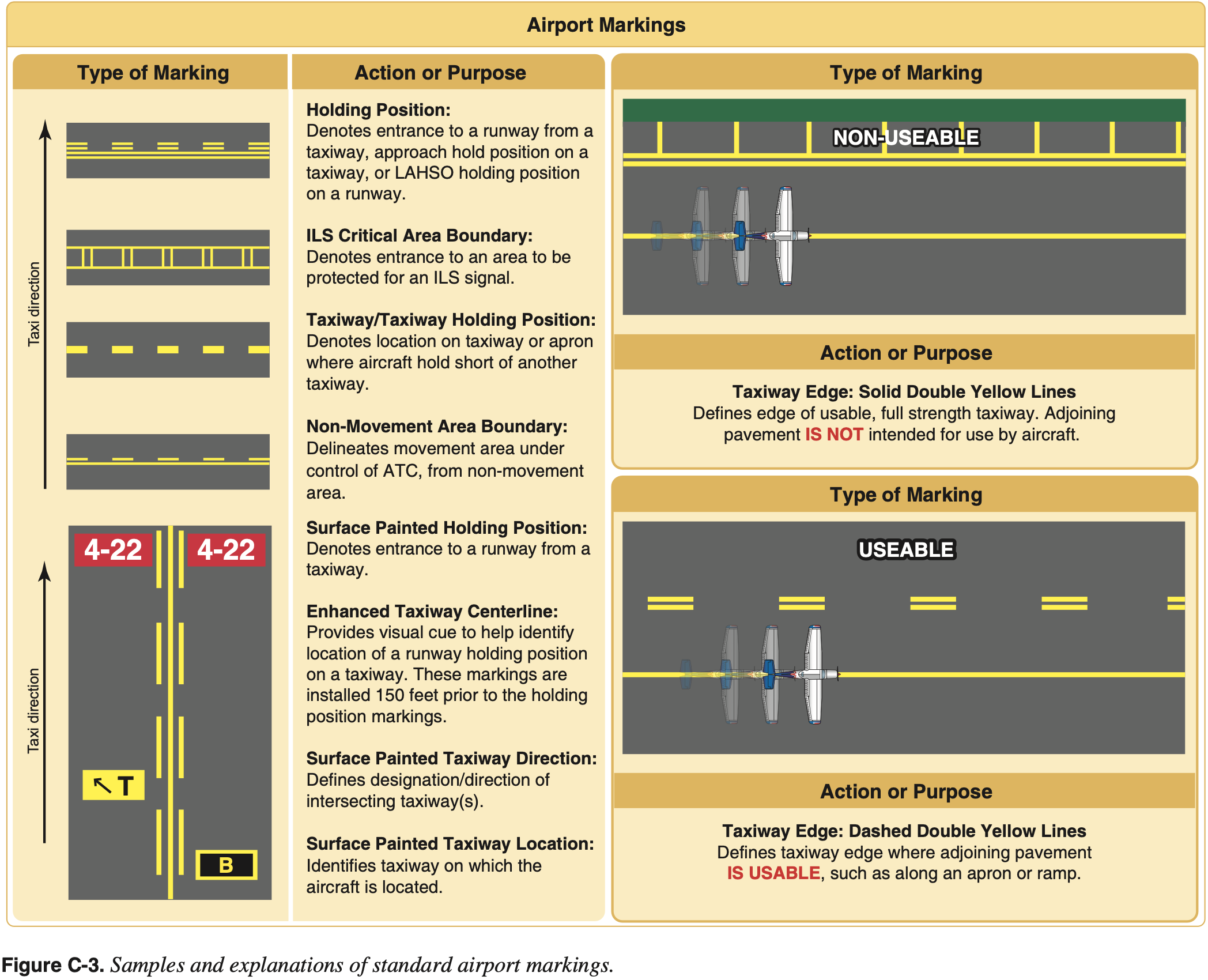
Airport Signs, Markings, Lighting
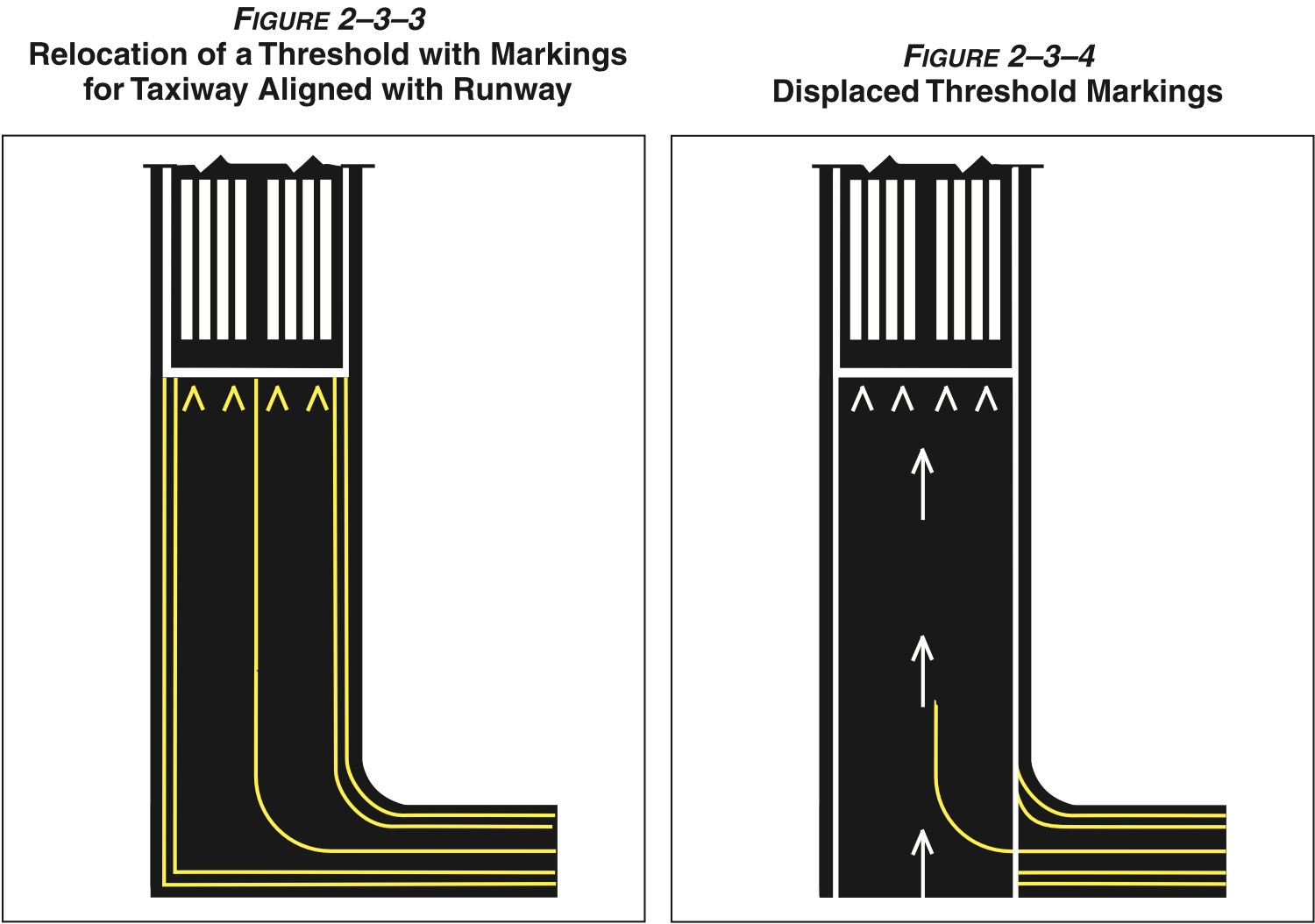
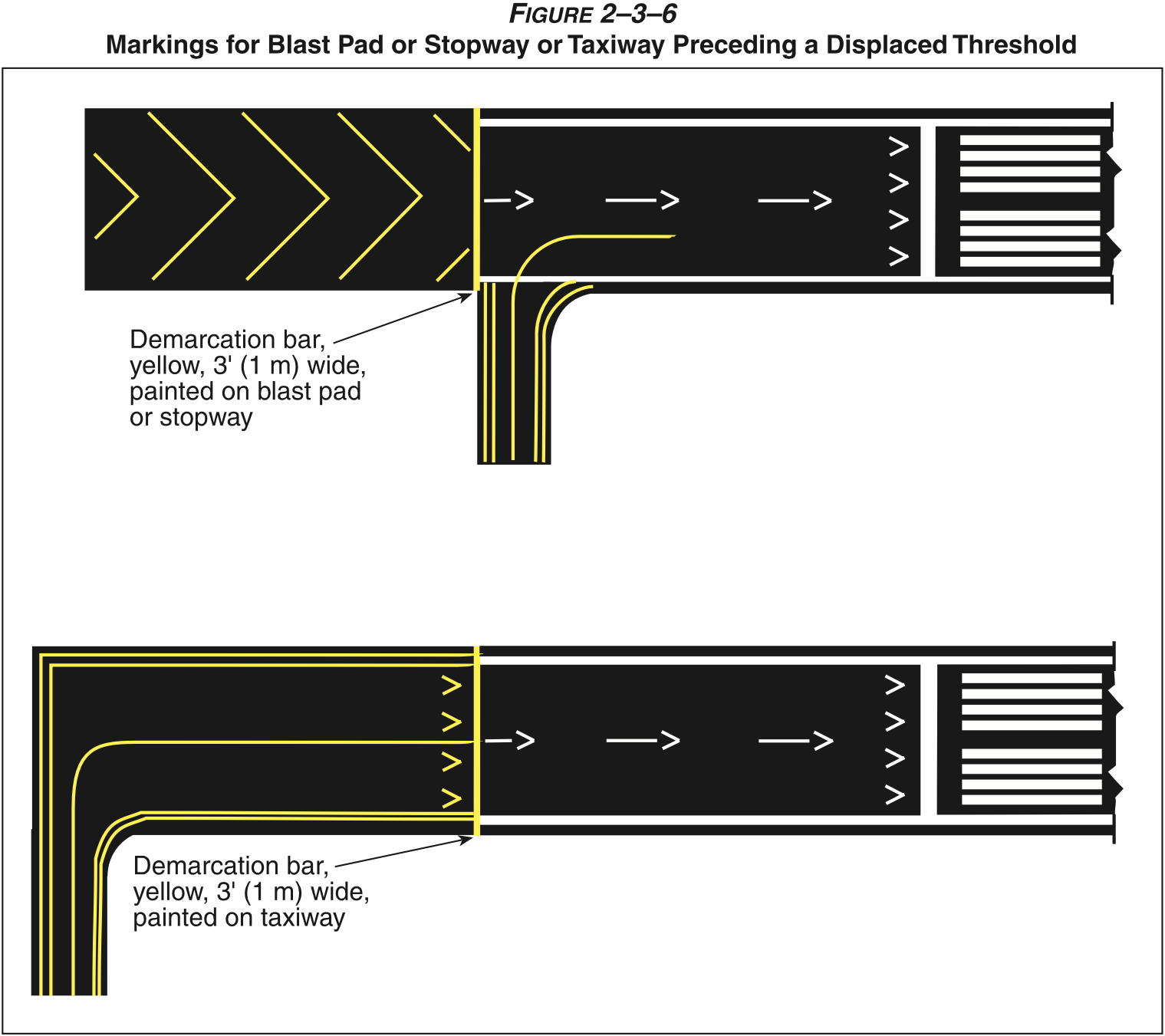
- Make sure to know and comply with airport surface markings, lighting, and signage
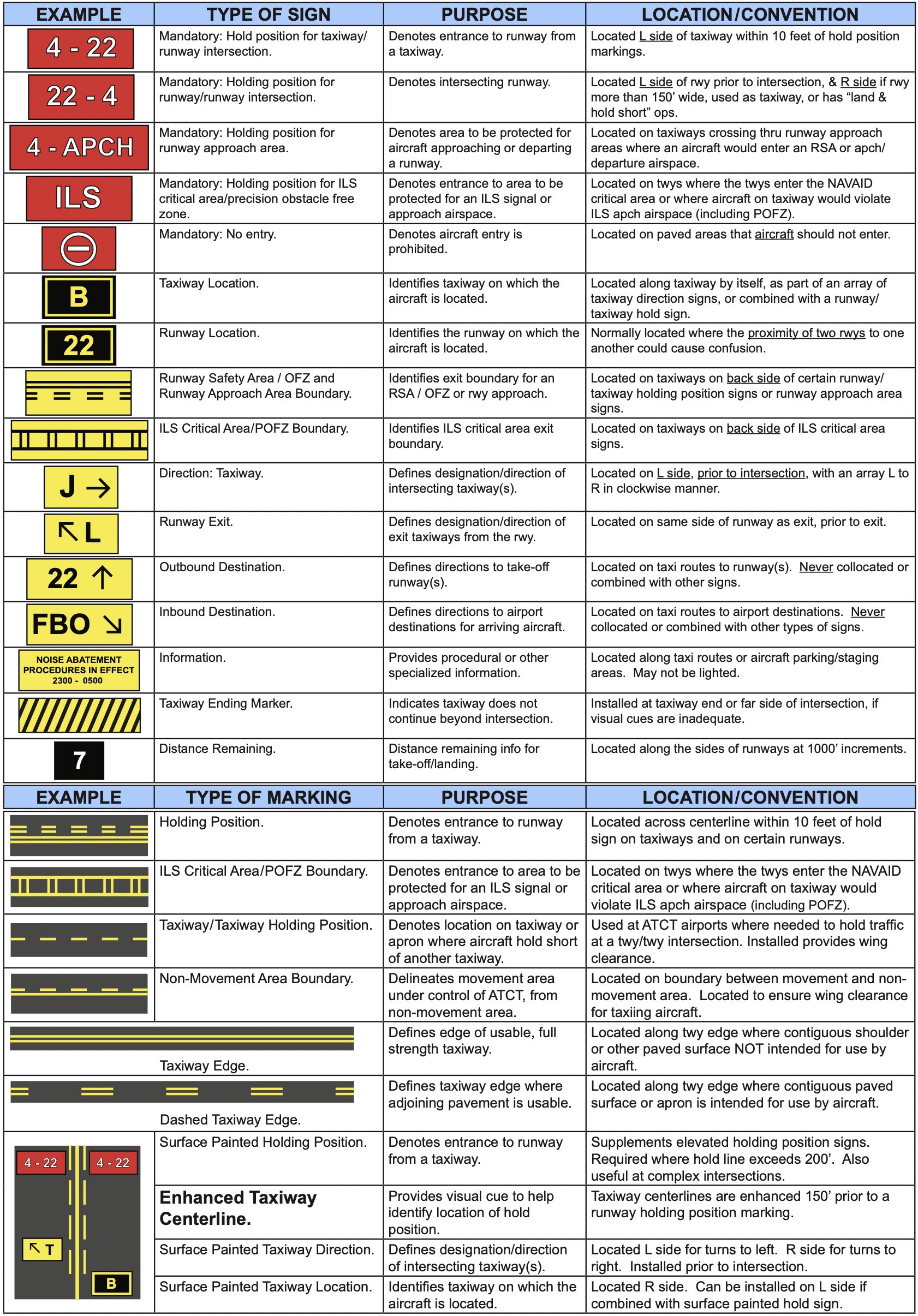
- Yellow paint for taxiing
- White paint for taking off and landing
- Entire airplane needs to be clear of markings - wings extend pretty far.
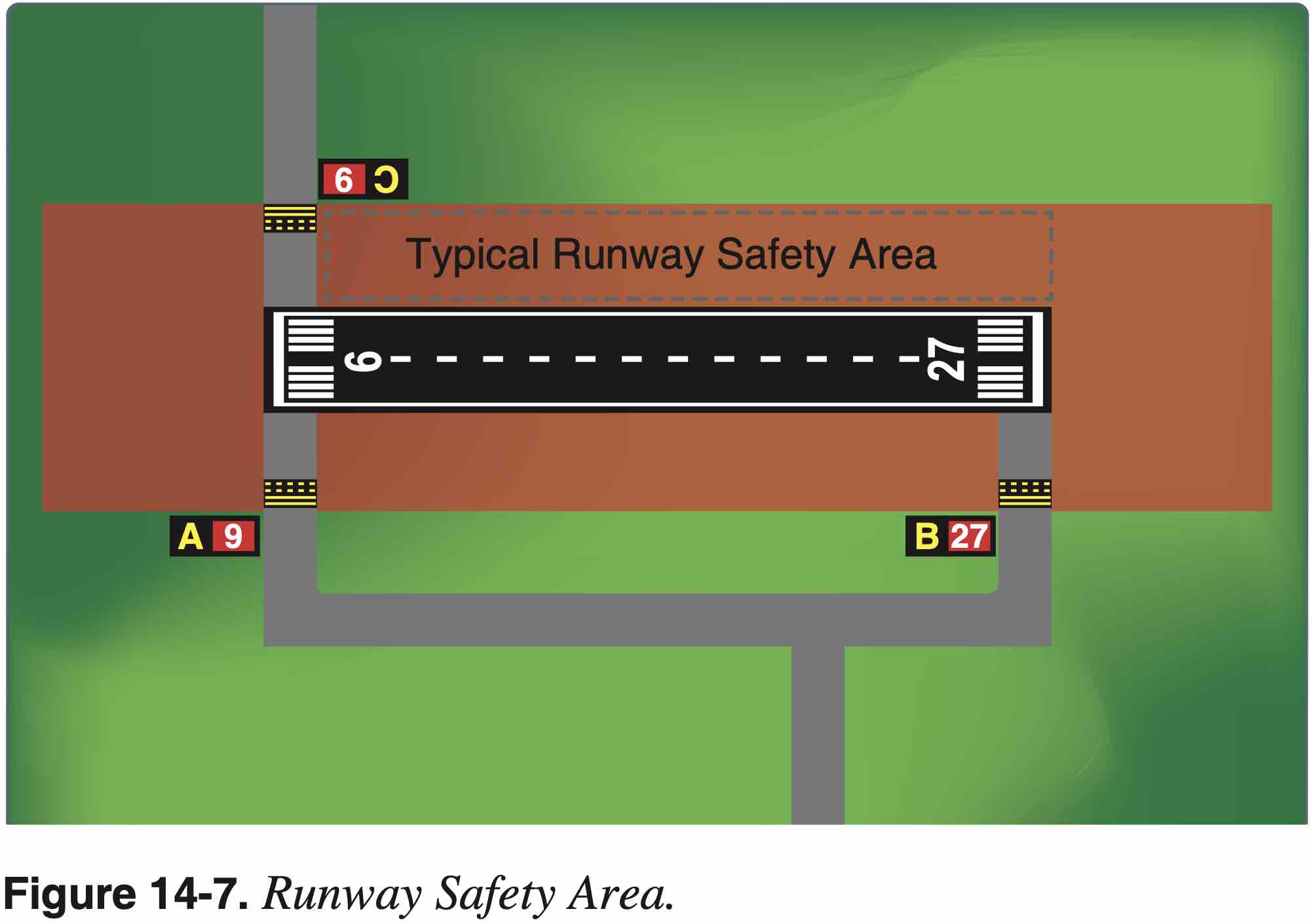
- The "dashed" side of Runway Holding Position marking, for example, (as well as others) indicates the "relevant" side.
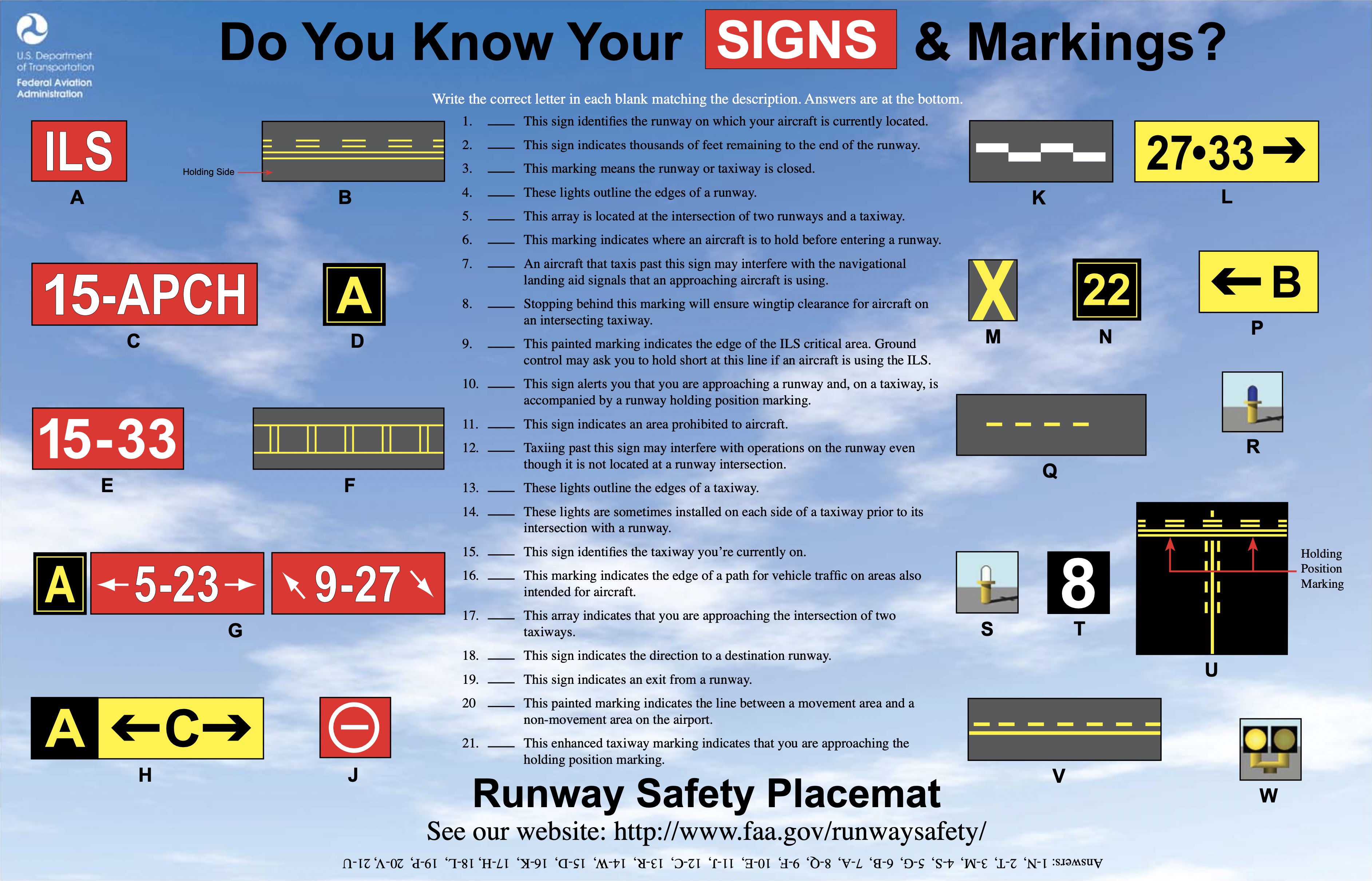
- Airport sign types
- Red - mandatory
- Yellow text on black - location
- Black text on yellow - direction
- Review this information first, and carry a reference if needed
Airport Lighting
- Taxiway centerline lights - green
- Taxiway edge lights - blue
- Runway centerline lights
- White
- Last 3000 ft: alternating red and white
- Last 1000 ft: red
- Runway edge lights
- Three intensities: high, medium, low
- White
- When an instrument runway lighting is designed, the last 2,000 ft. or one-half of the runway length available (whichever is less), are yellow.
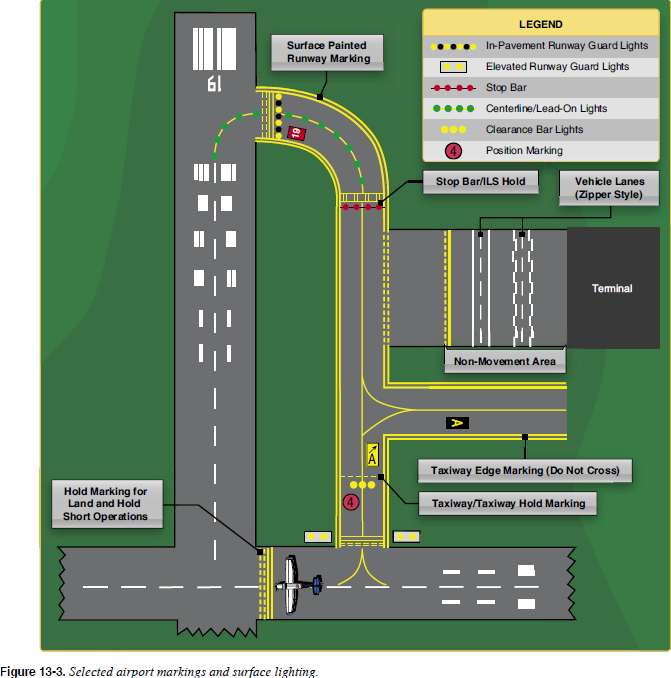
- Runway Guard Lights are installed at taxiway/runway intersections.
- They are primarily used to enhance the conspicuity of taxiway/runway intersections during low visibility conditions, but may be used in all weather conditions.
- Runway guard lights consist of either a pair of elevated flashing yellow lights installed on either side of the taxiway, or a row of in-pavement yellow lights installed across the entire taxiway, at the runway holding position marking.
- Will be flashing at all times.
- Runway Stop Bar Lights
- Red "stop sign" lights before proceeding onto runway they must not be red
- Pilots should never cross a red illuminated stop bar, even if an ATC clearance has been given to proceed onto or across the runway.
- See AIM 2-1-11 Taxiway Lights
Hold Lines
- See above for some examples of holding taxiway markings and signage
- Need to follow instructions and hold the entire aircraft behind hold position signs unless given clearance to cross.
- Hold lines are there for a reason
- Readback of all runway holding instructions is required
- See this written on the airport diagrams as a reminder, and mentioned over ATIS
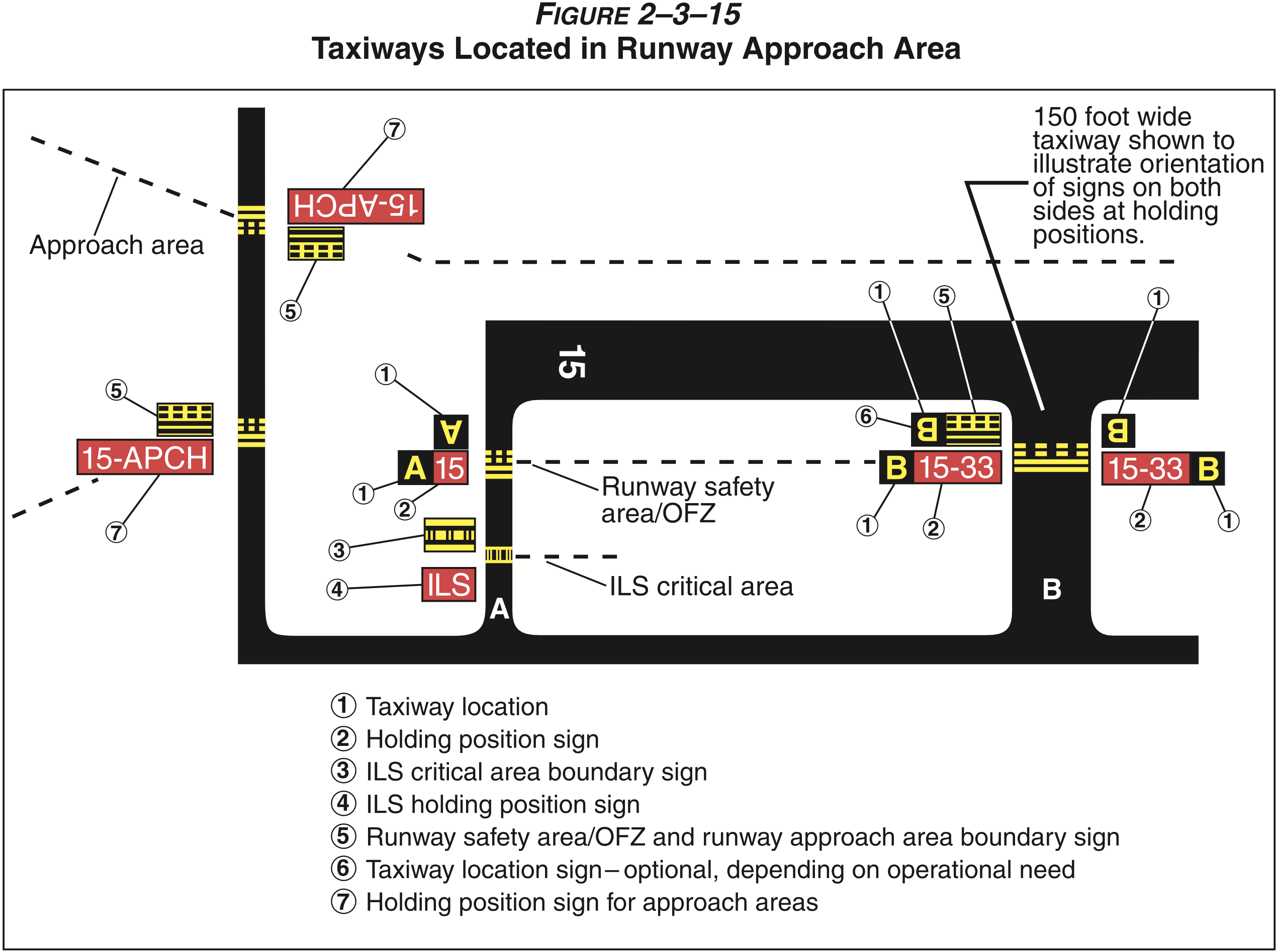
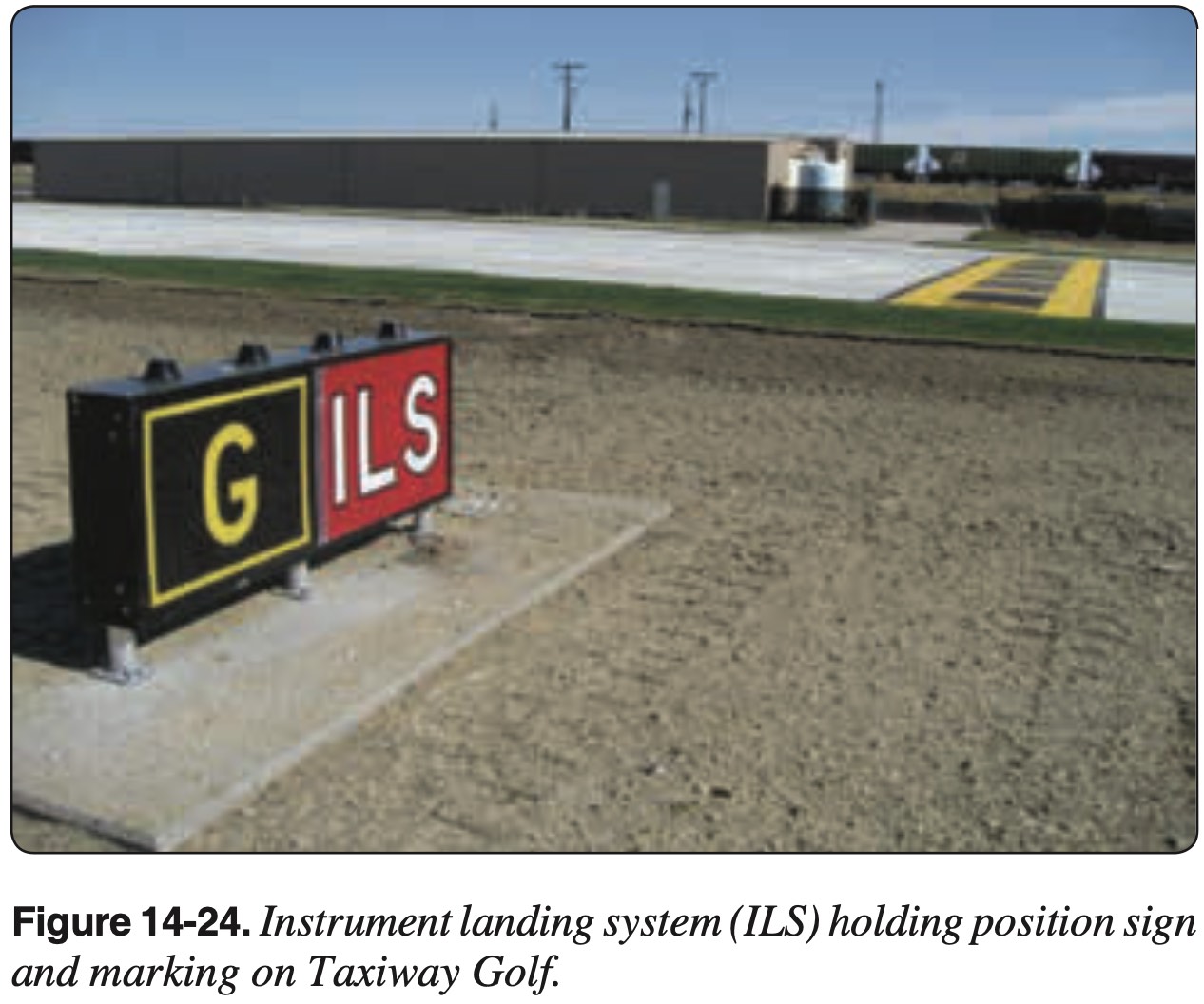


ILS Hold Short
At a towered airport follow ATC instructions if they tell you to hold short of the ILS critcal area
JO 7110.65AA 3−7−5(a) Precision Approach Critical Area:
Aircraft and vehicle access to the ILS critical area must be controlled to ensure the integrity of ILS course signals whenever the official weather observation is a ceiling of less than 800 feet or visibility less than 2 miles. Unless the arriving aircraft has reported the runway in sight or is circling to land to another runway, do not authorize vehicles/aircraft to operate in or over the critical area, except as specified in subparagraph a1, whenever an arriving aircraft is inside the ILS outer marker (OM) or the fix used in lieu of the OM.
See also AIM 2-3-5(b):
When instructed by ATC to hold short of the ILS critical area, pilots MUST STOP so that no part of the aircraft extends beyond the holding position marking. When approaching the holding position marking, pilots must not cross the marking without ATC clearance.
AIM 1-1-9(k) provides the same information that is in JO 7110.65AA regarding when ATC responsibilities to protect the ILS critical area
This is primarily serves to inform pilots that when the official weather observation indicates a ceiling of less than 800 feet or visibility less than 2 miles, the ILS critical area should be protected for aircraft inside the final approach fix.
- There are some exceptions, including when the pilot reports the runway in sight that ATC may allow aircraft into the ILS critical area.
- Be mindful of this and don't just always assume there will be zero interference to the ILS signals, even if the official weather observation indicates a ceiling of less than 800 feet or visibility less than 2 miles.
I haven't found a definitive guide for non-towered airports
- When departimg from a non-towered airport in IMC, a release and clearance void time will be given, assuring that no IFR traffic will be inbound on the approach during this time
- Outside of this time, holding short of the ILS critical area is probably the most conservative option to ensure the presence of your aircraft doesn't interfere with an aircraft on an approach
Flight Deck Activities During Taxiing
Maintaining strict focus on the movement of the aircraft and ATC communications
- Already covered importance of task management, and making sure to program GPS, dial in frequencies as much as possible before moving
- During taxi maximum attention can be available to move the aircraft, look outside, and be listening and communicating with ATC
Sterile Cockpit
- Refrain from nonessential activities during critical phases of flight.
- This includes while taxiing
- Remind all cockpit occupants of the importance of maintaining a sterile cockpit, but encourage the ability to speak up if anyone sees a potential conflict.
- Refrain from unnecessary conversation from the time the preflight preparations begin until the time the aircraft is clear of the terminal area and at cruising altitude.
- The same procedure should be followed on arrival, from the time landing preparations begin until the aircraft is safely stopped at the terminal.
Minimizing Workload During Taxiing
- Plan ahead
- Complete checklist items before taxiing, or when stopped (for example in runup area)
- Know how to use avionics
- Don't want to waste time fumbling around and figuring out the GPS while taxiing
- Keep cockpit organized
- Apply SRM and use all resources available
- Ask passengers to hold documents
Adhering to Clearance or Instructions
- Write down
- Read back
- Read back clearly and enunciate
- No prizes for speaking fast or in any manner that makes understanding more difficult
- When calling up, be prepared what you will say before keying the mic
- Also avoid adding redundancy or superfluous information to your radio calls
- Even when cleared to cross, light up your aircraft and always scan the entire runway and final
- Be vigilant! Recall operational incidents
Maintaining and Enhancing Situational Awareness
- Perform checklist items when stopped and clear of hazards such as personel, vehicles, and other aircraft
- For any momentary "heads down" time needed, perform safely when on straight taxiway away from intersections
- Be aware of where you are on airport at all times and proximity to other aircraft and vehicles moving on the airport
- Pilots should use a "continuous loop" process to actively monitor and update their progress and location during taxi.
- This includes knowing the aircraft's present location and mentally calculating the next location on the route that will require increased attention (e.g., a turn onto another taxiway, an intersecting runway, or hot spots)
- Be especially vigilant if another aircraft that has a similar call sign is on frequency.
- Care should be taken to avoid inadvertently executing a clearance or instruction for another aircraft.
- If the pilot becomes disoriented
- Never stop on a runway
- Initiate communications with ATC to regain orientation
- Pilots should be especially vigilant when instructed to taxi and "Line Up and Wait" (LUAW)
Procedures if in Close Proximity to Another Runway
- Procedures for briefing if a landing rollout to a taxiway exit will place the pilot in close proximity to another runway which can result in a runway incursion
- Know what is required of you as PIC (see below)
- Know ahead of time the airport environment, location of hot spots, and where hold short markings are
- Use satellite imagery and other available aids during preflight planning
- Brief the expected taxi route to include any hold short lines and runways to cross, hot spots, as well as any other potential conflicts.
- Once taxi instructions are received, the pretaxi route should be reviewed and monitored.
- It is essential that any changes to the taxi route be fully understood by pilots.
- Display the current airport diagram to follow the progress of the taxi operation.
- The following procedures must be followed after landing and reaching taxi speed
- Exit the runway without delay at the first available taxiway or on a taxiway as instructed by ATC
- Pilots must not exit the landing runway onto another runway unless authorized by ATC
- At airports with an operating control tower, pilots should not stop or reverse course on the runway without first obtaining ATC approval
- Taxi clear of the runway unless otherwise directed by ATC
- An aircraft is considered clear of the runway when all parts of the aircraft are past the runway edge and there are no restrictions to its continued movement beyond the runway holding position markings.
- In the absence of ATC instructions, the pilot is expected to taxi clear of the landing runway by taxiing beyond the runway holding position markings associated with the landing runway
- Even if that requires the aircraft to protrude into or cross another taxiway or ramp area
- Most important thing is to get clear of runway
- See AIM 4-3-20 Exiting the Runway After Landing
- Once all parts of the aircraft have crossed the runway holding position markings, the pilot must hold unless further instructions have been issued by ATC.
Procedures on a Taxiway Between Parallel Runways
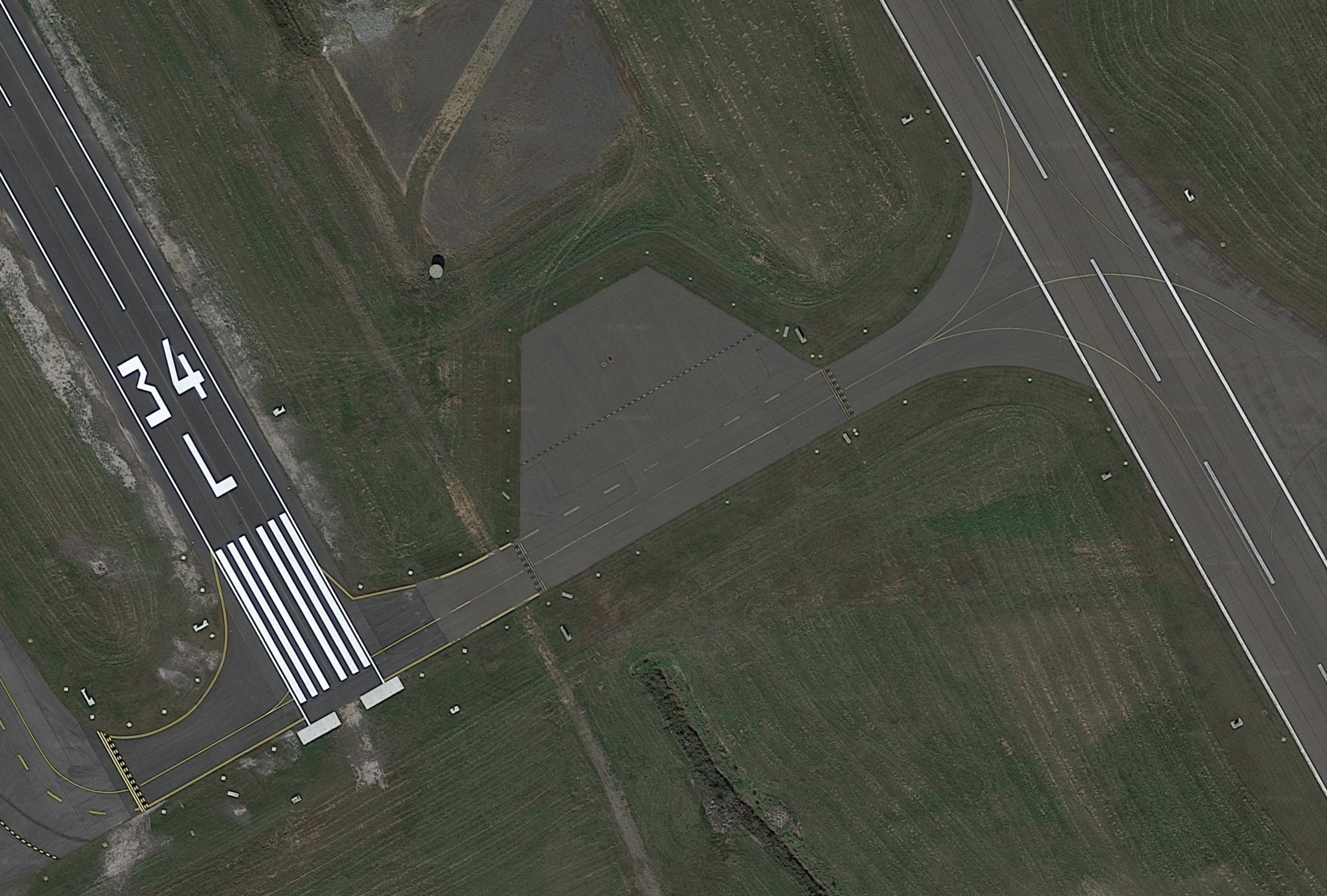
- This is not uncommon at KHEF
- Gain situational awareness
- Know exactly where aircraft is on airport environment
- Positively identify
- Aircraft heading
- Both runways
- Follow rules described in AIM (above)
- Make sure clearance is had before proceeding past runway hold position line
- Even when cleared to cross, light up your aircraft and always scan the entire runway and final
Operations an Airports with a Control Tower
- Emphasis on ATC communications and runway entry/crossing authorizations
ATC communications and pilot actions
- At both towered and non-towered airports
- Before takeoff
- Before landing
- After landing
- Use proper phraseology
- e.g. "hold short runway 16L" not "stop before runway 16L"
Procedures unique to night operations
- Allow your eyes time to adjust and protect your night-adjusted vision
- Taxi slowly, particularly in congested areas
- Use extra caution when entering or crossing a runway
- Avoid using the strobe lights and bright, forward-facing lights around other aircraft
- When stopped, use extra vigilance to ensure the airplane does not creep forward
- For example it may be more difficult to notice the plane rolling during runup at night
- Adjust the interior lights to a minimum brightness that allows reading the instruments and switches
- Dimming the lights reduces reflections on the windows
Procedures for Steering, Maintaining Position, and Situational Awareness
Situational Awarenesss
Is the accurate perception of operational and environmental factors that affect the flight. It is knowing what is going on and what is coming next.
- Situational awareness is being proactive
- Develop strong task management skills
- Plan ahead (e.g., review the airport diagram before taxiing and landing)
- Regularly pause to make a quick mental assessment of the flight environment
- Consciously raise awareness in critical phases of flight and during ground operations
- For example, at
KHEF, when taxiing from parking to hold short of taxiwayF, before calling to get taxi clearance, that might be a good moment raise awareness
- For example, at
- Use advanced avionics properly (avoid complacency and excessive "heads-down" time)
- When taxiing, the pilot's eyes should be looking outside the airplane scanning from side to side while looking both near and far to assess routing and potential conflicts.
- A safe taxiing speed should be maintained
- The primary requirements for safe taxiing are
- Positive control
- The ability to recognize any potential hazards in time to avoid them
- The ability to stop or turn where and when desired, without undue reliance on the brakes
- The primary requirements for safe taxiing are
- Proceed at a cautious speed on congested or busy ramps
- Normally, the speed should be at the rate where movement of the airplane is dependent on the throttle
- That is, slow enough so when the throttle is closed, the airplane can be stopped promptly
- Normally, the speed should be at the rate where movement of the airplane is dependent on the throttle
- The pilot should place the aircraft on the taxiway center
- Center line, center body
- If the pilot ever becomes disoriented, stop (not on a runway) and notify ATC
- Consider requesting progressive taxi before becoming disoriented
- Use tools available to you in cockpit
- Zoom in on G1000 to show taxiways
- Use geo-referenced taxi diagrams in Foreflight, for example, if you use that
Airport Hot Spots
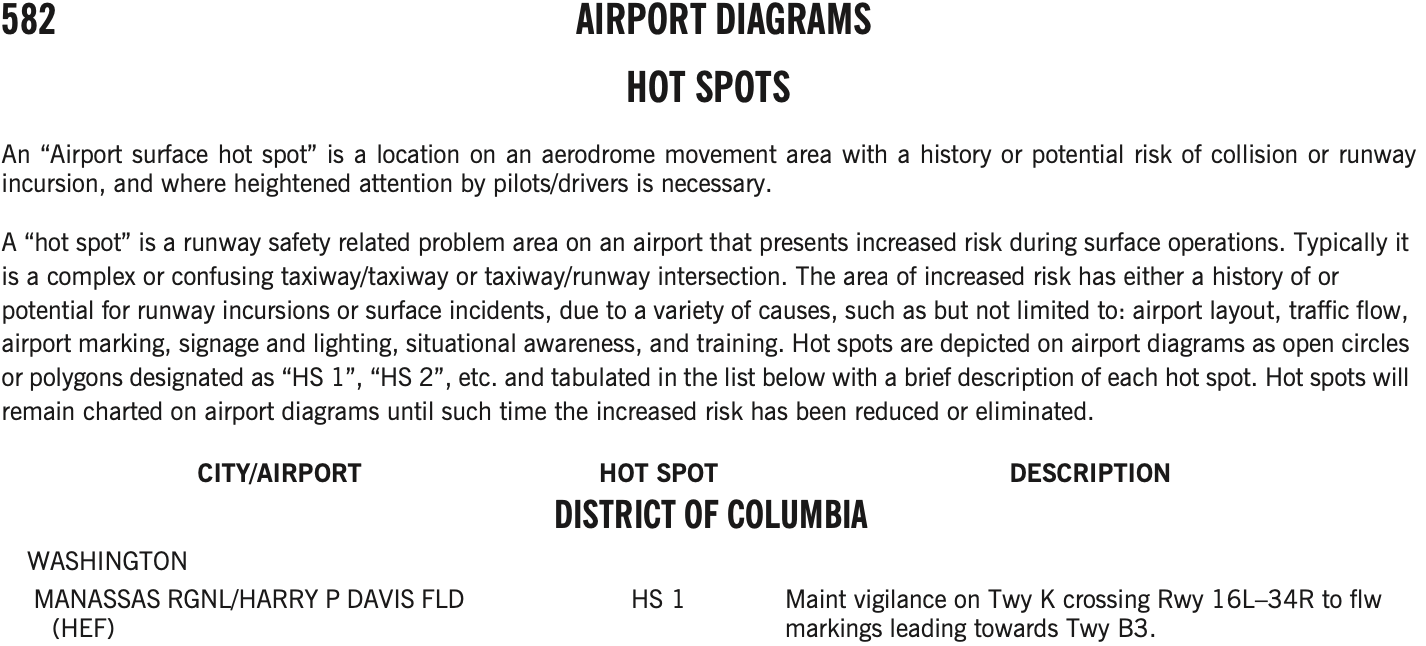
Hot Spots
Areas designed to alert pilots to potential conflicts, that have a history of or have been identified to have an increased risk.
- Be sure to be familiar with airport hot spots and brief their location and precautionary action to be taken before taxiing.
- See Hot Spot Standardized Symbology
Use of aircraft exterior lighting
- Use to increase aircraft visibility when crossing runway.
- Be mindful at night of how lighting can impair visibility during taxi operations.
- For example, don't taxi around with strobes on.
- Aircraft Lights
- See AIM 4-3-23 - Use of Aircraft Lights
- An aircraft anti-collision light system can use one or more rotating beacons and/or strobe lights.
- However, during any adverse meteorological conditions, the pilot-in-command may determine that the anti-collision lights should be turned off when their light output would constitute a hazard to safety.
- Supplementary strobe lights should be turned off on the ground when they adversely affect ground personnel or other pilots, and in flight when there are adverse reflection from clouds.
- Aircraft position lights are required to be lighted on aircraft operated on the surface and in flight from sunset to sunrise.
Low visibility operations
- Emphasis on all the items above
- Especially planning ahead and situational awareness
- Have current charts available, and be familiar with them
- Taxi slowly
- Perform "heads down" activities while aircraft is stopped
- Writing down clearance, drawing on airport diagram, briefing taxi route and hot spots
- Be alert if ATC states to hold short of the ILS critical area
- Notify ATC immediately if you become disoriented
- Use low visibility taxi charts when available
- See LVO/SMGCS (Low Visibility Operations / Surface Movement Guidance Control System)
- FAA-AC-120-57C

Operations at Uncontrolled Airports
- Towered vs. non-towered airports
- No clearance, only vigilence
- No progressive taxi
- May not have an airport diagram
Summary
- Plan ahead
- Have all necessary current information available, and be familiar before taxiing
- Practice enhanced situational awareness
- Always know where you are and where you are going, and continuously check in
- Stop (not on a runway) and notify ATC immediately if you become disoriented
- Use good task management
- Perform checklists and other "heads down" time while stopped
- Good communication
- Read back instructions
- Proper phraseology
- Be vigilant if another aircraft has similar call sign
- Vigilence
- Check before entering runway, even if cleared
- Use of lighting
- To be more visible
- Thoughtfully at night so as not to impair vision
References
- FAA-H-8083-25B Pilot's Handbook of Aeronautical Knowledge
- FAA-H-8083-3C Airplane Flying Handbook
- Aeronautical Information Manual
- FAA-AC-91-73B Parts 91 and 135 Single Pilot, Flight School Procedures During Taxi Operations
- FAA-AC-150/5340-1M Standards for Airport Markings
- FAA-AC-150-5340-30J Design and Installation Details for Airport Visual Aids
- FAA Airport Sign and Marking - Quick Reference Guide
- Great resource to review the types of signs and marking that are used at airports and what they mean.
- FAA Runway Incursions
- My CFI Notebook - Runway Incursion Avoidance
- FAA Runway Safety Flashcards