Effective Teaching
This page covers Task E. Elements of Effective Teaching in a Professional Environment from the FAA-S-ACS-25 Flight Instructor for Airplane Category Airman Certification Standards.
Instructor Responsibilities
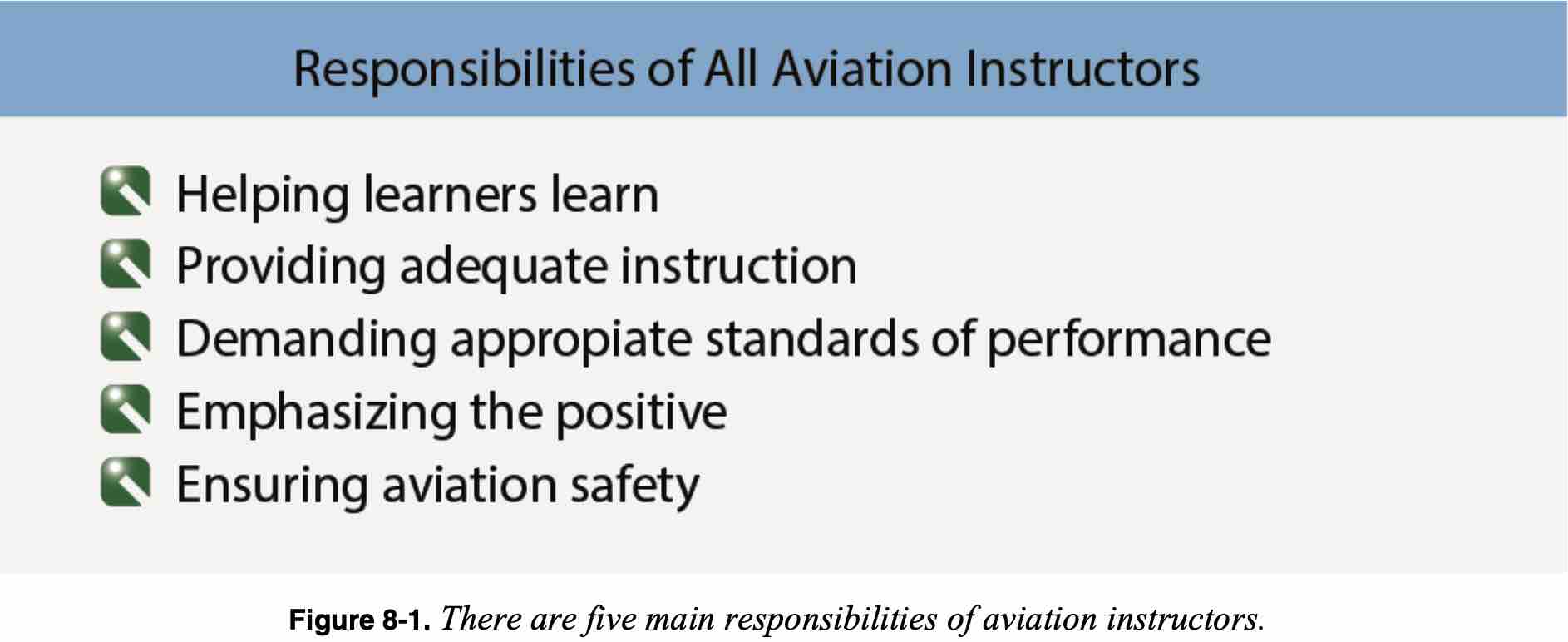
- Aviation instructor responsibilities (LISES)
- L - Helping students learn
- I - Providing adequate instruction
- S - Demand acceptable standards of performance
- E - Emphasize the positive
- S - Safety
Helping Learners Learn
- Enhance and maintain motivation
- Point out pleasurable features of aviation
- Be salesperson
- Keep learner aware of objective of each lesson
- Help overconfident learners - make them perform according to standards
- Raise standards and make them work hard to reduce overconfidence
- Another CFI responsibility is assessment
- Criterion referenced
- Keep learner informed of progress
Providing Adequate Instruction
- To tailor his or her teaching technique to the learner, the flight instructor analyzes the learner's personality, thinking, and ability.
- No two learners are alike, and a particular method of instruction may not be equally effective for all learners.
Training to Established Standards of Performance
- TBD
Emphasizing the Positive
- TBD
Minimizing Learner Frustrations
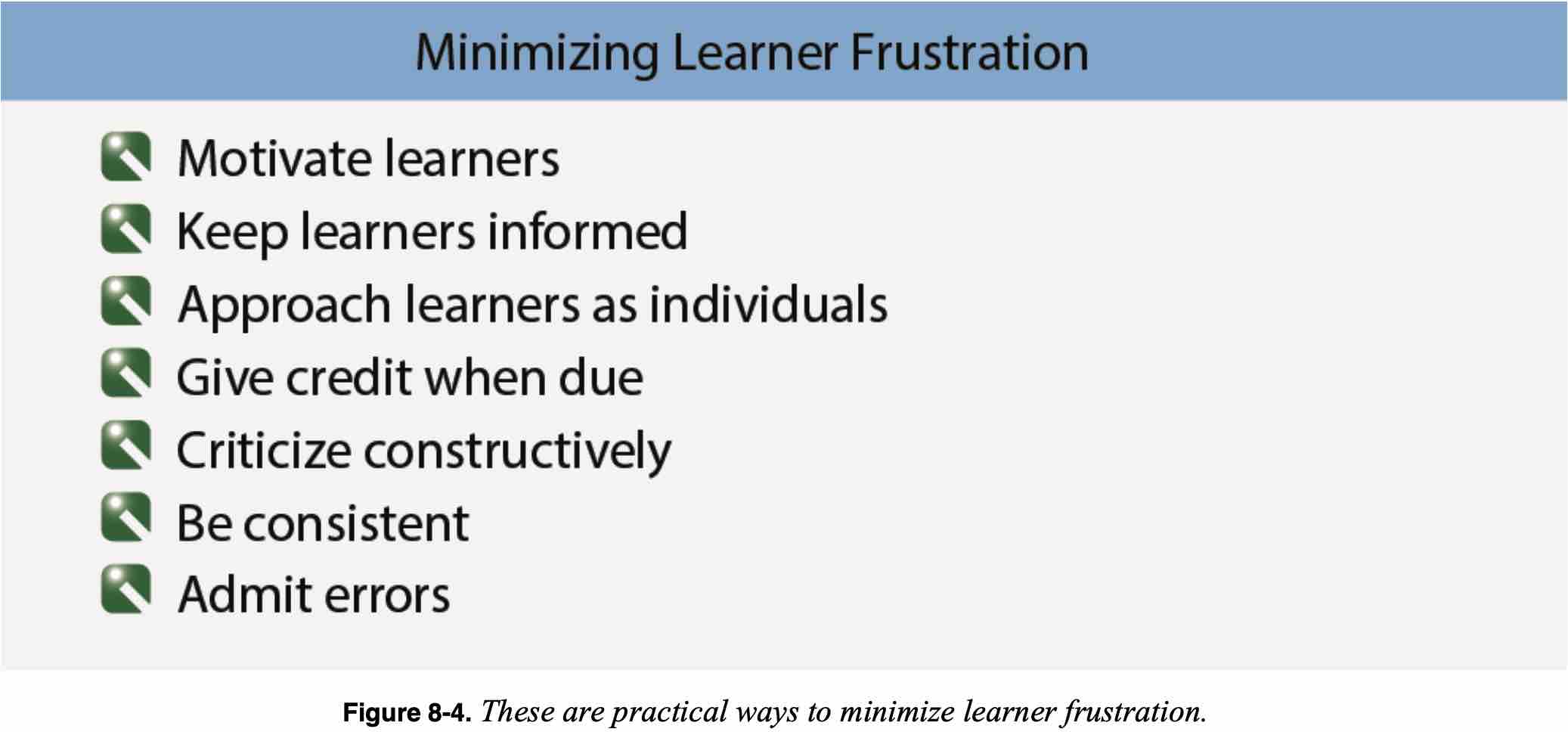
- Minimizing student frustrations (MIICCCA)
- M - Motivate students
- I - Keep students informed
- I - Approach students as individuals
- C - Give credit when due
- C - Criticize constructively
- C - Be consistent
- A - Admit errors
Flight Instructor Responsibilities
- Physiological obstacles for flight students
- Check that student is well rested, hydrated, well fed, use restroom
- During flight training, students may react to unfamiliar noises or vibrations, experience unfamiliar sensations due to G-force, or have an uncomfortable feeling in their stomach.
- It will be hot, bring water bottle
- A sick student does not learn well
- Before medical is issued
- Does student require glasses to see - make sure they have them for instruction
- Is student colorblind, for example
- Ensuring student ability
- Flight instructors ensure learner pilots develop the required skills and knowledge prior to solo flight.
- The learner pilot needs to show consistency in the required solo tasks.
Qualifications and Professionalism
- Characteristics
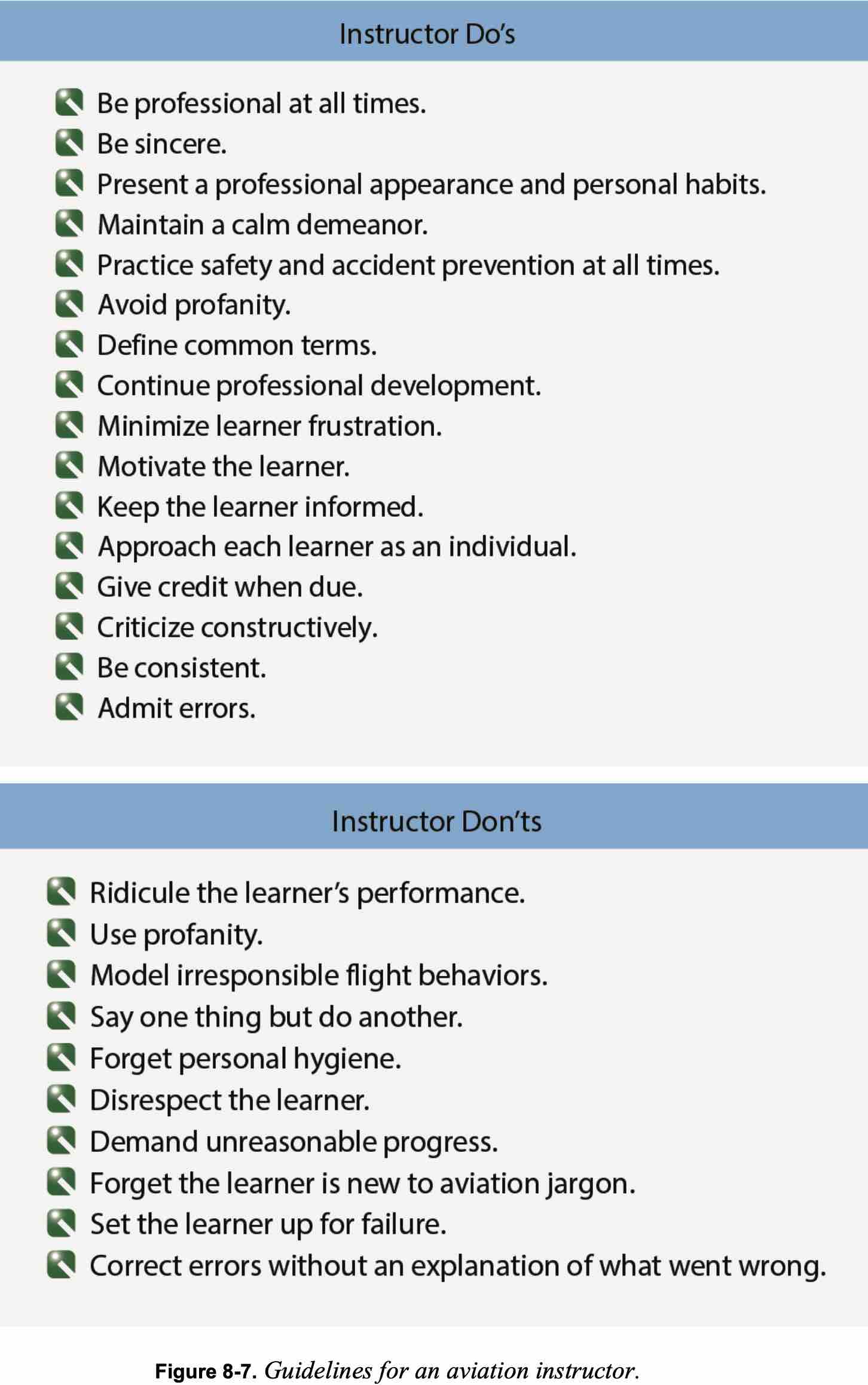
- Be true and sincere
- Acceptance of the learner
- Good appearance and good demeanor are important
- Demeanor
- Safety and accident prevention
- Behave ethically
- Exercise good judgement
- Take personal responsibility
- Self-improvement - Always look to learn more
Professional Development
- TBD
Ethics and Conduct
- TBD