Normal Approach and Landing
This page covers Task B. Normal Approach and Landing from the FAA-S-ACS-25 Flight Instructor for Airplane Category Airman Certification Standards.
Procedures for Normal and Crosswind Approach and Landing
- How to determine landing performance and limitations.
- Configuration, power, and trim.
- Obstructions and other hazards which should be considered.
- A stabilized approach at the recommended airspeed to the selected touchdown area.
- Course of action if selected touchdown area is going to be missed.
- Coordination of flight controls.
- A precise ground track.
- Wind shear and wake turbulence.
- Crosswind procedure.
- Timing, judgment, and control procedure during roundout and touchdown.
- Directional control after touchdown.
- Use of brakes (landplane).
- Use of checklist.
- After landing runway incursion procedures.
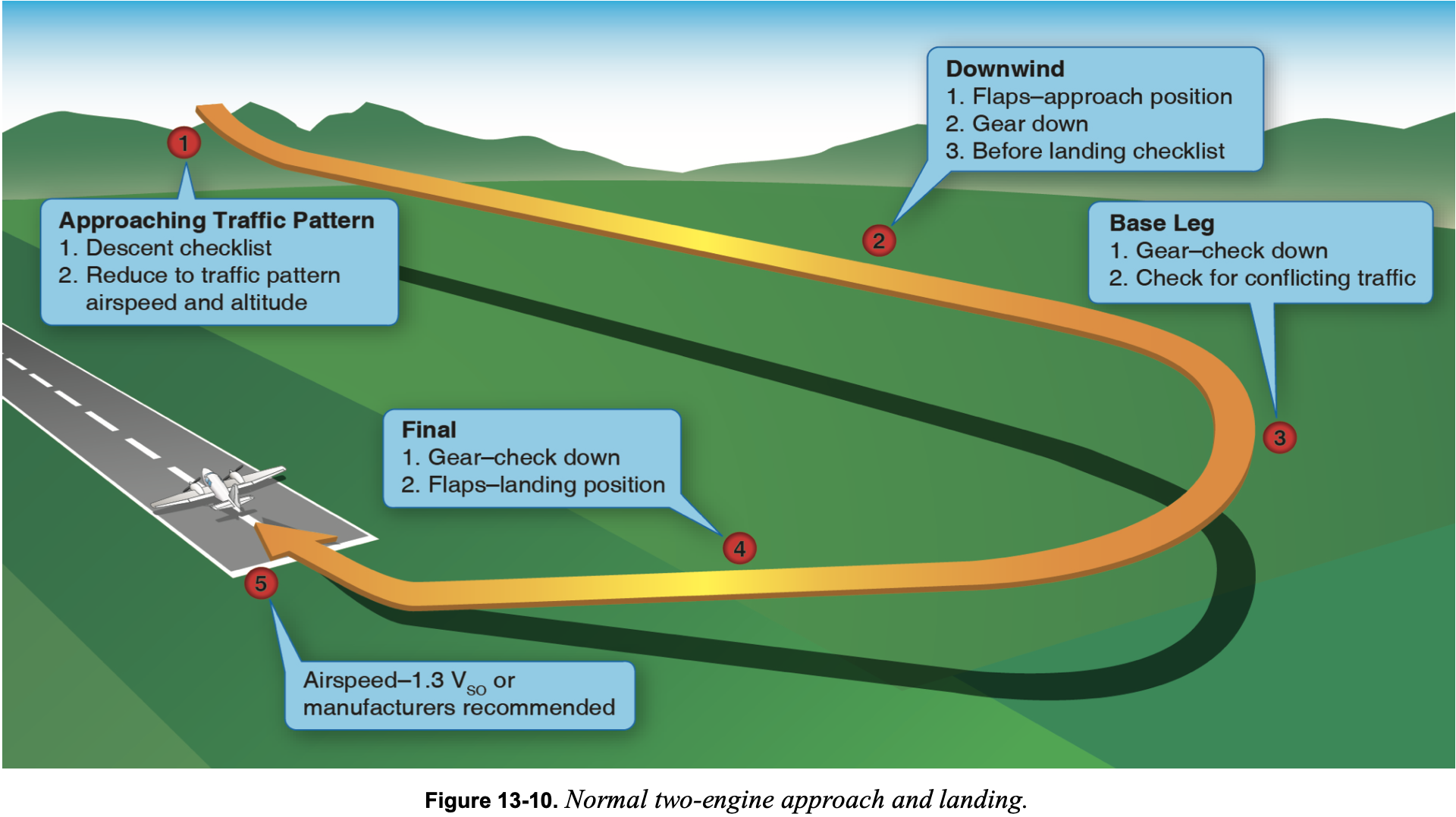
A stabilized approach, including energy management concepts
- TBD
Effects of Atmospheric Conditions on Approach and Landing Performance
- TBD
Wind Correction Techniques on Approach and Landing
- TBD
Common Errors Related to Normal and Crosswind Approach and Landing
- Improper use of landing performance data and limitations.
- Failure to establish approach and landing configuration at appropriate time or in proper sequence.
- Failure to establish and maintain a stabilized approach.
- Inappropriate removal of hand from throttles.
- Improper procedure during roundout and touchdown.
- Poor directional control after touchdown.
- Improper use of brakes (landplane).
- Failure to ensure receipt and acknowledgement of landing clearance.
- Failure to review airport diagram for runway exit situational awareness to avoid a runway incursion after landing.
- Additional common errors are listed in FAA-H-8083-3C Airplane Flying Handbook Chapter 9: Approaches and Landings on page 9-10 and 9-20.
References
- FAA-H-8083-3C Airplane Flying Handbook
- Chapter 9: Approaches and Landings
- Page 9-2
- Page 9-15
- Chapter 13: Transition to Multiengine Airplanes
- Page 13-20
- Chapter 9: Approaches and Landings
Land and hold short operations (LAHSO)
Land and hold short operations (LAHSO)
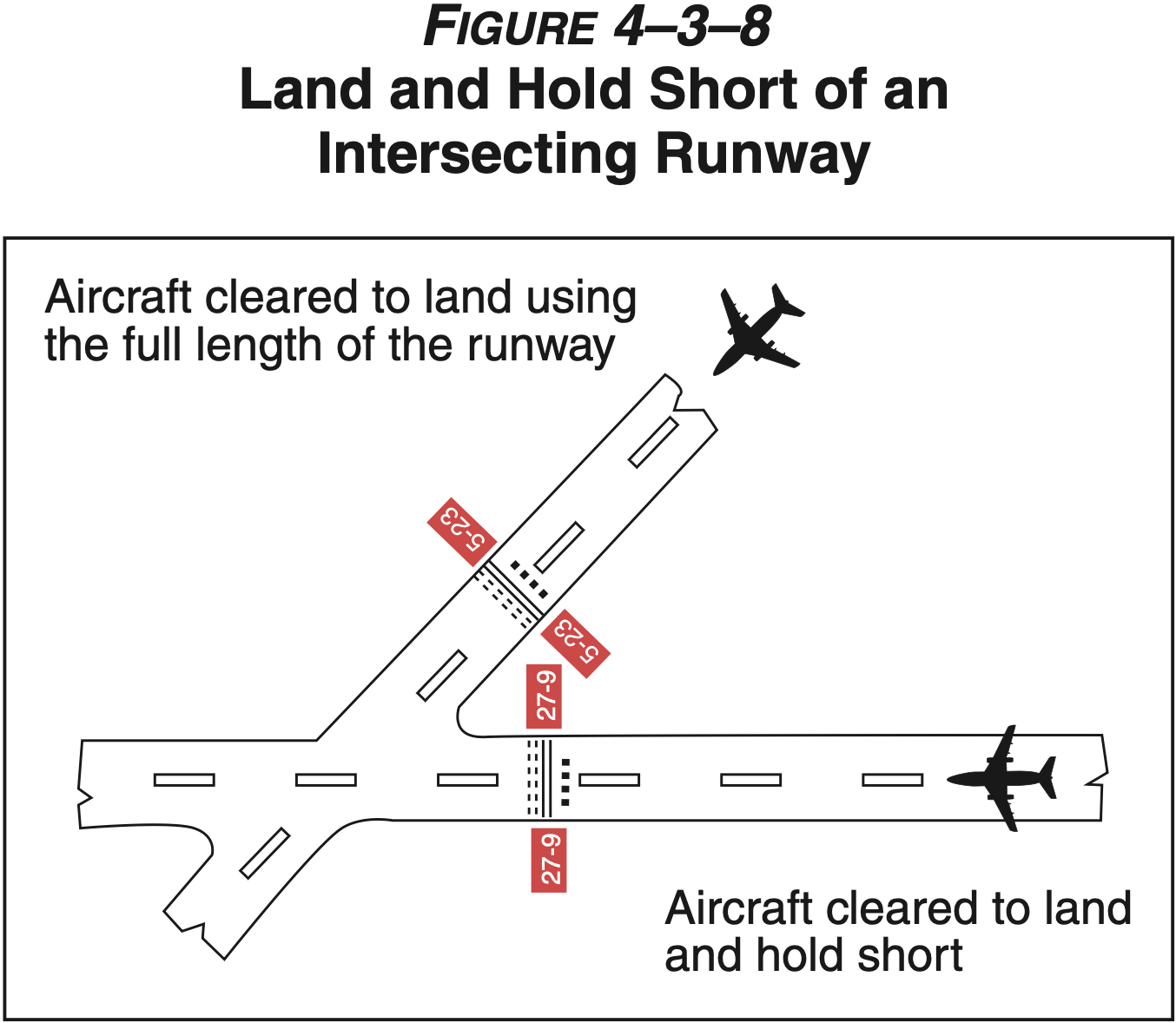
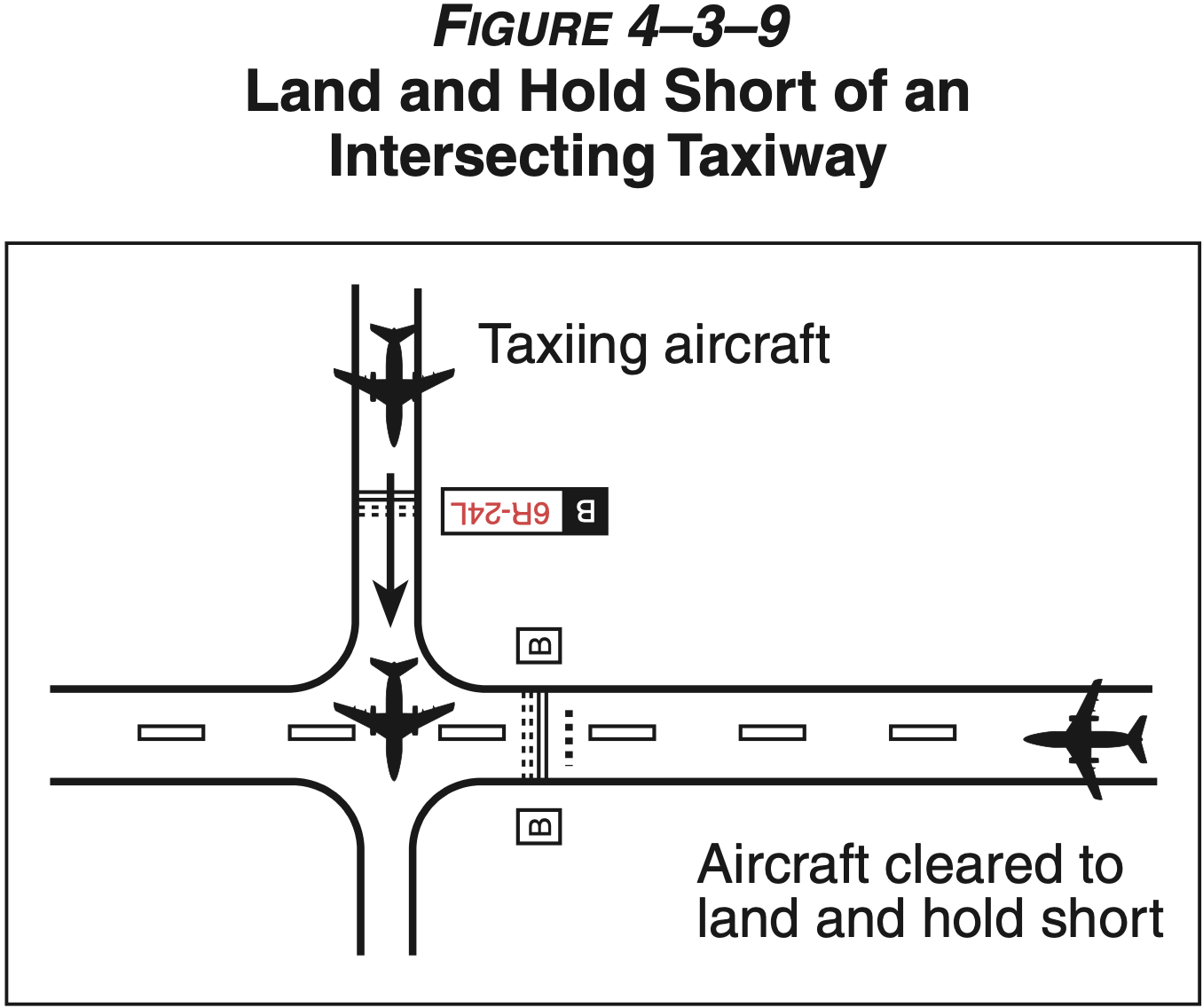
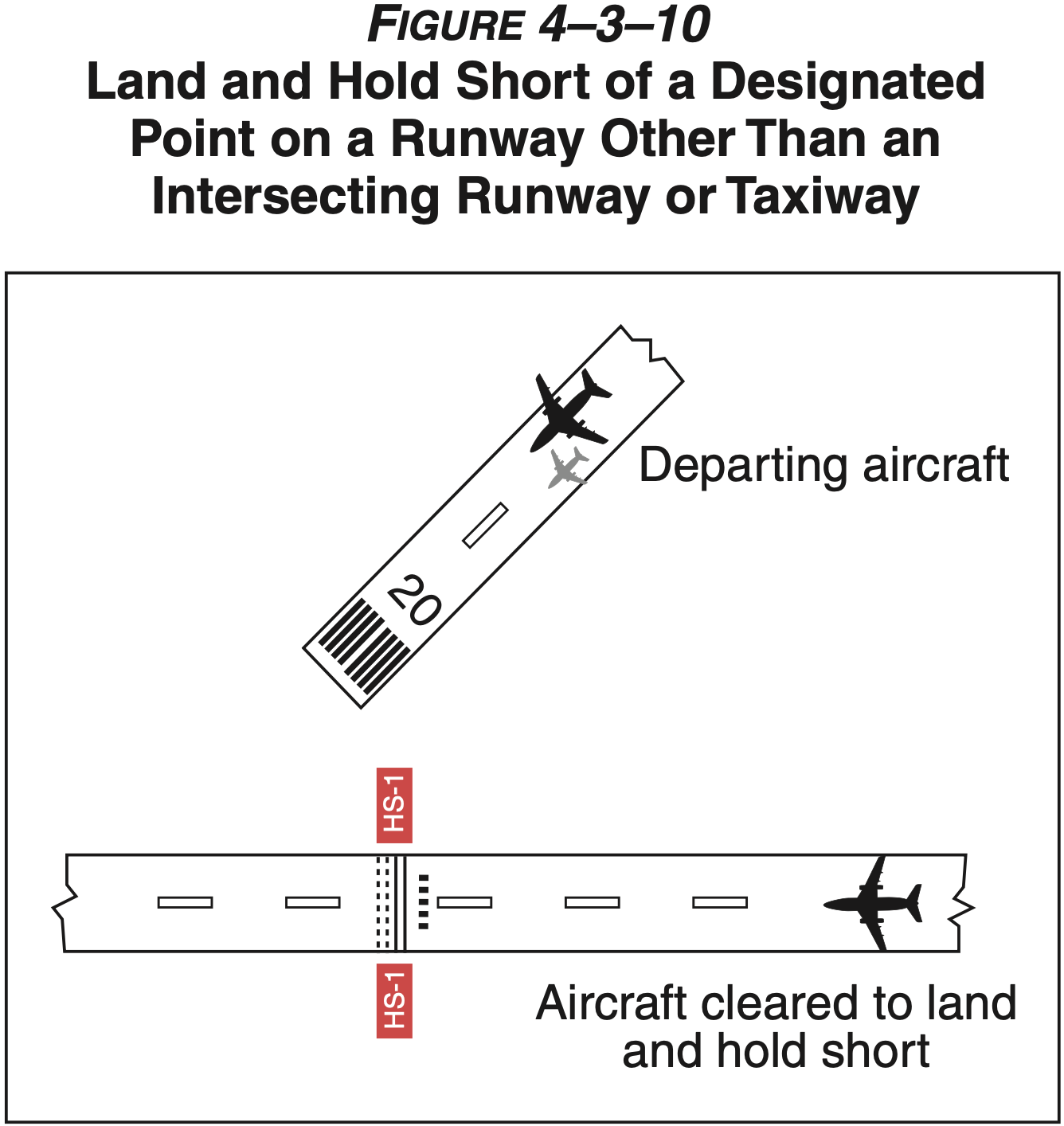
These operations include landing and holding short of an intersecting runway, an intersecting taxiway, or some other designated point on a runway other than an intersecting runway or taxiway.
- See AIM 4-3-11 Pilot Responsibilities When Conducting Land and Hold Short Operations (LAHSO)
- Also FAA Safety - LAHSO - Land and Hold Short Operations
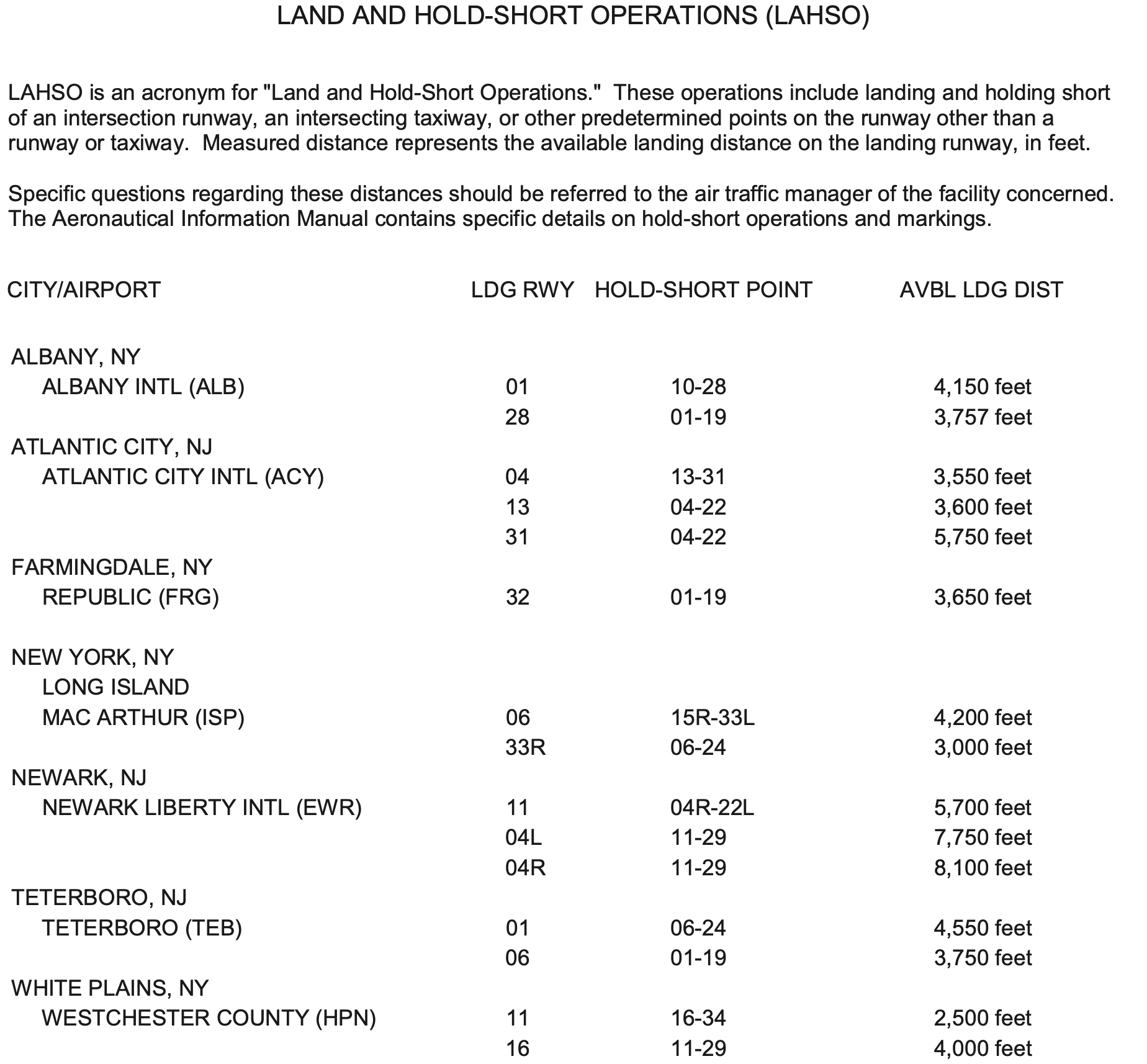
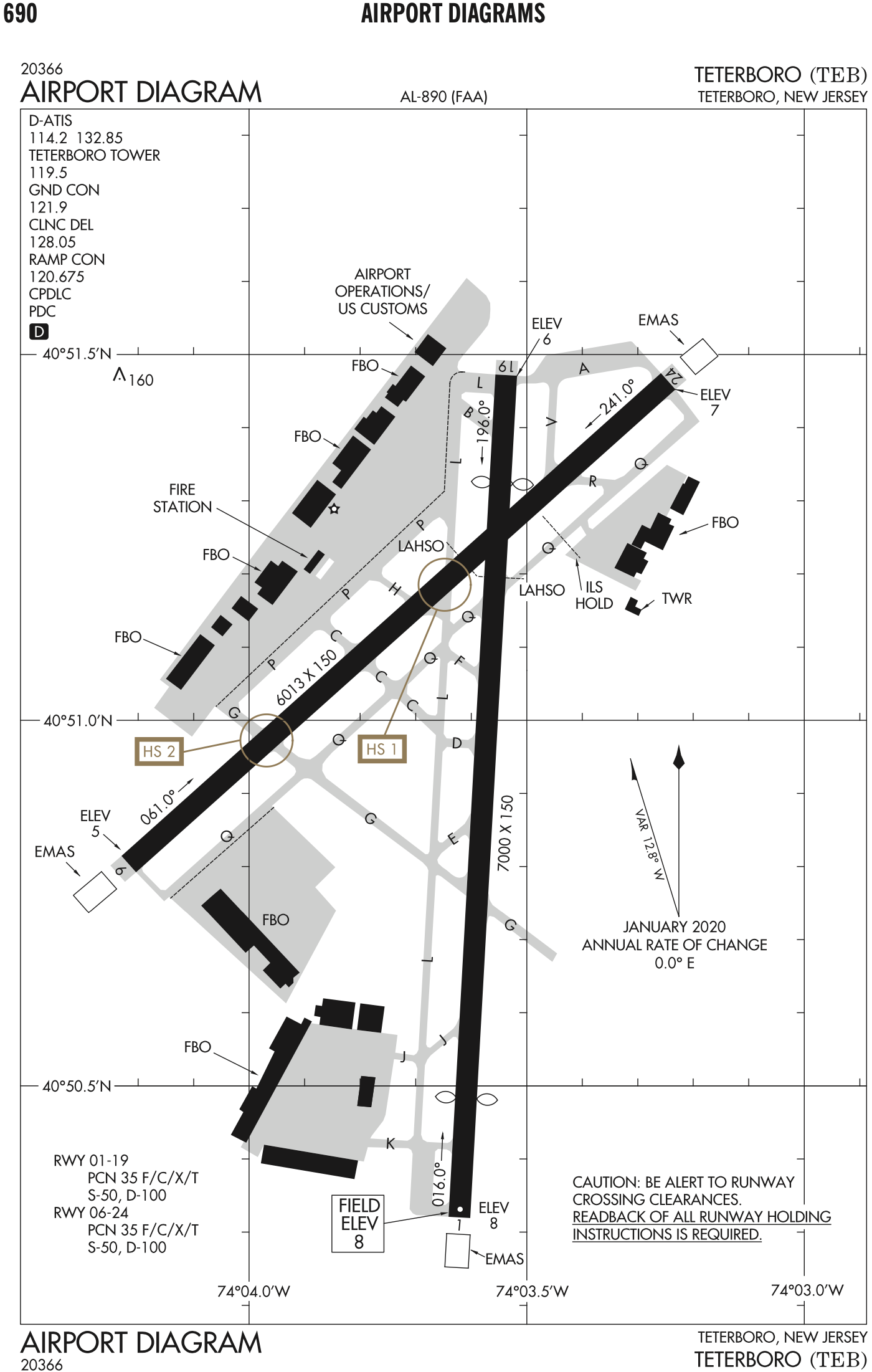
- Available Landing Distance (ALD), hold short point, and more information can be found in the Digital Terminal Procedures Publication (d-TPP)/Airport Diagrams.
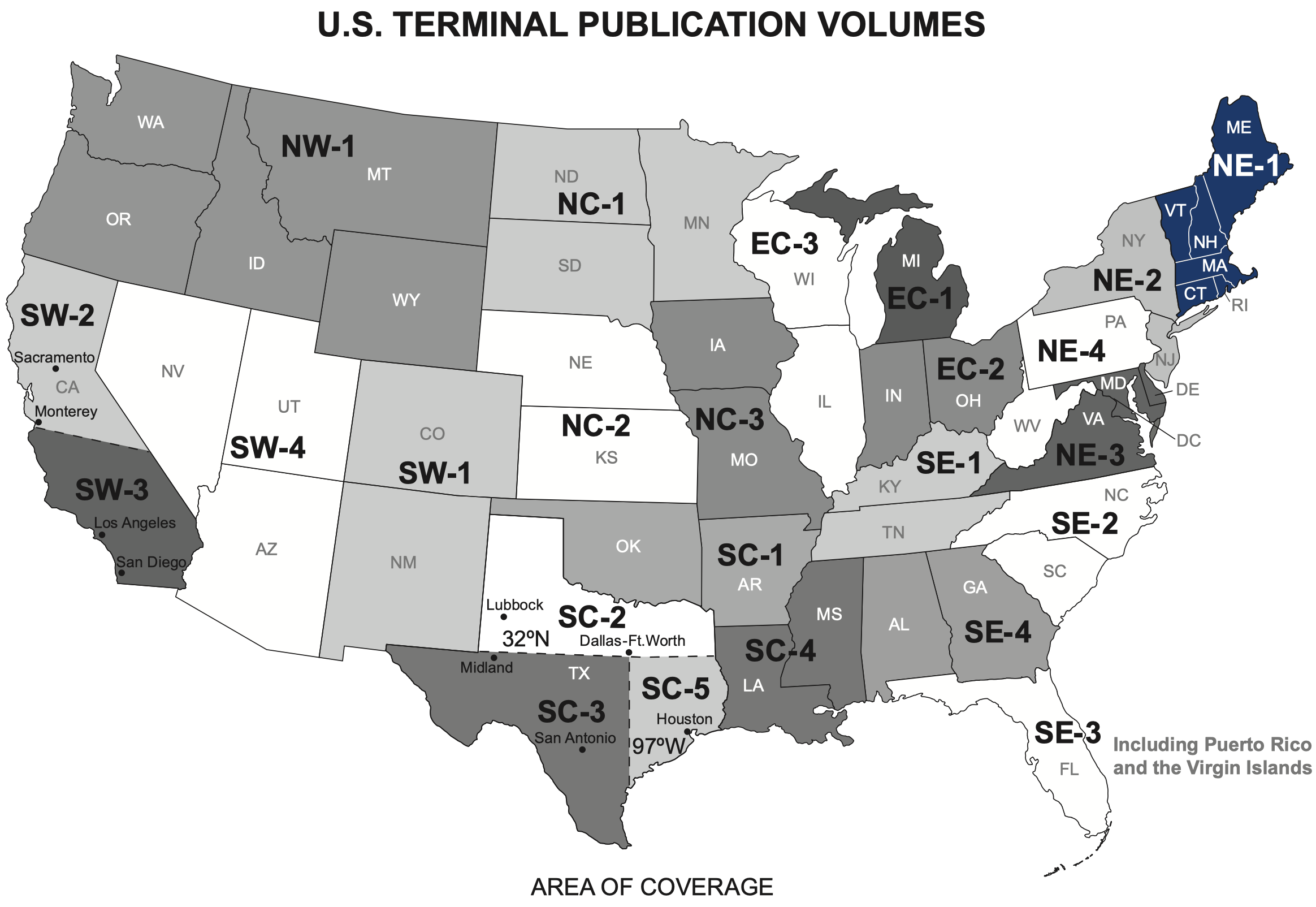
- The states covered by each region are shown below.
- ATC may offer a LAHSO clearance to the pilot of an arriving aircraft
- e.g. "Cessna N12345 cleared to land runway 12, hold short of runway 34, 5600 feet available."
- As PIC you are not obliged to accept the LAHSO clearance
- Pilot can request Available Landing Distance (ALD)
- If there are any doubts, exercise good ADM and do not accept LAHSO clearance
- If clearance is accepted, need to adhere, or receive a new clearance
- In the event of a rejected landing, notify ATC as soon as possible
- Do the following to ensure that LAHSO operations are conducted properly
- Know landing distance available
- Be advised by ATC as to why LAHSO are being conducted
- Advise ATC if you cannot comply with LAHSO
- "unable"
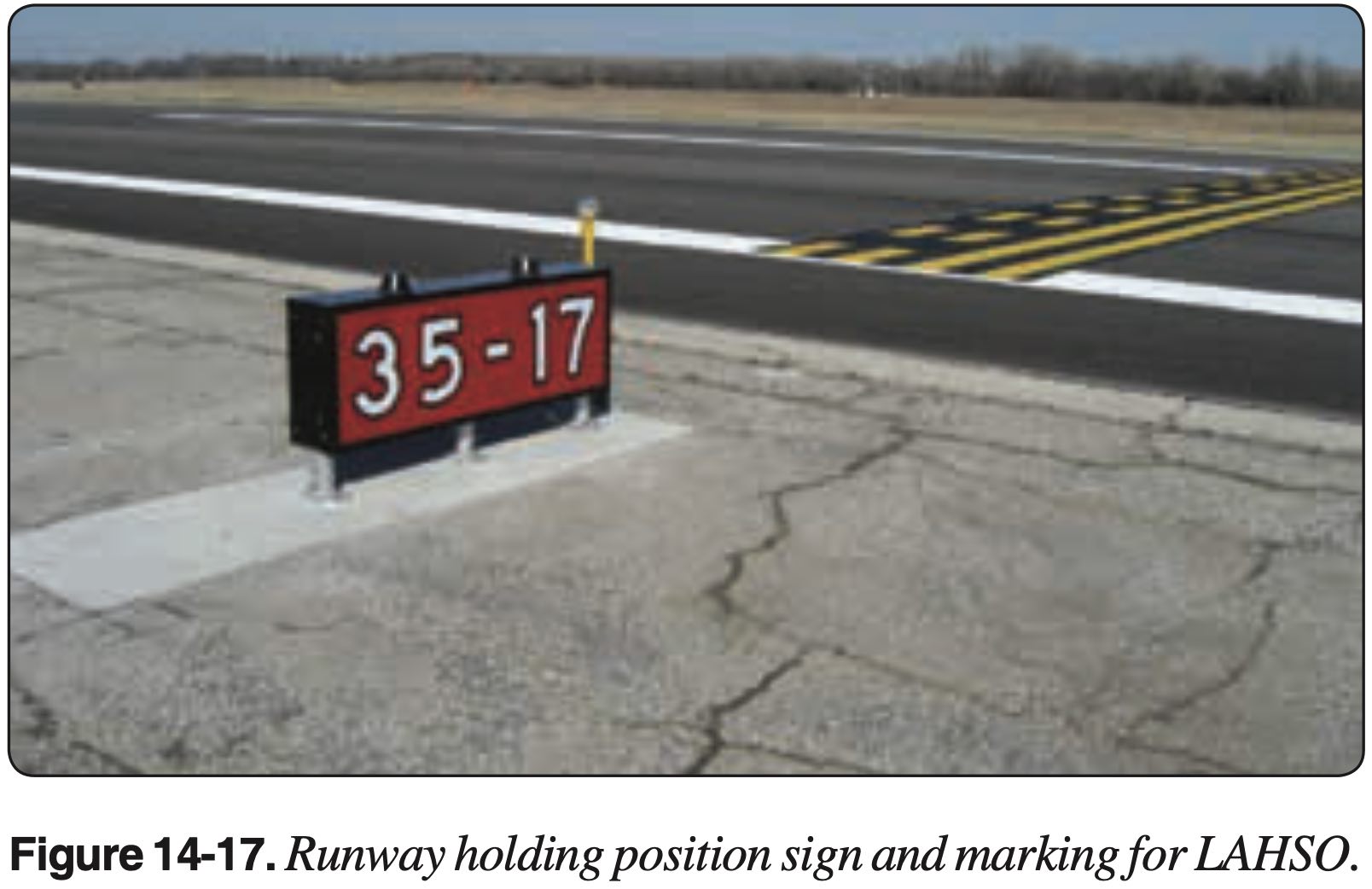
- Know what signs and markings are at the LAHSO point
- LAHSO are not authorized for student pilots who are performing a solo flight
- At many airports air carrier aircraft are not authorized to participate in LAHSO if the other aircraft is a general aviation aircraft
- Generally, LAHSO are not authorized at night
- LAHSO are not authorized on wet runways or with tailwind
- However, turbulence might be a weather factor leading to a higher approach speed than planned, or the lack of a headwind
- From AIM above: A LAHSO clearance does not preclude a rejected landing.
- If you have to go around after accepting LAHSO clearance, maintain separation from vehicles and aircraft and promptly notify tower.
- Student pilots
- AIM says student pilots should not participate in the LAHSO program
- Order JO 7110.118B Land and Hold Short Operations (LAHSO) to ATC says when student pilots identify themselves as such, they must not be issued a LAHSO clearance
- Interestingly the previous version 7110.118 Land and Hold Short Operations says "solo student pilots will not conduct LAHSO" and student pilots of course cannot carry passengers.
- But the above I think technically doesn't preclude student pilot from accepting LAHSO, but the practical answer is that they should never accept.
- May encounter runway hold markings on a runway even when not conducting LAHSO operations, as sometimes will be given clearance to taxi on a runway (and hold short of intersecting runway)