Circling Approach
This page covers Task D. Circling Approach from the FAA-S-ACS-8C Instrument Rating Airplane Airman Certification Standards.
Objective
To determine the applicant exhibits satisfactory knowledge, risk management, and skills associated with performing a circling approach procedure.
Definition
- Approaches whose final approach segment is more than 30 degrees different from the landing runway alignment are designated as circling approaches.
- Circling approaches may also be designated when the descent gradient is greater than 400 ft/NM from the FAF to the threshold crossing height (TCH).
- 400 ft/nm approximates a 3.77° descent angle
- Or there is no runway clearly identified on the field.
Examples
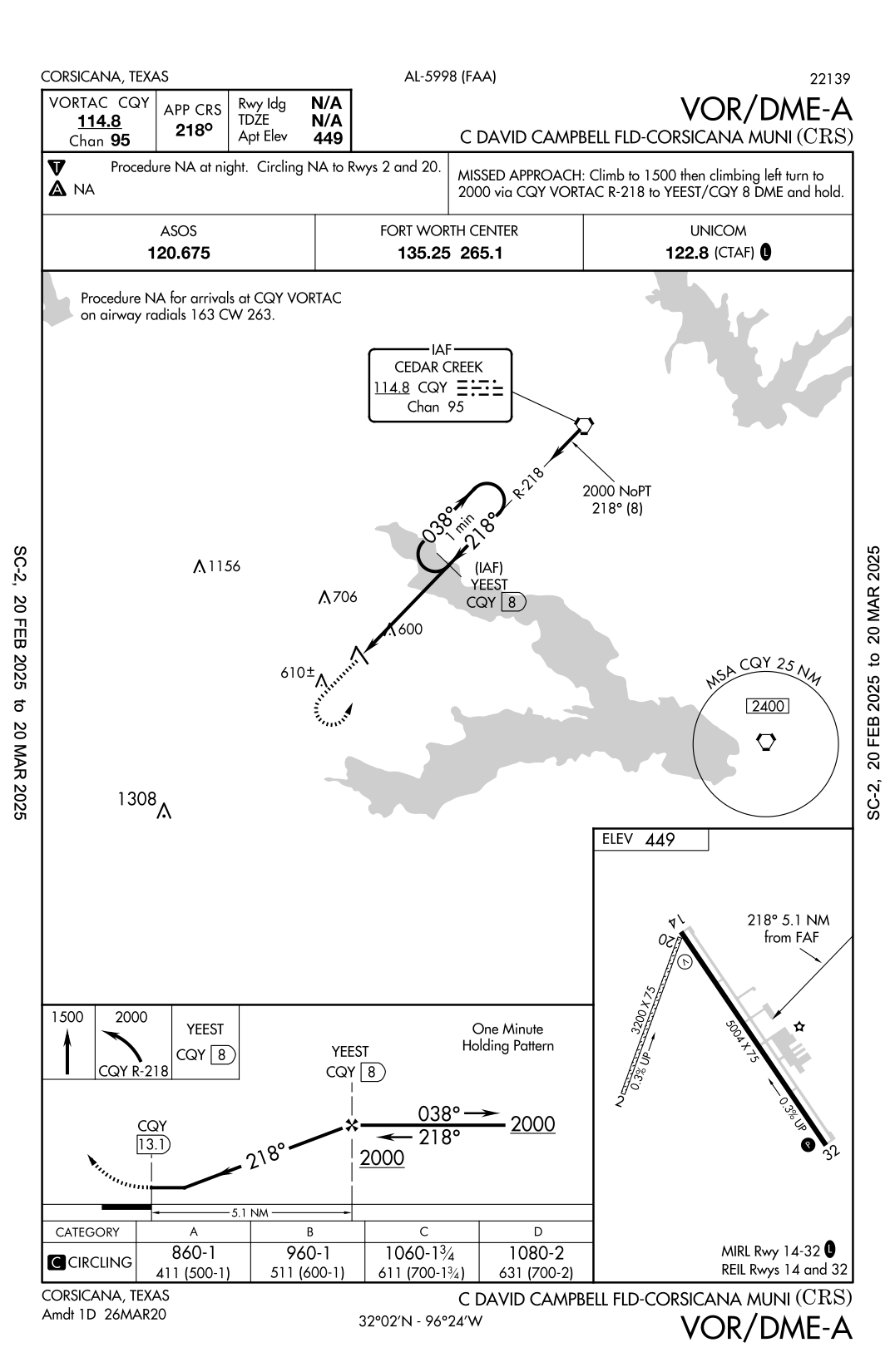
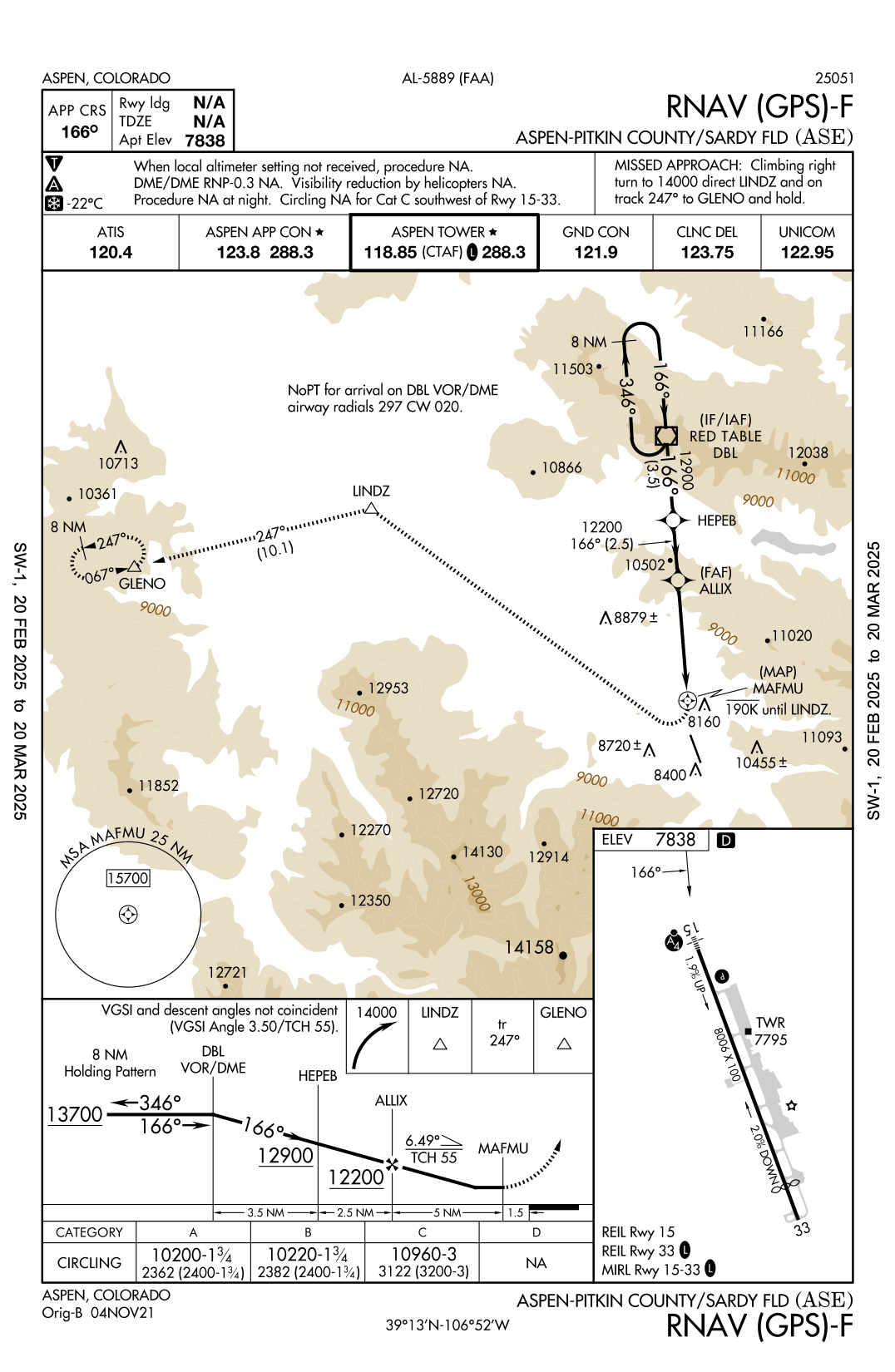
Overview
Unless a specific landing runway is specified in the approach clearance, the pilot may land on any runway
See FAA-H-8083-16B Instrument Procedures Handbook Chapter 4: Approaches page 4-11 for the criteria above.
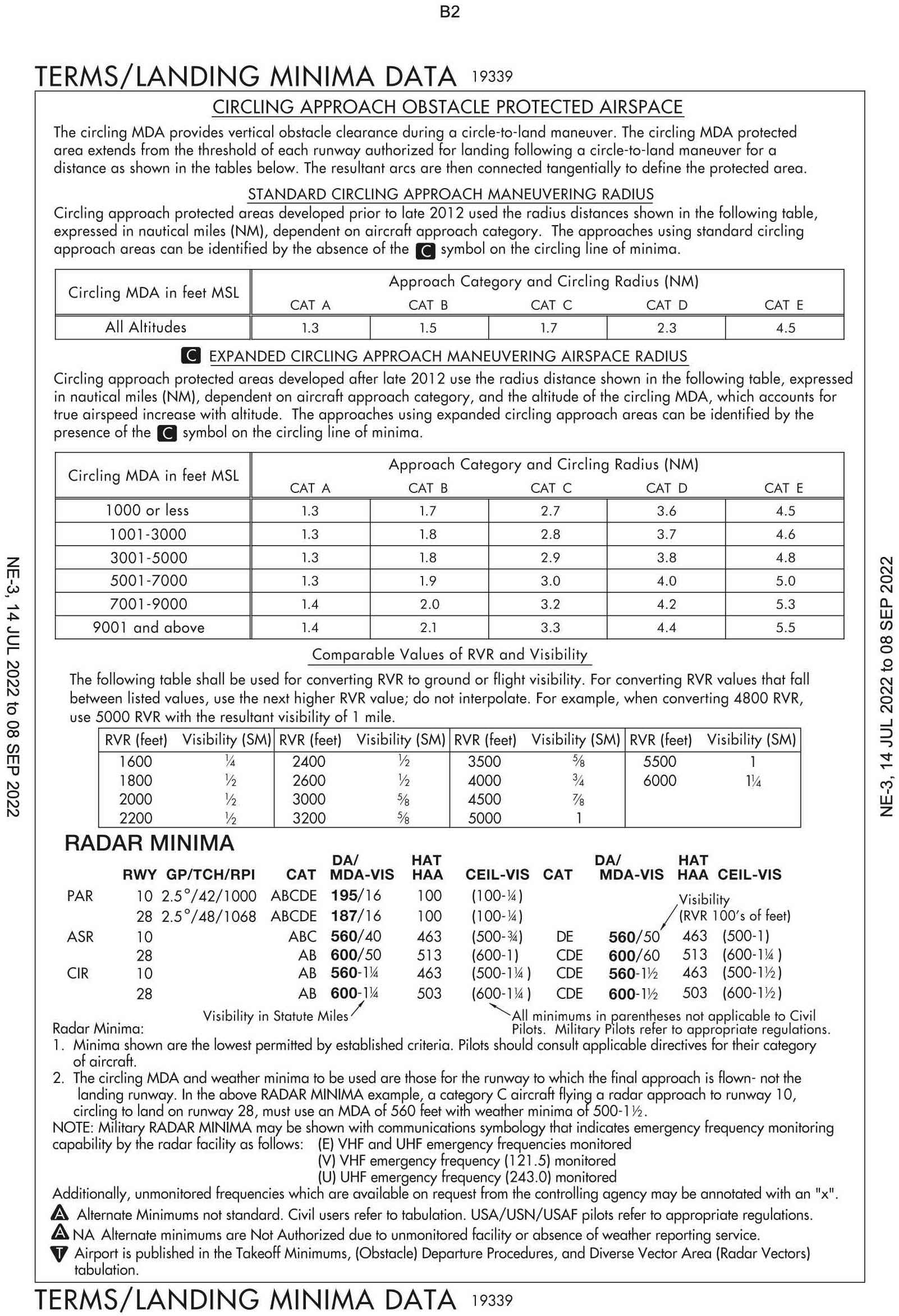
Circling minima guarantee 300 foot obstacle clearance with the circling area
If you re-enter clouds you must go missed
No more than 30° bank
Circling approach radii are from any paved runway on airport
From AIM 5-4-20(f)
Pilots should remain at or above the circling altitude until the aircraft is continuously in a position from which a descent to a landing on the intended runway can be made at a normal rate of descent using normal maneuvers.
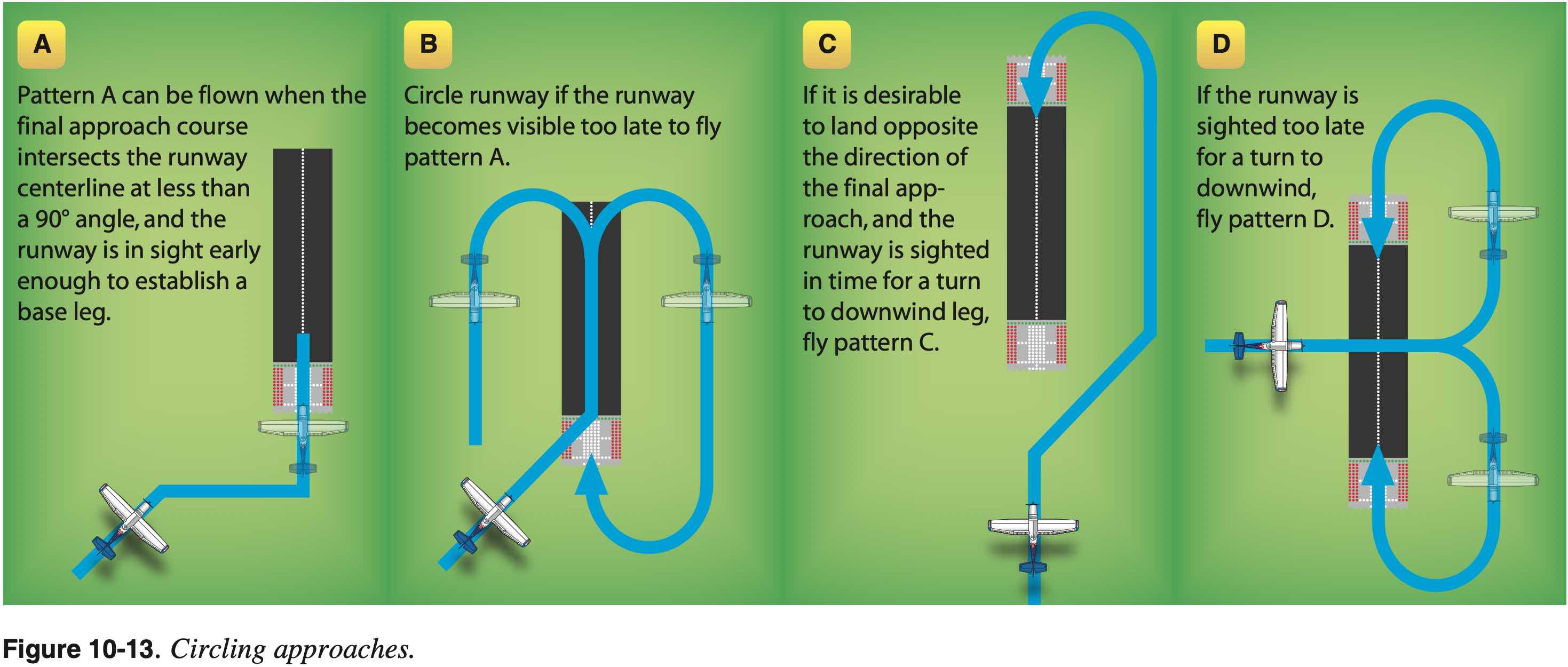
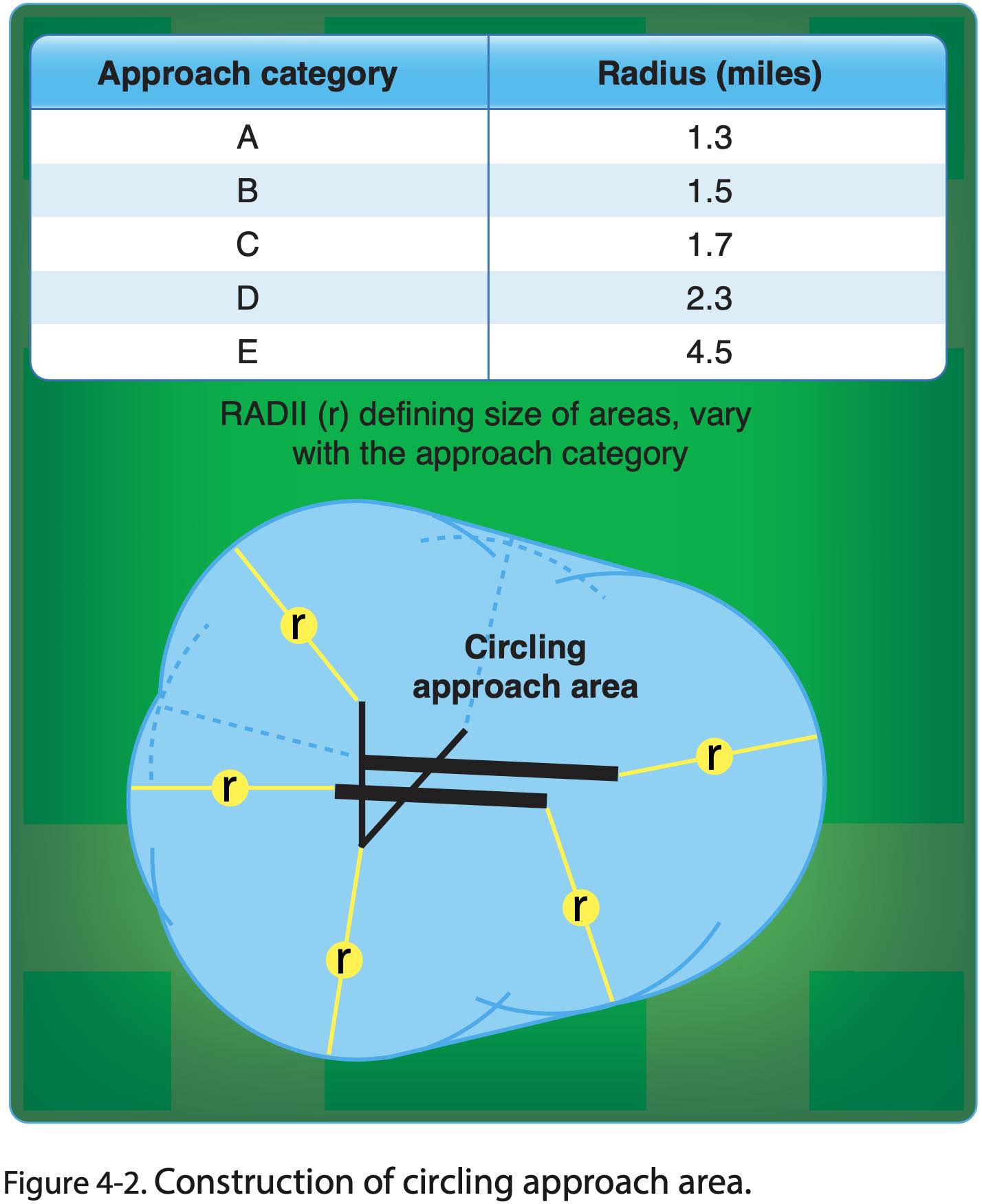
Direction of Circling
The takeaway of this issue seems to be that FAA lawyers maintain that 14 CFR § 91.126, that requires all turns be made to the left, applies to pilots flying circling approaches.
However an increasing amount of guidance (e.g. via FAA-AC-90-66C) seems to imply that it is only when circling in VMC that this rule applies
It is this latter interpretation that makes sense - when practicing instrument approaches in VMC, pilots should circle in the direction of the VFR traffic pattern, as there very well may be such traffic present.
Similarly, with regards to safely when circling in IMC, it is the instrument approach procedure that should state whether circling in any particular directions are unsafe and should prohibit them, otherwise it should be assumed that it is safe.
It seems the primary reason for this ambiguity is that 14 CFR § 91.126, which governs class G airspace, is referenced by 14 CFR § 91.127, which governs class E airspace.
In Class G airspace, there is more ambiguity around expectations of whether VFR traffic may exist or not, given the weather minimums are 1 sm visibility and clear of clouds.
FAA-AC-90-66C paragraph 9.7 states:
If the Chart Supplement lists a right-hand traffic pattern at a non-towered airport, pilots conducting practice instrument approaches in visual meteorological conditions (VMC) should circle to the right to enter the traffic pattern.
Paragraph 9.2 of FAA-AC-90-66C also states the following, which provides support for a circling maneuver not being the same as a VFR traffic pattern, and therfore not beholden to the same rules that apply to VFR traffic patterns.
Arriving aircraft should enter the airport's traffic pattern at traffic pattern altitude
Furthermore paragraph 8.2.1.1 of FAA-AC-90-66C states the following, which, if the maneuvering required as part of a circling approach is considered "outside the traffic pattern" then 14 CFR § 91.126 does not apply.
An aircraft outside the traffic pattern would not be bound by § 91.126(b)
Paragraph 9.9 of FAA-AC-90-66C states:
Use of standard traffic patterns (left turns) for all aircraft and CTAF procedures by radio-equipped aircraft are required at all airports without operating control towers unless indicated otherwise by visual markings, light gun signals, airport publications, or published approach procedure. A pilot should understand that other traffic patterns (right turns) may already be in common use at some airports or that special circumstances or conditions exist that may prevent use of the standard traffic pattern.
Do IMC conditions or other visibility restrictions (e.g. flying from the right seat) on a circling approach count as conditions "that may prevent the use of the standard traffic pattern"?
Recall the aerobatic box to the west side of KHWY when active switched the pattern to right traffic for 33, also there were remarks on the weather about helicopters flying right hand patterns. The latter seems to be to adhere to 14 CFR § 91.126(b)(2) but switching of the traffic pattern due to aerobatic activity over remarks on the AWOS is less clear.
Paragraph 9.11.3 of FAA-AC-90-66C states:
Pilots conducting instrument approaches in VMC should be particularly alert for other aircraft in the pattern so as to avoid interrupting the flow of traffic and should bear in mind they do not have priority over other VFR traffic. Pilots are reminded that circling approaches must comply with § 91.126(b) unless the approach procedure explicitly states otherwise. Remember, if the Chart Supplement lists right-hand traffic at a non-towered airport, pilots conducting practice instrument approaches in VMC should circle to the right to enter the traffic pattern.
This language, to specify "in VMC" was added in paragraph 9.6 of FAA-AC-90-66B-CHG-1
In addition, the language "unless the approach procedure explicitly states otherwise" seems to not be how Flight Standards responded to the example of the RNAV (GPS) RWY 12 at KTCY in IFR Magazine - Circling Revisited, rather it was implicitly stated that circling to the right was acceptable only because circling to the left was not authorized.
LDA Approaches
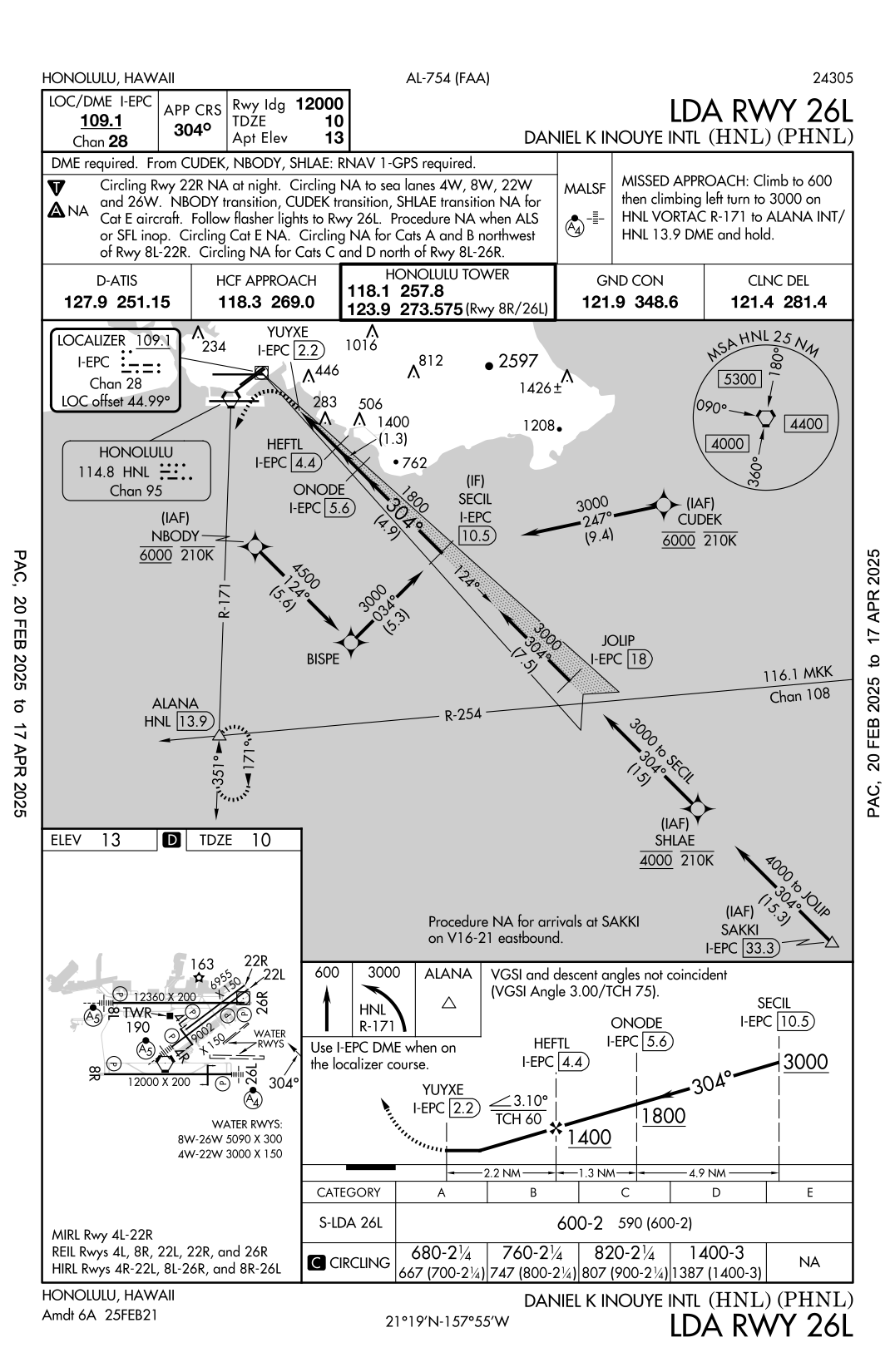
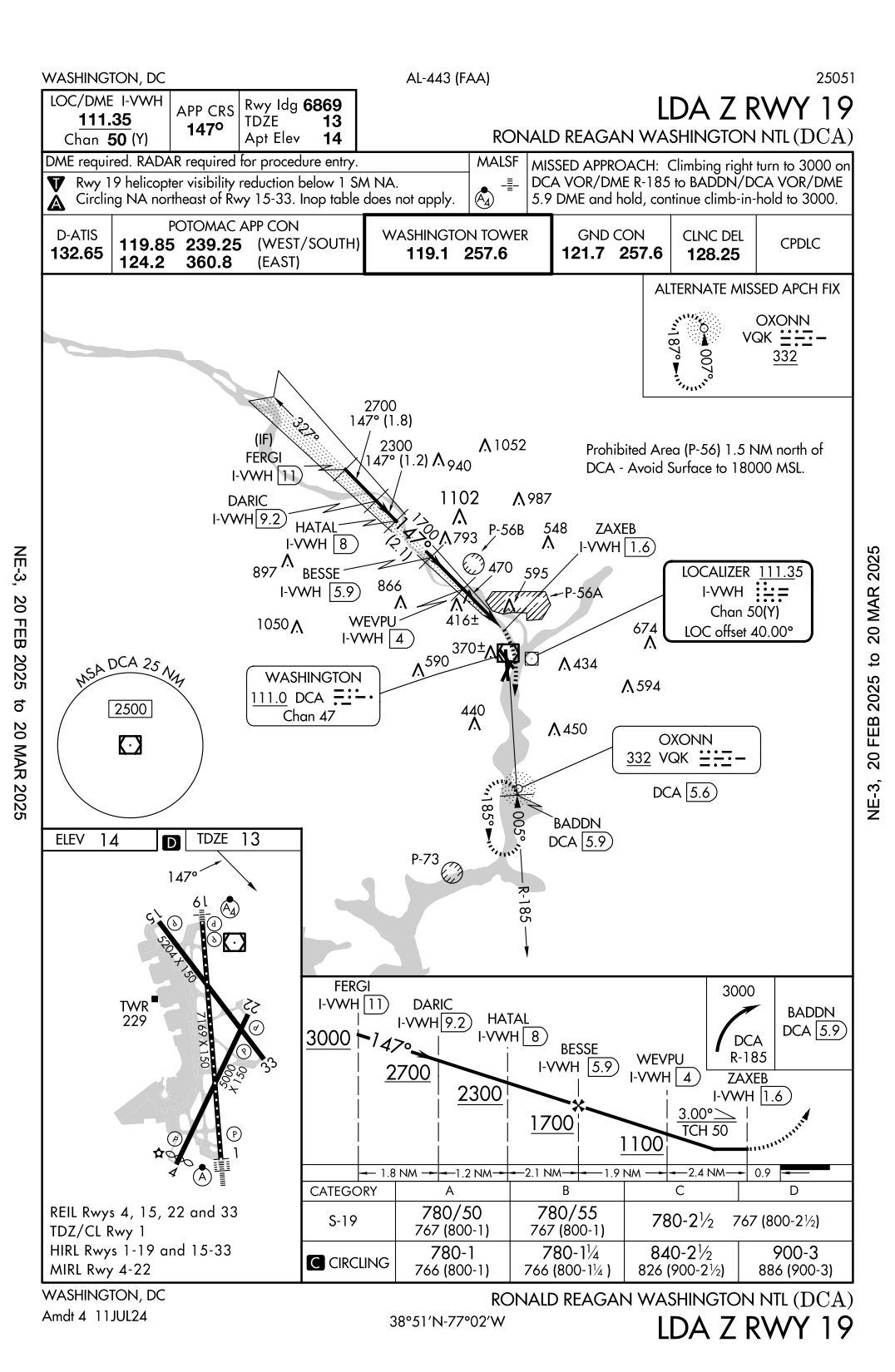
- There are some exceptions to this with LDA (and perhaps other) approaches
PHNL LDA RWY 26LKDCA LDA Y RWY 19KDCA LDA Z RWY 19
- The reason is probably described in FAA Order 8260.3G
- The majority of LDA approaches are designated circling approaches consistent with the definition above, these are just some notable exceptions to that rule.
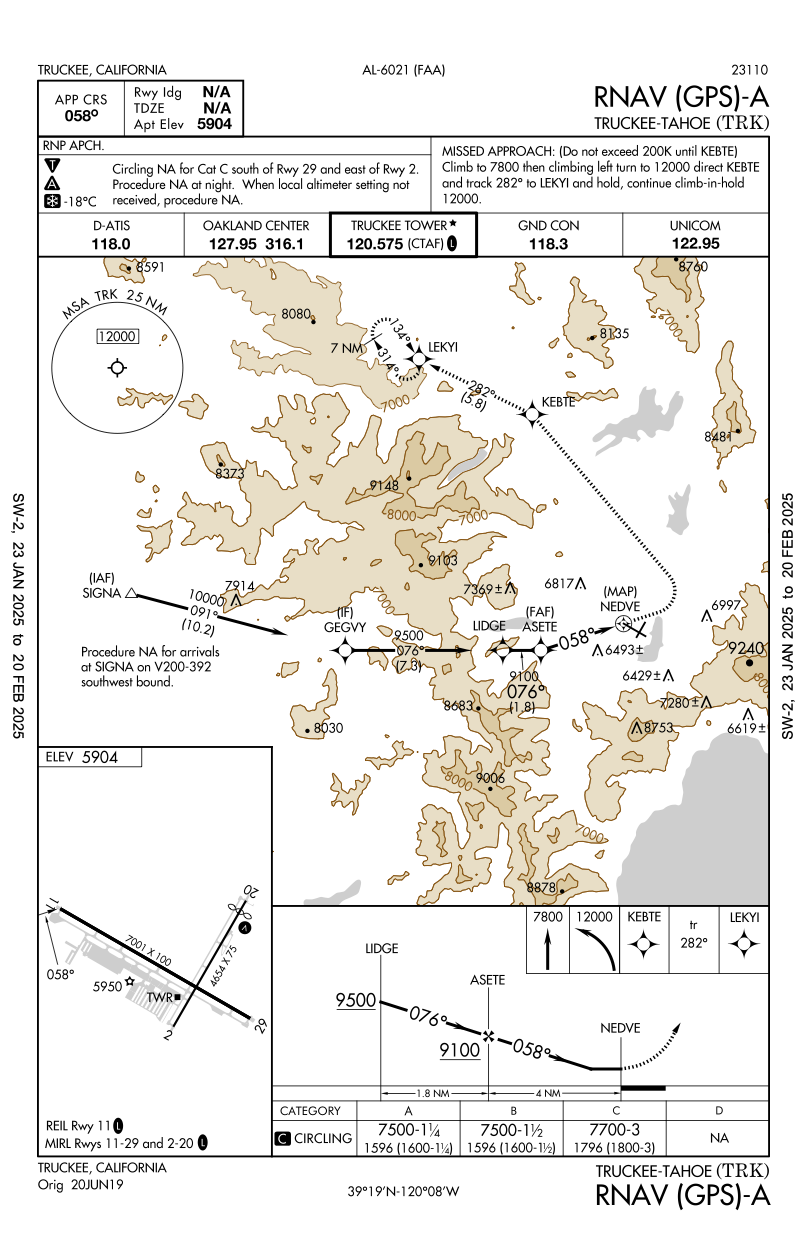
GPS Circling Approach
Completion Standards
- TBD