Holding Procedures
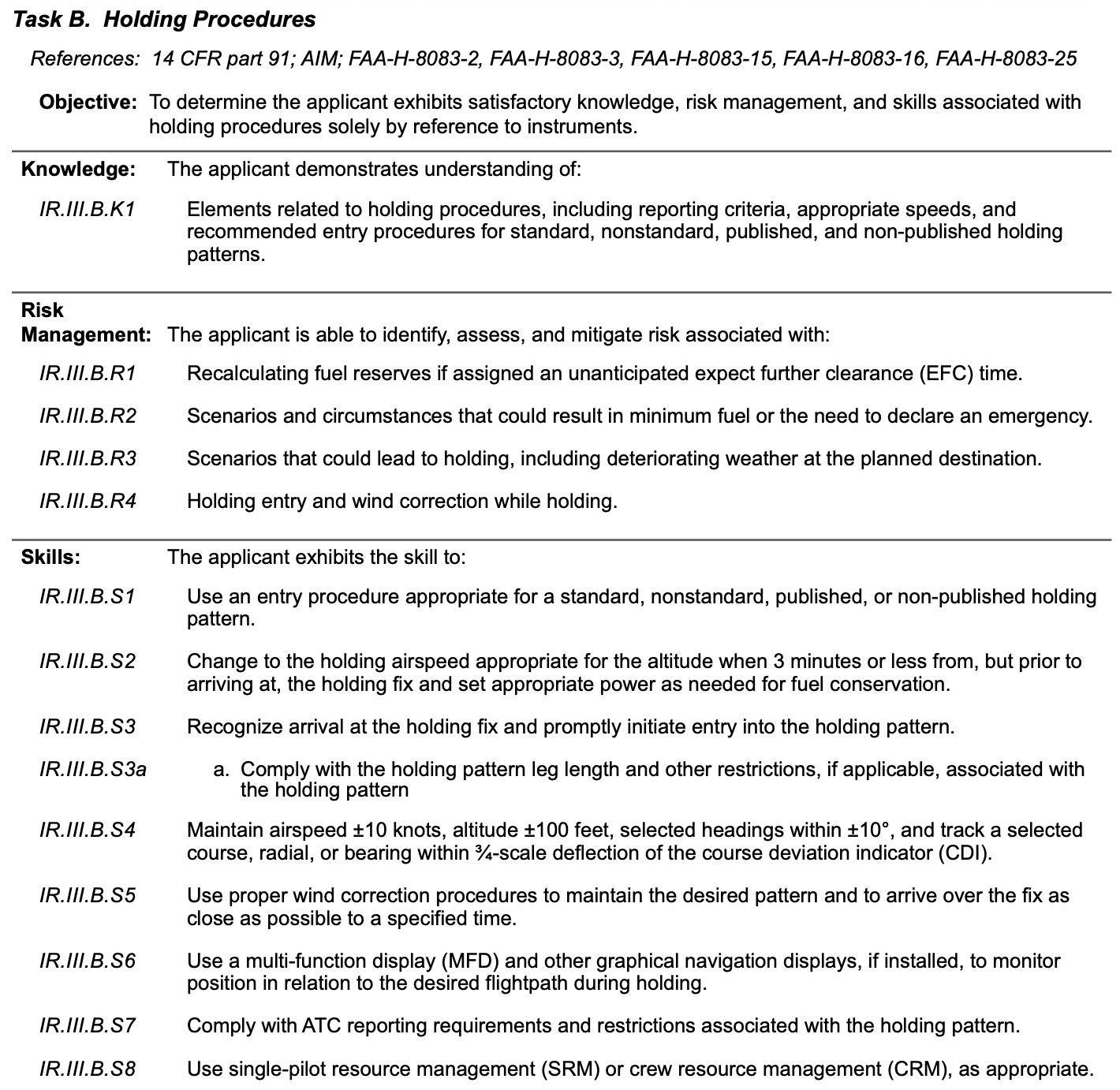
This page covers Task B. Holding Procedures from the FAA-S-8081-9E Flight Instructor Instrument Practical Test Standards.
Holding Overview
Hold Procedure
A predetermined maneuver which keeps aircraft within a specified airspace while awaiting further clearance from air traffic control.
- See FAA Pilot/Controller Glossary: Hold Procedure
- The following are some of the reasons for holds
- Await further clearance
- Upon reaching the clearance limit (C in CRAFT) before further clearance has been received
- For example to allow separation with other traffic
- Reverse course on an approach
- Buy time to get configured for an approach
- Lose altitude as needed before beginning an approach
- Wait for hazardous weather or low ceilings or bad visibility to pass
- Allow traffic congestion to clear
- Wait for airport or runway closures to clear up
- Equipment outages
- Providing more time when handling abnormal situations and emergencies
- As part of a missed approach procedure as next steps are determined
- Await further clearance
Structure of a Hold
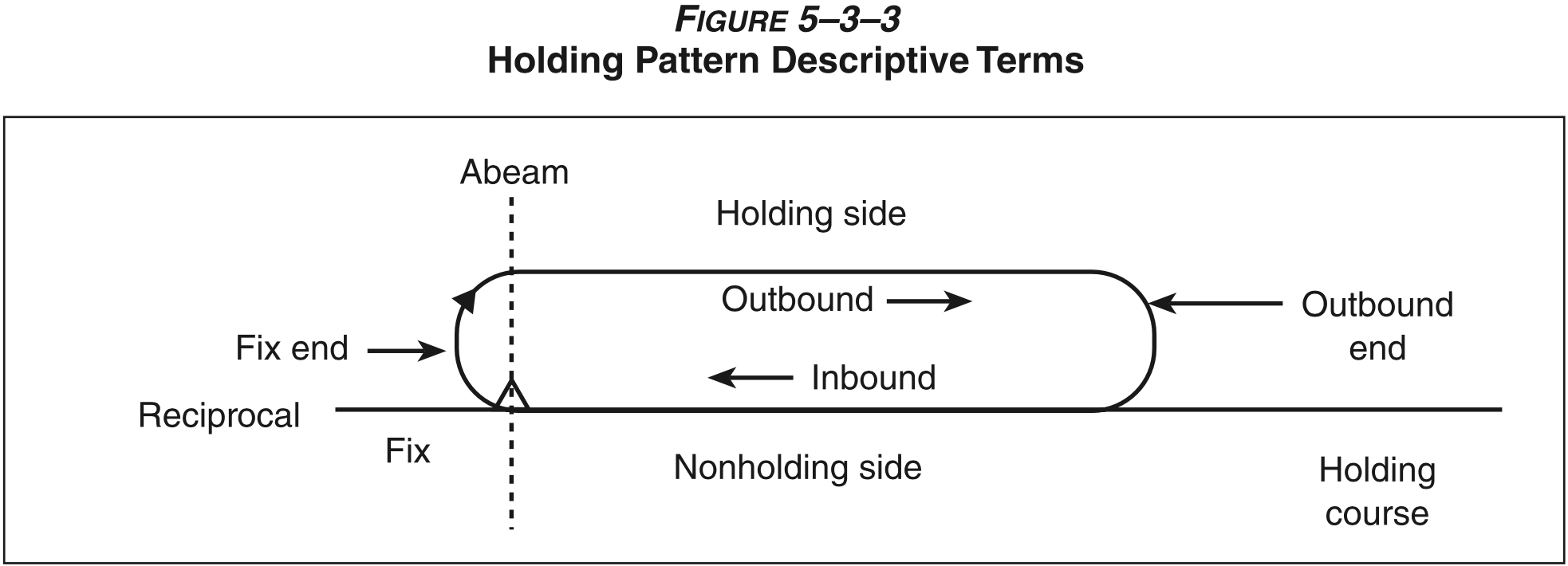
- The figure above shows the basic structure of a hold, defined by four things
- Holding fix
- Inbound leg
- Size
- Direction of turns
- The holding fix can be defined by
- The location of a VOR
- The intersection of VOR radials
- A VOR radial and DME
- A GPS waypoint
- And just about any other way to define a location
- Holds can be defined by time or distance
- In timed holds, it is the inbound leg that is the reference
- In the case of distance holds, it is the outbound leg
- Standard hold direction is right turns
- In the case of timed holds, the standard hold time depends on altitude
- 1 minute inbound leg at or below 14,000 ft MSL
- 1.5 minute inbound leg above 14,000 ft MSL
- To remember this 1.5 minutes comes into play at 15,000 ft MSL
- Airlines typically ask for 10 mile legs
- It is not a bad idea to ask for 5 mile legs to reduce workload
- Never hurts to ask ATC to slow down as soon as holding instructions are given when approaching the holding fix
- Can save some more fuel
- And may be the case that by the time you arrive at the holding fix you don't even need to hold anymore
- Bank angle in hold
- Use 15° bank which is approximately standard rate
- When given a hold ATC should give EFC time, but if they don't it's a good idea to ask for it so in case comms are lost, we know when to leave the holding fix
- Can hold at a GPS fix using OBS mode
- OBS suspends GPS from sequencing to the next waypoint and allows us to dial in a radial
- Note: the outbound leg could be greater or less than the 1 minute inbound leg due to wind
- More on wind correction below
Example of a Hold on an Instrument Approach Plate
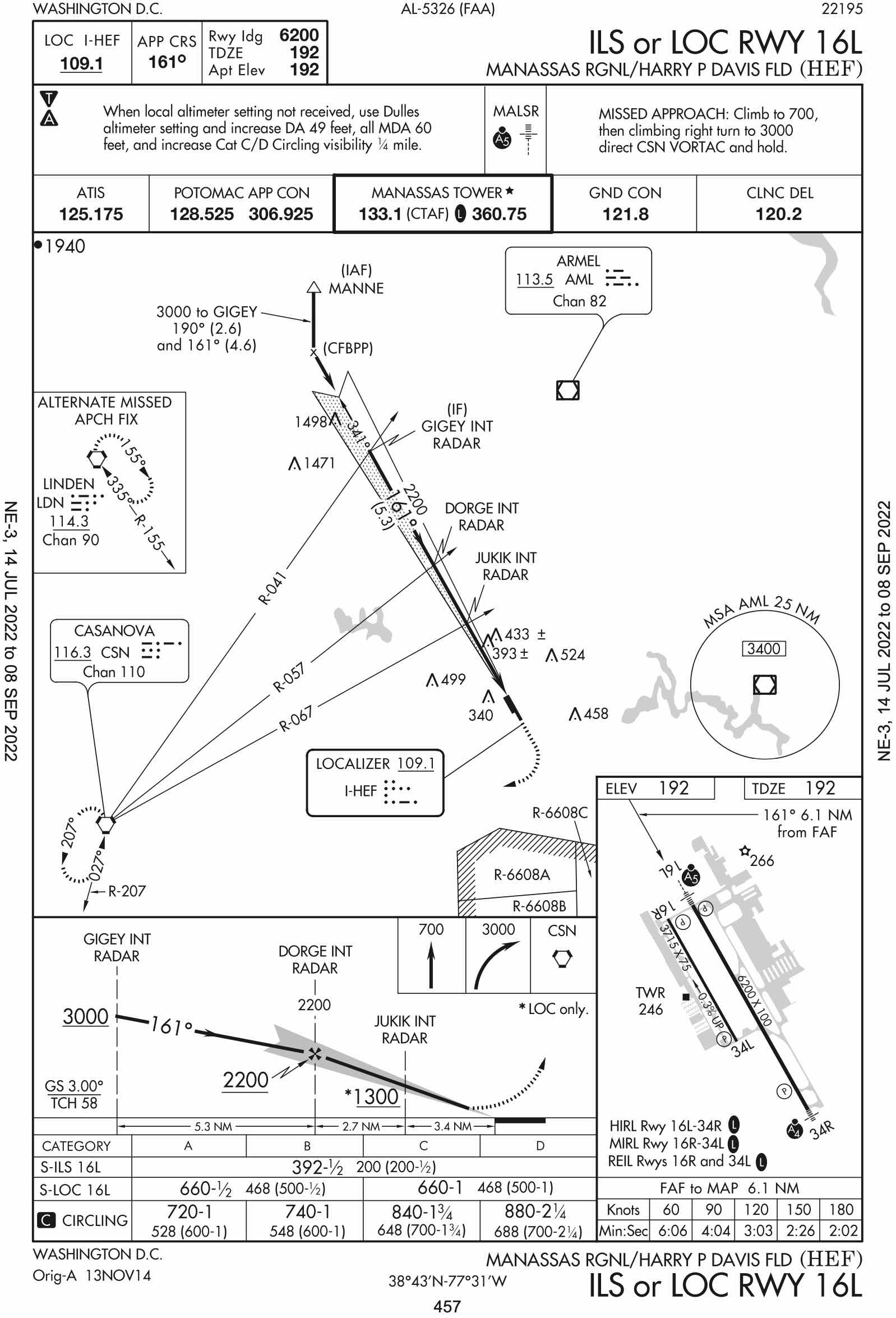
Holding Entry
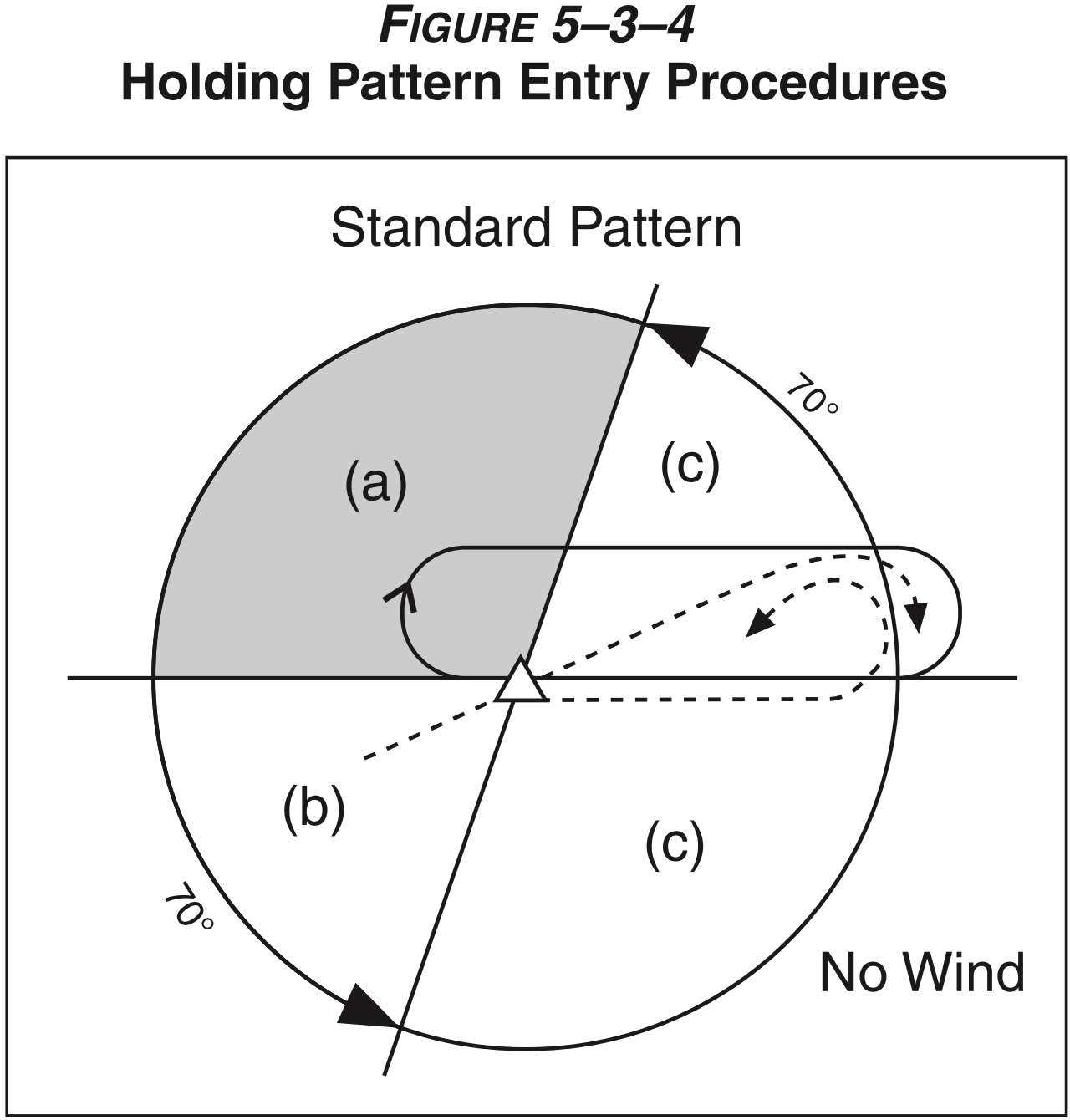
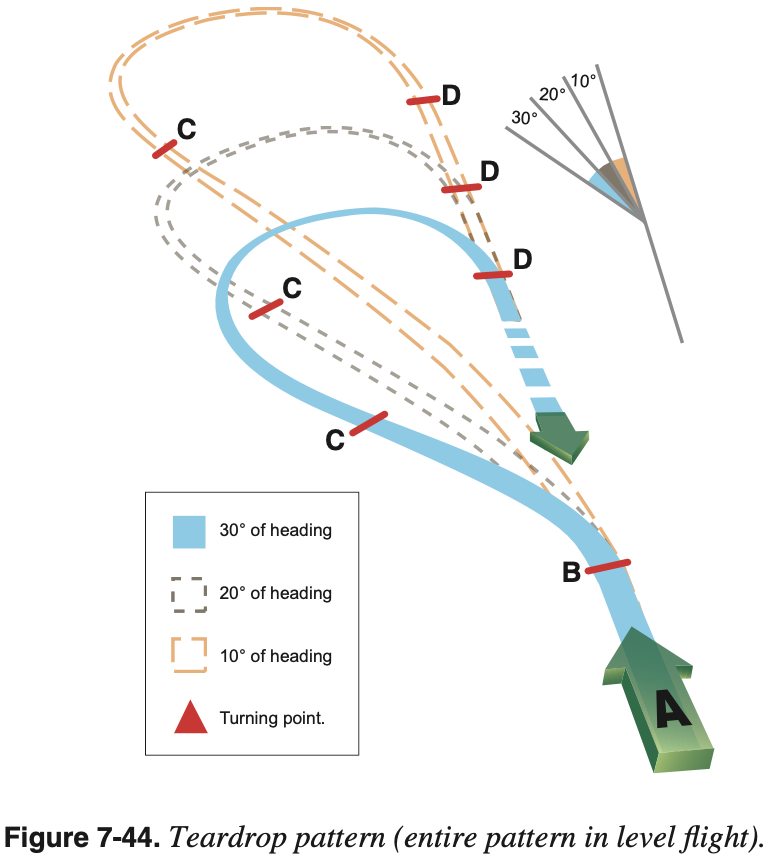
- There are three standard holding entry procedures that are used depending on the relative direction from which you are approaching the holding fix
- Direct Entry
- Teardrop Entry
- Use 30° angle for 1 minute legs
- Use 15° angle for 4 nm legs
- Closer to 6° angle for 10 nm legs
- Parallel Entry
- Use 45° intercept angle
- Note: Parallel hold entry does not fly the inbound leg outbound, it parallels it only
- In fact the AIM expressly says to fly over the holding fix then turn to a heading to parallel the holding course outbound on the nonholding side
- This means after crossing the holding fix use the pink diamond to track the outbound course, but again it will be parallel
- While we should always strive to execute the proper procedure to enter into the hold, ATC doesn't really care
- The most important thing is to remain in the protected area
- In flight this means don't get bogged down with single degree precision determinations of hold entries, or re-determining your entry if your bearing relative to the fix changes slightly
- Rather, make a reasonable calculation of the hold entry and the necessary heading after crossing the fix, and execute this entry
TIP
Determine the hold entry as early as practicable when expecting to hold. For example when briefing an approach you can determine and brief the expected entry to the hold on the missed approach procedure.
Details
There are details regarding holding both in AIM 5-3-8 and AIM 5-4-9 both have information on holds.
AIM 5-3-8(j)(5) states the following with respect to hold entries for DME holds:
DME/GPS holding is subject to the same entry and holding procedures except that distances (nautical miles) are used in lieu of time values.
This is the same guidance as in FAA-H-8083-15B Instrument Flying Handbook page 10-13.
AIM 5-3-8(j)(4) states:
The initial outbound leg should be flown for 1 minute or 1 1/2 minutes (appropriate to altitude). Timing for subsequent outbound legs should be adjusted, as necessary, to achieve proper inbound leg time. Pilots may use any navigational means available; i.e., DME, RNAV, etc., to ensure the appropriate inbound leg times.
Regarding HILPT, AIM 5-4-9(a)(5) states (emphasis added):
A holding pattern in lieu of procedure turn may be specified for course reversal in some procedures. In such cases, the holding pattern is established over an intermediate fix or a final approach fix. The holding pattern distance or time specified in the profile view must be observed. For a hold-in-lieu-of-PT, the holding pattern direction must be flown as depicted and the specified leg length/timing must not be exceeded.
The intepretation from this seems to be that the initial outbound can not be shortened.
- See
KFBR RNAV (GPS) RWY 22that has a 7 nm HILPT. - In this case, flying outbound for 1 minute before turning to intercept the inbound leg seems to be inconsistent with the guidance in the AIM.
- See
This same guidance appears verbatim in FAA-H-8083-16B Instrument Procedures Handbook on page 4-49.
Compensating for Wind
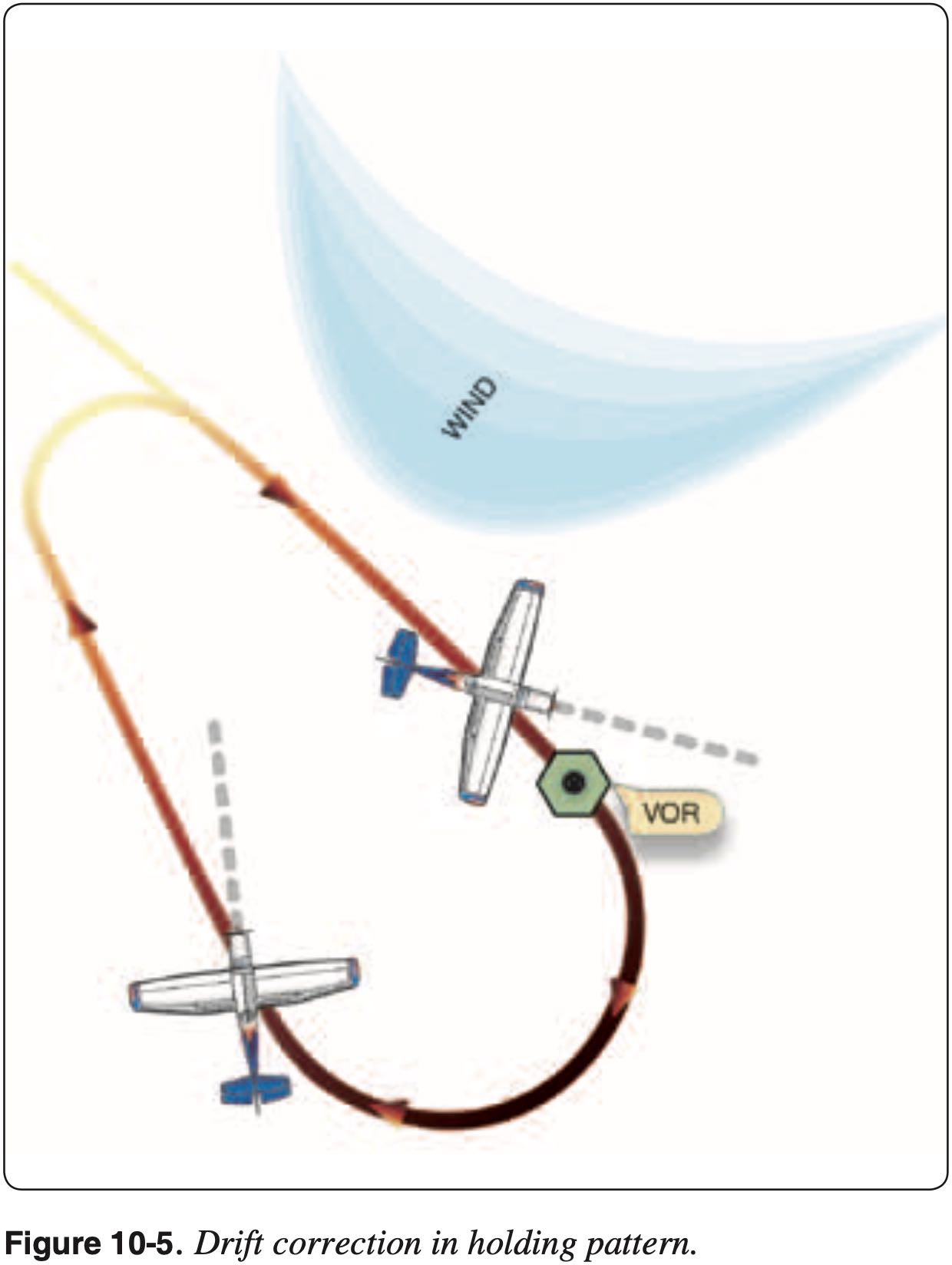
- When flying a holding pattern, the effects of wind need to be compensated for to ensure the hold is flown within the airspace protected for that hold
- In timed holds, both crosswind corrections and timing corrections must be made
- In distance holds, only crosswind corrections need to be made
- The most important thing is to stay within the protected airspace for the hold
TIP
When executing a hold, don't overthink the rules-of-thumb below. Instead, come up with a reasonable adjustment to the outbound and fly it, don't get fixated on perfecting mental math. It's OK to round off a degree of heading or second of time.
Timing corrections
- Adjust outbound to achieve 1 minute inbound legs
- Time the outbound leg when abeam the fix
Abeam the fix is most accurately determined by flag flip
- This is consistent with guidance in AIM 5-3-8(g) and AIM 5-3-8(j)(4)(b):
Outbound leg timing begins over/abeam the fix, whichever occurs later. If the abeam position cannot be determined, start timing when turn to outbound is completed.
If the abeam position cannot be determined, start timing when turn to outbound is completed
- If you fly an initial outbound leg of 1 minute and that gives an inbound leg of 50 seconds, then
- Take this deficit of 10 seconds
- Multiply it by 1.5 and apply it to the next outbound leg
- This would give an outbound leg of 1:15
- If you have a wind vector in the cockpit, fly an extra second outbound per knot of headwind on the outbound leg
- Some rules-of-thumb propose flying an extra half second outbound per knot of headwind on the outbound leg
- No timing corrections are to be made on the initial outbound
- See AIM 5-3-8(j)(4)
- Note: it is better to go out a bit further and give more time on the inbound than cutting the inbound too tight
Crosswind corrections
- To compensate for crosswind, triple the inbound wind correction angle on the outbound leg
- So if heading 10° right of the inbound course is required to stay on course, on the outbound leg use a 30° wind correction to the left
- This rule-of-thumb works well for 1 minute holds, for 4 nm mile holds, doubling the inbound wind correction works better.
- Do not compensate for wind when turning - just fly standard rate turns (15° bank angle)
Using Track Diamond
NOTE
In aircraft equipped with track information displayed on the HSI, the application of proper crosswind corrections is made easier.
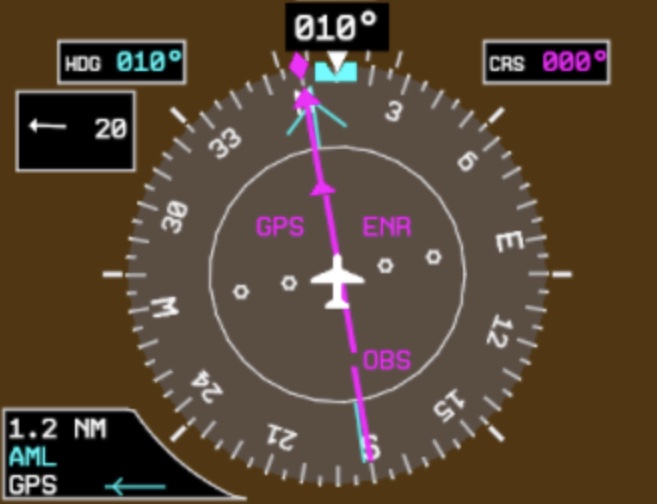
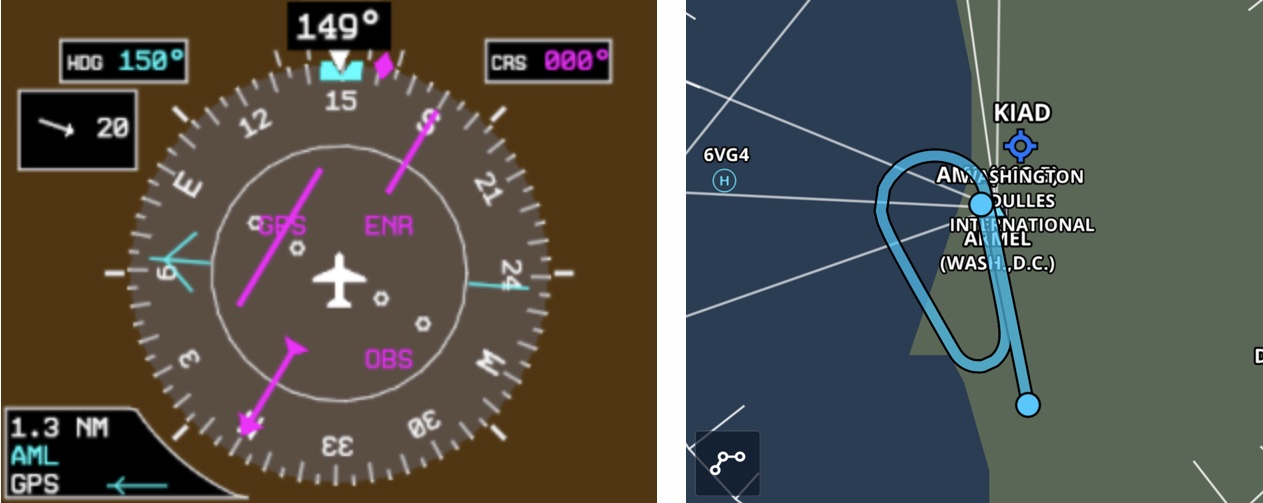
- Consider the following hold: "Hold south of the AML VOR on the 180 radial, left turns"
- This means our inbound
CRSis 360 - There is a 20 knot wind from the East
Note Inbound Crosswind Correction
- To make proper crosswind corrections throughout the hold, first note the required crosswind correction when established inbound
- Once established inbound on a
TRKis 360, andHDGis 010, giving a 10° crosswind correction to the right
Incorrect Outbound Crosswind Correction
- This shows what the hold would look like if we made the incorrect crosswind corrections on the outbound, using the same crosswind correction as the inbound
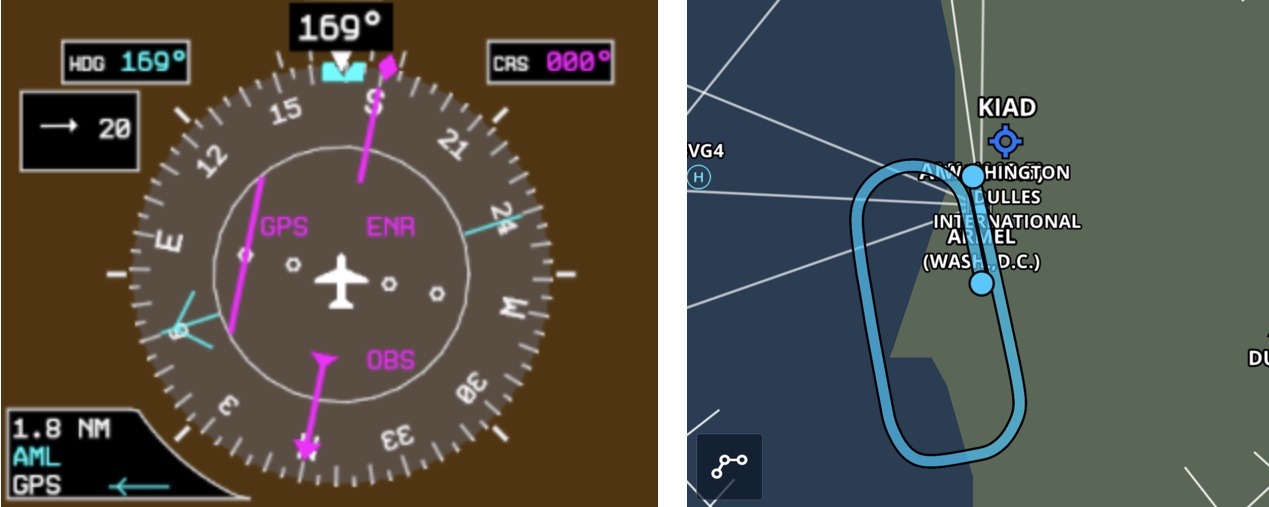
Correct Outbound Crosswind Correction
- This shows the correct crosswind corrections on the outbound, multiplying the inbound crosswind correction by 3
- This gives us an outbound heading of 150
Unpublished Holds
- Holds can be published or unpublished
- When the hold is not published an ATC clearance will specify
- Location of the inbound leg relative to the fix (in terms of N, SE, etc.)
- Holding fix
- Radial, course, bearing, airway, or route on which the aircraft is to hold
- Leg length in miles if DME or RNAV is to be used
- Direction of turn, if left turns are to be made
- Time to expect-further-clearance (EFC) and any pertinent additional delay information
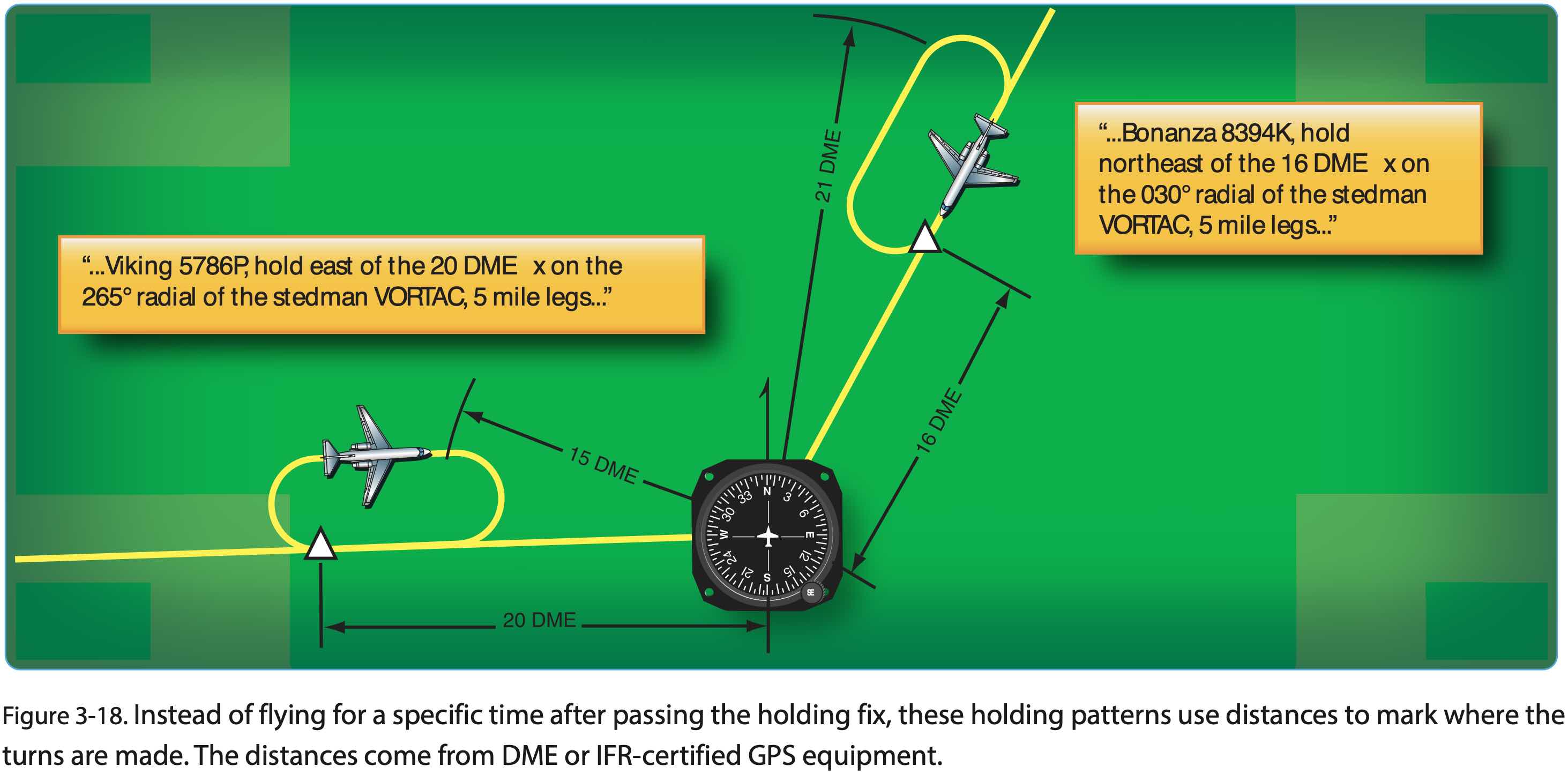
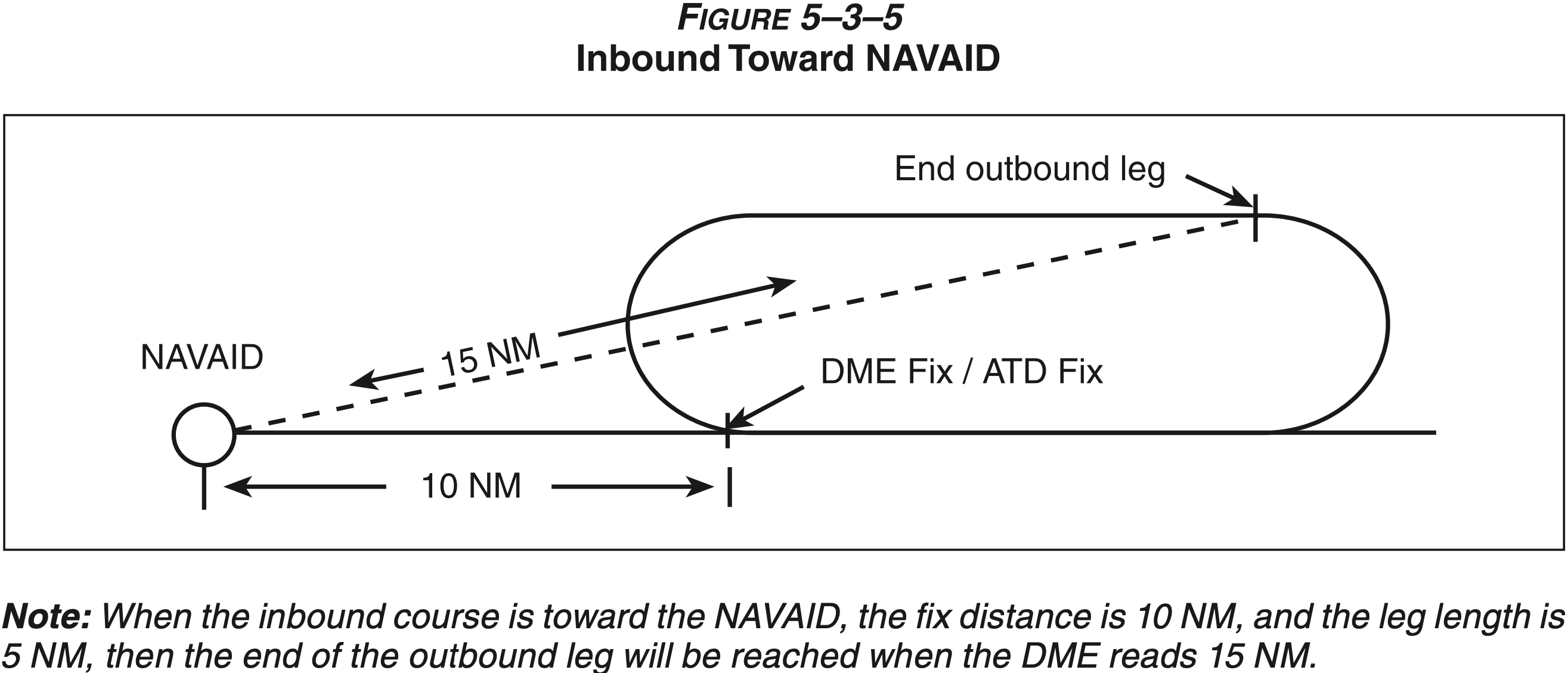
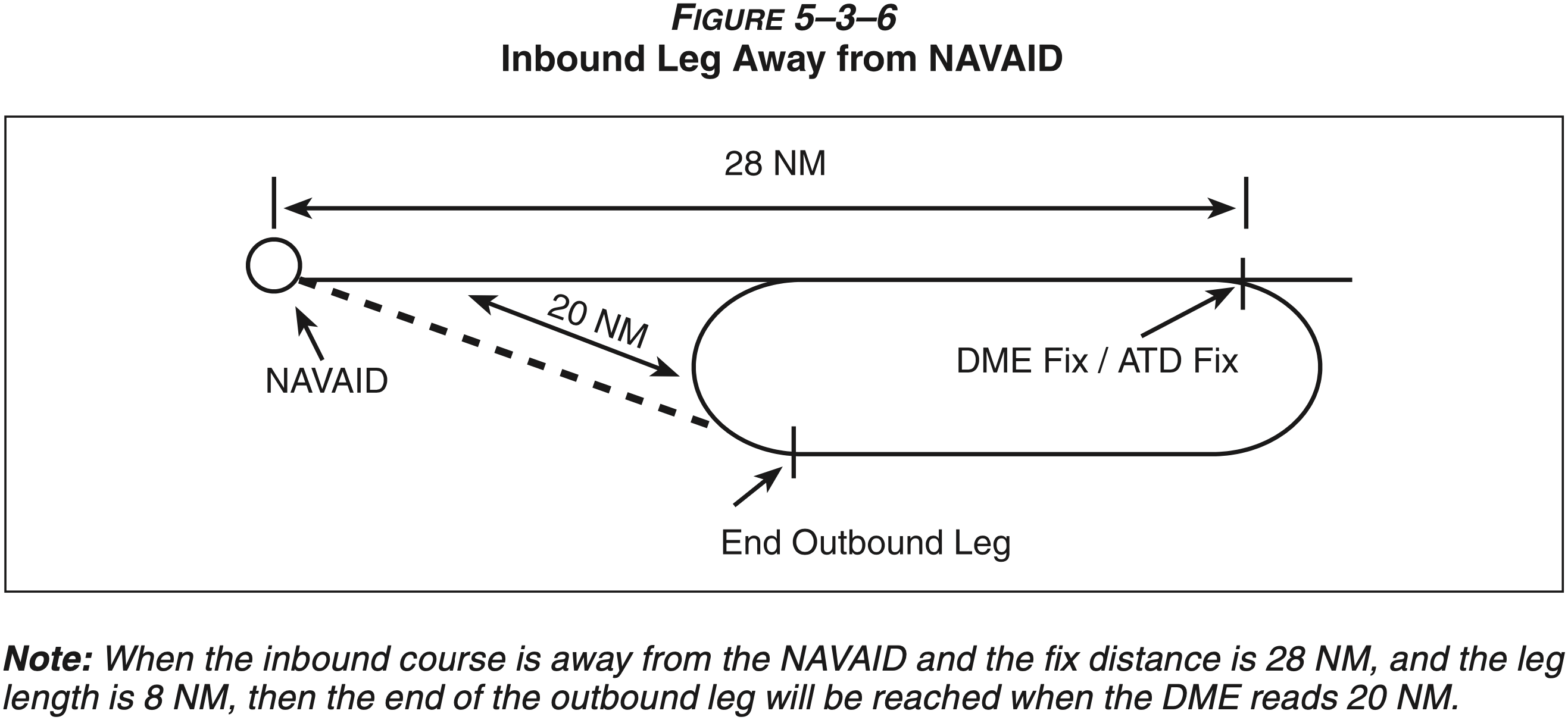
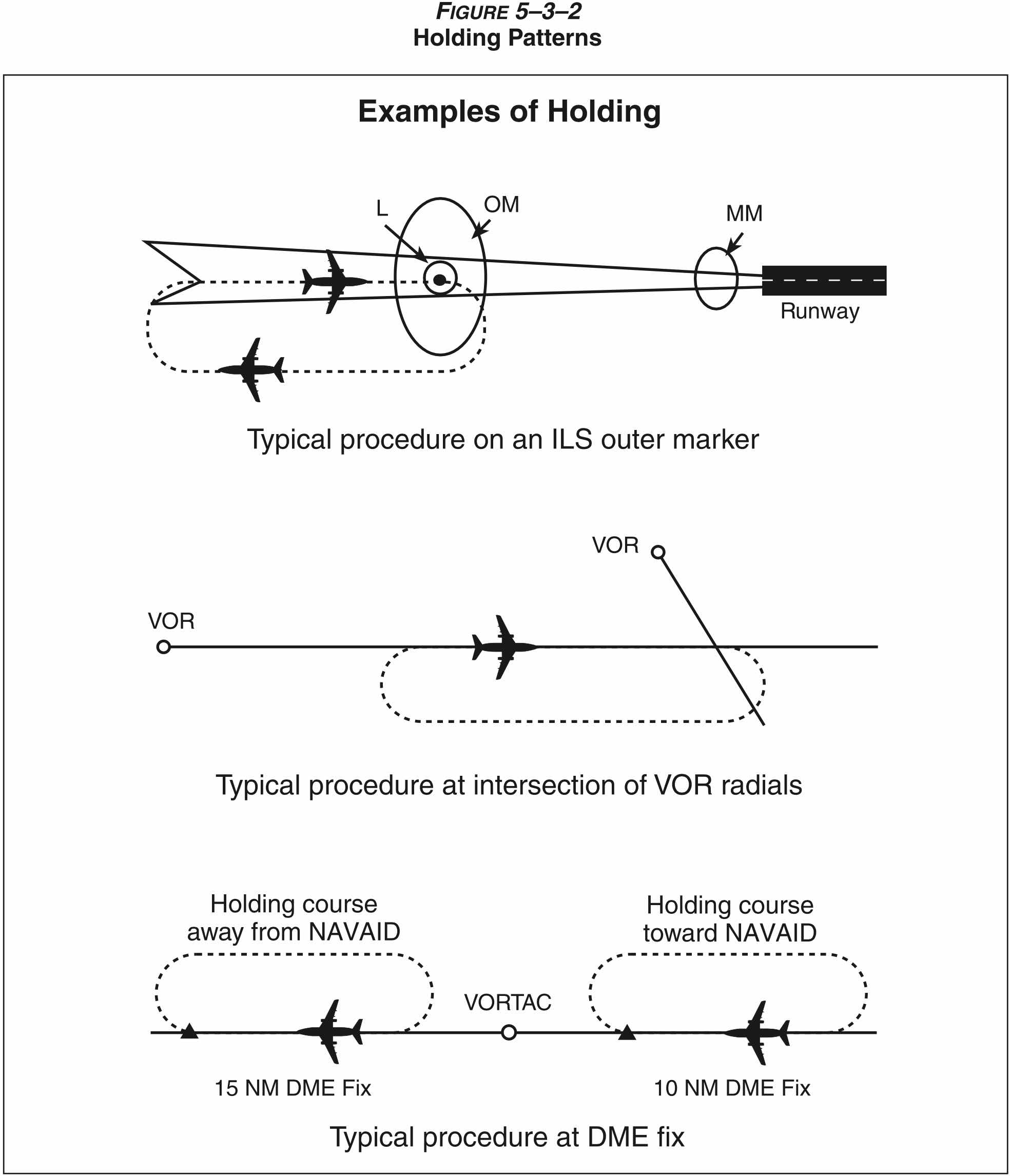
- Note how DME holds are defined in the image below
Flying a Hold
Determine Entry, CRS, and TRK
- Determine the hold from the chart or ATC instructions
- Draw the hold on the chart to help with situational awareness and ensure the hold is flown as cleared
- Determine inbound course (
CRS)- This may or may not be the same as the radial that defines the inbound leg
- Determine hold entry
- Determine the initial outbound track (
TRK)- Alternatively heading in aircraft not equipped to provide track information
Prior to Entry
- Prior to entering the hold
- Start slowdown 3 minutes before reaching holding fix
- Remember it's a good idea to ask ATC to slow down as soon as you are expecting to hold
- There are references in AIM 5-3-8 regarding this slowdown 3 minutes prior to the hold in reference to slowing below maximum holding speed.
- For general aviation a better reference is FAA-S-ACS-8C Instrument Rating Airplane Airman Certification Standards that specifies a slowdown 3 minutes prior to reaching the holding fix and states power should be set to conserve fuel.
- Power 2100 RPM
- Use a little left rudder
- 2 slow turns of nose-up trim
- Airspeed should be about 90-95 KIAS
- Start slowdown 3 minutes before reaching holding fix
Initial Outbound
- Crossing the holding fix run T + 5 T's
- Toggle
- Switch to
OBS/SUSPas necessary SUSPprevents the GPS from sequencing- For example, if we are holding in a HILPT and need to remain in the hold instead of sequencing on the the rest of the approach
OBSalso suspends GPS from progressing to next waypoint and allows us to dial in a radial- For example, if we've been given an unpublished hold
- Switch to
- Turn
- Turn to the outbound track (or heading) determined by the entry procedure
- Time
- Start the timer when wings are level
- Twist
- Twist OBS to inbound course
- Twist heading bug to outbound heading
- Throttle
- Set throttle for holding speed
- This should have been done within 3 minutes of holding fix
- Talk
- Talk to ATC as needed or requested
- Toggle
- When the timer reaches 1 minute or whatever the length or duration outbound of the hold is supposed to be then run the 5 T's again
- Turn
- Inbound
- Time
- Reset the timer
- Twist
- Twist heading bug to inbound heading
- Throttle
- Verify throttle setting
- Talk
- Talk to ATC as needed or requested
- Turn
- Established inbound run the 5 T's again
- Turn
- Heading as needed to maintain inbound course
- Time
- When getting established back inbound start the timer at the first of
- Wings level
- Course centered
- When getting established back inbound start the timer at the first of
- Twist
- Heading bug to inbound heading
- Throttle
- Verify throttle setting
- Talk
- Talk to ATC as needed or requested
- Turn
- Crossing the fix run the 5 T's again
- Turn
- To outbound heading
- Time
- Note time of inbound leg
- Reset timer
- Twist
- Heading bug to outbound heading
- We should know what the outbound heading is based on wind correction on our inbound leg
- Throttle
- Verify throttle setting
- Talk
- Talk to ATC as needed or requested
- Turn
- When completing the turn and heading outbound
- Time the outbound leg when abeam the fix
- Abeam the fix is most accurately determined by flag flip
- If the abeam position cannot be determined, start timing when turn to outbound is completed
- AIM 5-3-8(g)
- Repeat this process for each turn in the hold
- Exiting the hold and returning to cruise
- Full power
- A little right rudder
- 2 turns of nose-down trim
- At 100 KIAS power to 2400 RPM
- Trim as required
Review of Timing
- When initially crossing the fix and turning outbound
- Start the timer when wings are level
- This buys a bit of extra time on the outbound leg
- When getting established back inbound
- Start the timer at the first of
- Wings level
- Course centered
- Start the timer at the first of
- When completing the turn and heading outbound
- Time the outbound leg when abeam the fix
- Abeam the fix is most accurately determined by flag flip
- If the abeam position cannot be determined, start timing when turn to outbound is completed as indicated by wings level
- AIM 5-3-8(g)
- See the example below
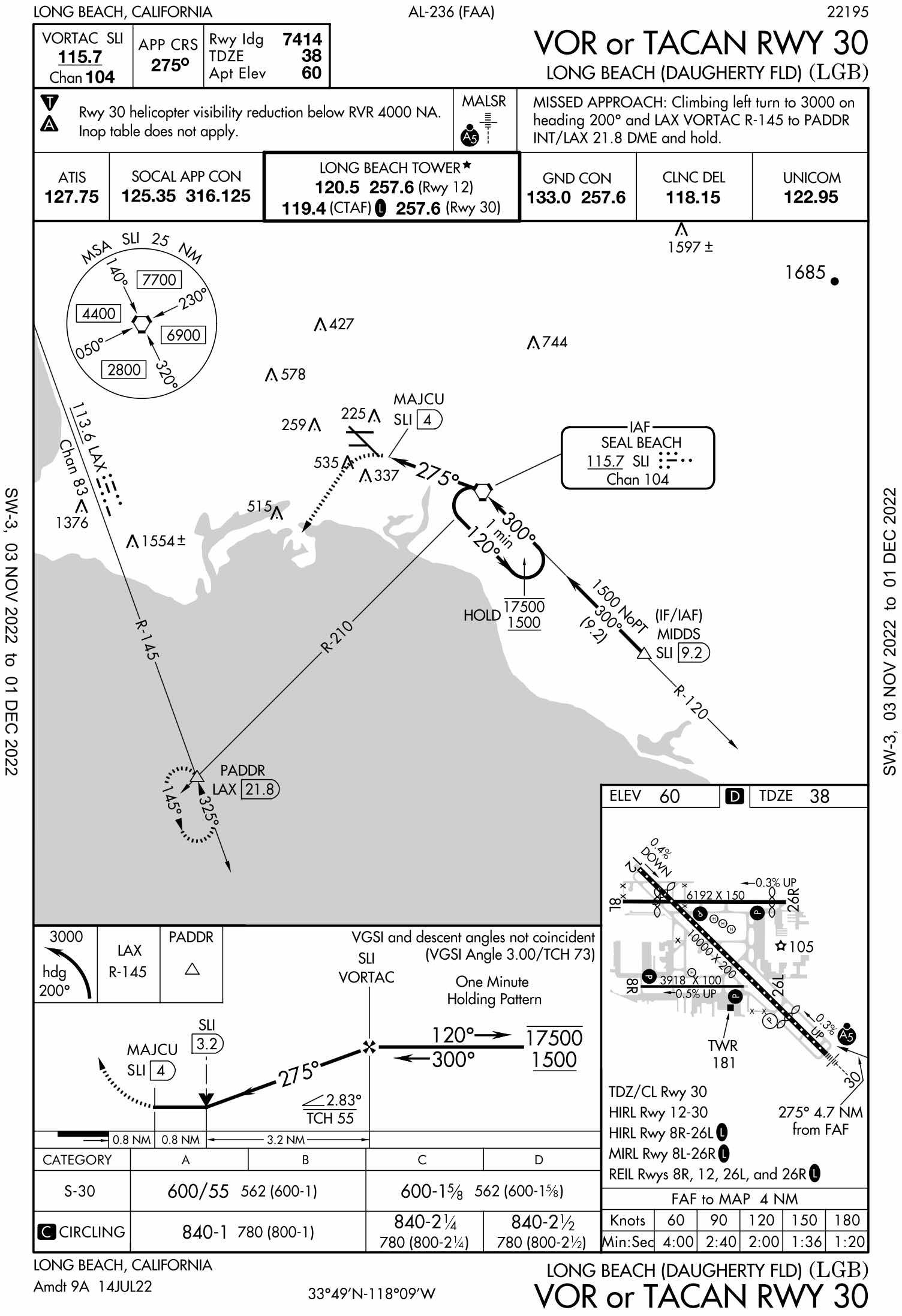
Holding Speed Limits
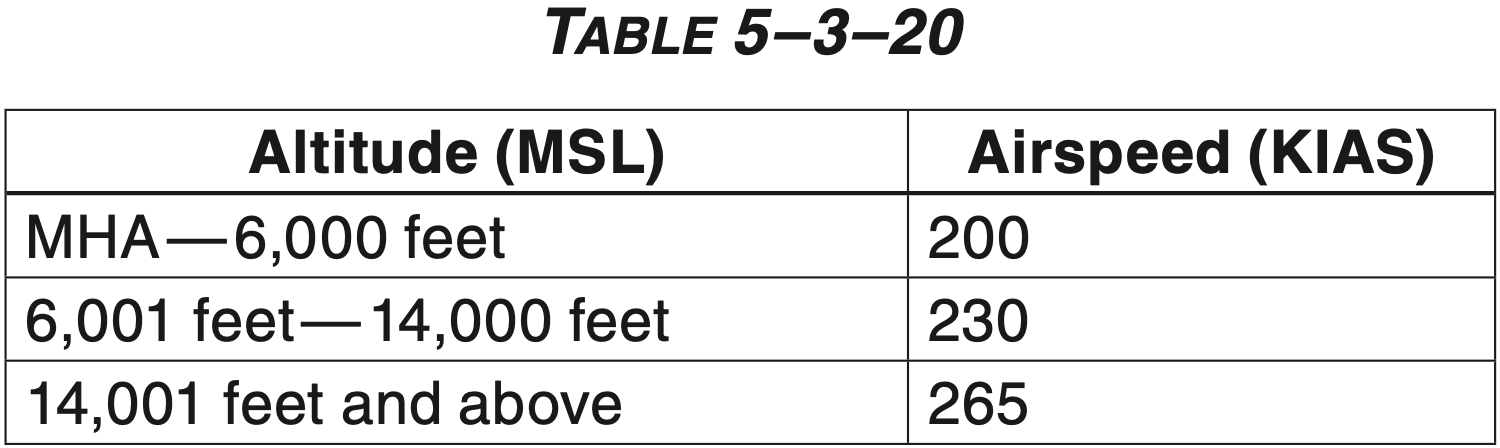
- There are limits on the maximum holding airspeed that must be complied with
- See table below
Operational Notes
- When holding at a VOR, for example, use pink needles (GPS) instead of green needles
- Recall 60:1 rule - 60 nm from VOR each degree is 1 nm
- Also recall cone of confusion
- Use the MFD to your advantage to see how the aircraft is tracking relative to what you want
- Additional notes
- When substituting GPS for DME distance, slant-range distance is usually negligible
- Know how your aircrafts RNAV/FMS will provide guidance / exectute the hold, as different systems may behave differently, and in some cases can cause a hold to extend outside the protected area
- For example, distance specified in terms of inbound leg rather than outbound
References
- FAA-H-8083-15B Instrument Flying Handbook
- Chapter 10: IFR Flight
- Page 10-10: Holding Procedures
- Chapter 10: IFR Flight
- PilotsCafe Holding Procedures 101
Completion Standards