Taxiing
This page covers Task D. Taxiing from the FAA-S-ACS-6C Private Pilot Airman Certification Standards.
Elements of Safe Taxi Operations
- Proper brake check and correct use of brakes.
- Brake use should be minimal
- When turning can use differential braking to aid turn
- Compliance with airport/taxiway surface marking, signals, and ATC clearances or instructions.
- Know where to find taxi diagrams, have them, make sure they are current, use them, brief them
- Review airport signs and markings
- Listen and write down ATC clearances, draw them on taxi diagram if helpful
- How to control direction and speed.
- Biggest difference compared to single engine is the ability to use differential throttling to aid in turning while taxiing
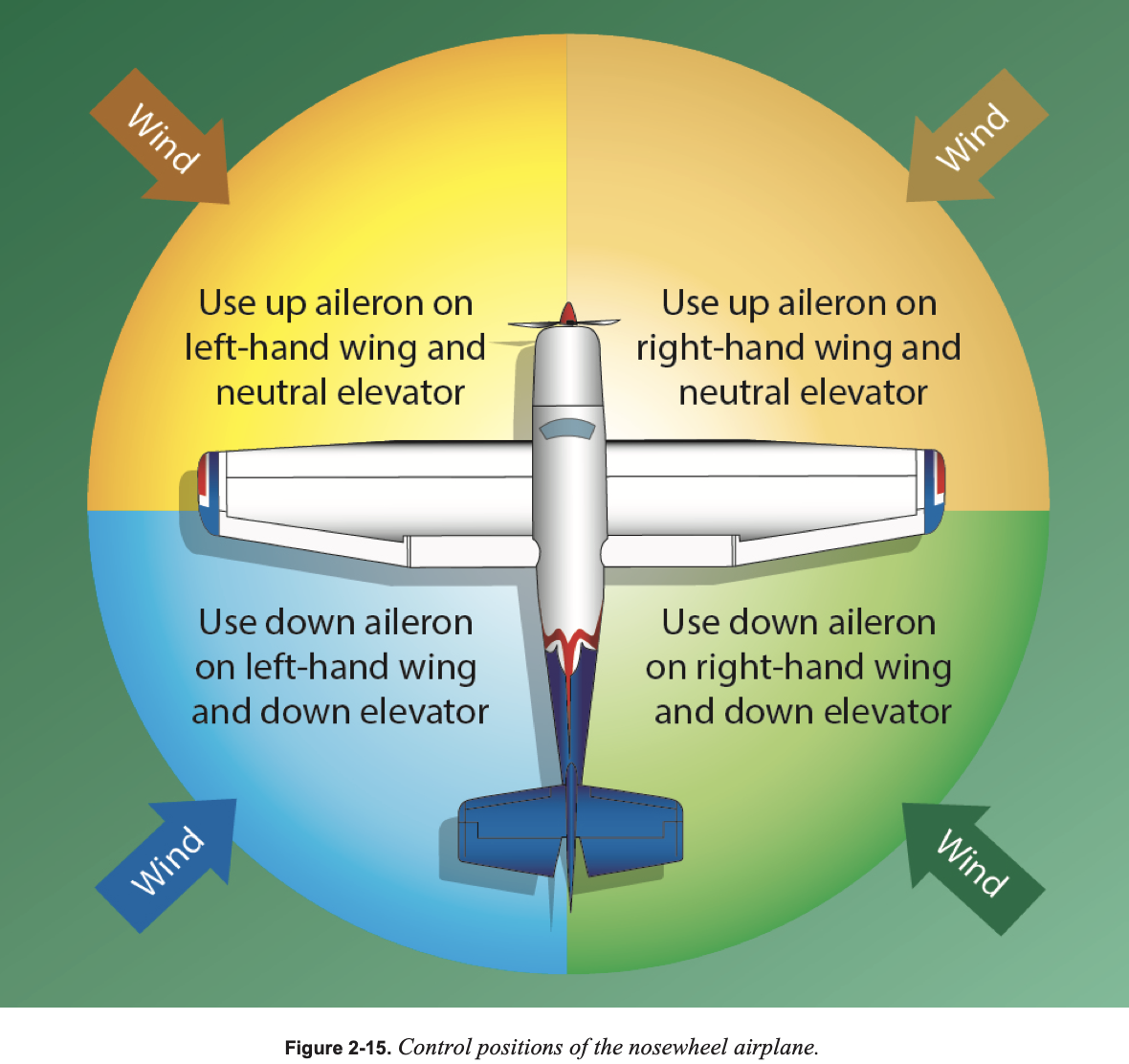
- Flight control positioning for various wind conditions.
- Position flight controls to help prevent wind gusts from lifting the plane
- Bugging the wind direction on the heading indicator can help the pilot position the controls correctly
- Procedures used to avoid other aircraft and hazards.
- Runway incursion avoidance procedures.
- See CFI TSA (Technical Subject Area) section
- Procedures for eliminating pilot distractions.
- Before engine start passengers should be briefed using the SAFETY acronym
- Y for "Yak" is to remind passengers of the need for a sterile cockpit during certain phases of flight and taxiing
- The pilot should be fully prepared before taxiing so they can be vigilent during taxiing and not attempt to do other things (e.g. setup FMS) until stopped
- Before engine start passengers should be briefed using the SAFETY acronym
- Use of taxi chart during taxi.
- Always have current taxi diagram, review it, brief taxi instructions
- Airport, taxiway, and runway position situational awareness.
- Refer to CFI TSA (Technical Subject Area) document form more information
- Aviate, navigate, communicate applies to taxiing
- When in doubt, stop the plane and call ATC for clarification
- Additional taxiing operations concerns at a non-towered airport.
- No taxi clearances are given, so need to exercise vigilance
- Be alert at untowered airports for aircraft that might not be communicating their position or intentions
Current Airport Aeronautical References and Information
- TBD
Taxi instructions/clearances
- TBD
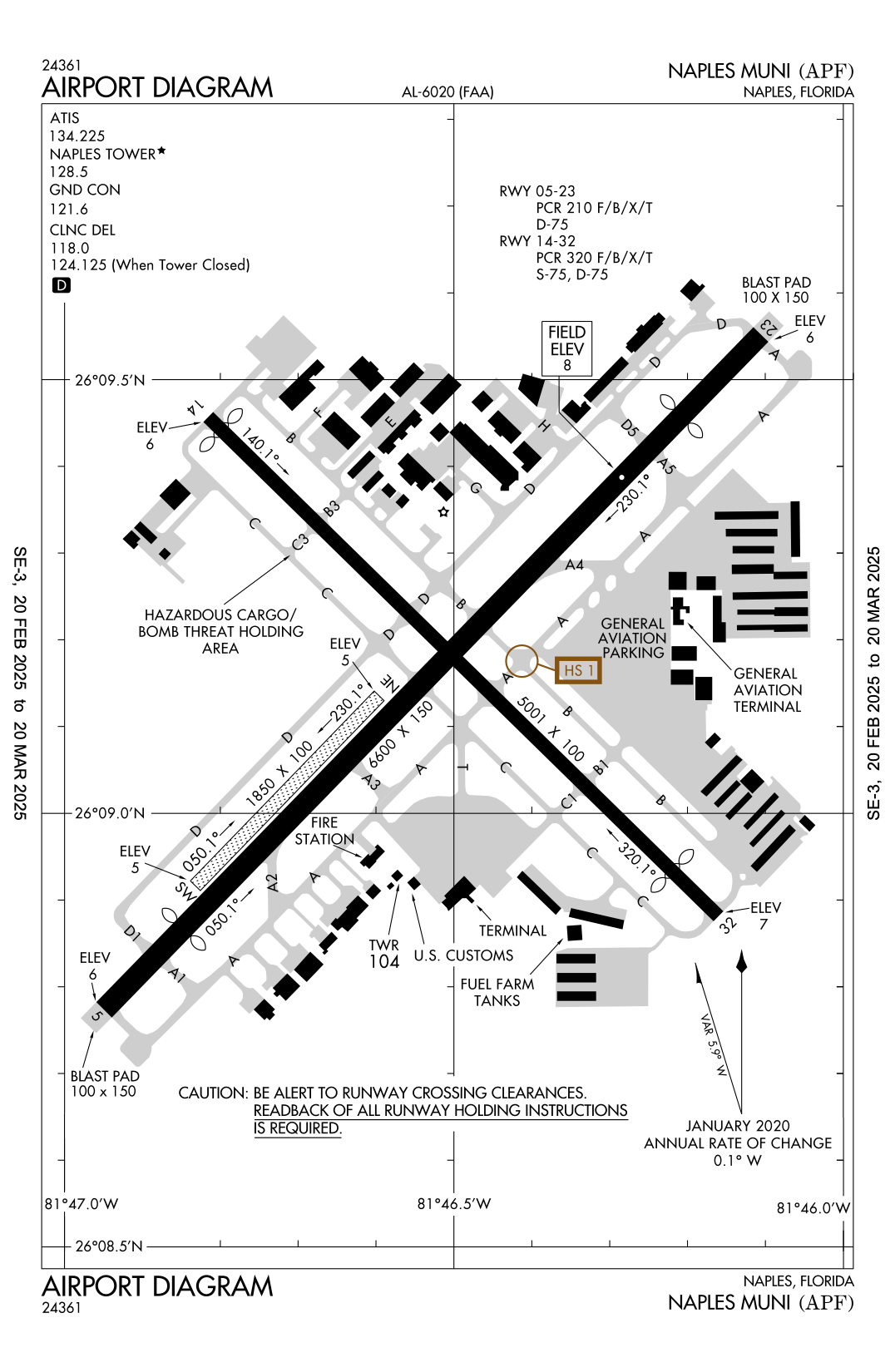
Airport markings, signs, and lights
- TBD
Numberless Runways
Visual indicators for wind
- TBD
Aircraft lighting, as appropriate
- TBD
Procedures for Various Scenarious
- TBD
References
- FAA-AC-150/5340-1M Standards for Airport Markings
- FAA Airport Sign and Marking - Quick Reference Guide
- Great resource to review the types of signs and marking that are used at airports and what they mean.
- FAA-H-8083-25B Pilot's Handbook of Aeronautical Knowledge
- AIM 2-3 Airport Marking Aids and Signs
- FAA-H-8083-3C Airplane Flying Handbook
- Chapter 2: Ground Operations
- Page 2-18
- Chapter 2: Ground Operations
- AIM 4-3-11 Pilot Responsibilities When Conducting Land and Hold Short Operations (LAHSO)