Performance and Limitations
This page covers Task F. Performance and Limitations from the FAA-S-ACS-6C Private Pilot Airman Certification Standards.
Use of Charts, Tables, and Data to Determine Performance
- See Section 5 of aircraft POH for performance information
- Key phases of flight, performance charts to consult, and how they impact decision making
- Takeoff and climbout
- Is there enough runway to safely takeoff?
- Is climb performance sufficient to clear surrounding terrain?
- Cruise and fuel burn
- Ensure enough fuel is available to complete flight
- Determine duration of flight to know which weather forecasts to reference
- Landing
- Is there enough runway to safely land?
- Takeoff and climbout
Factors Affecting Performance
Atmospheric Conditions
- High density altitude affects T/O, landing, climb rate
- Wind
Pilot Technique
- Achieving the performance calculated during preflight planning is dependent on the pilot flying the aircraft as directed
Airplane Configuration
- Achieving the performance calculated during preflight planning is dependent on the pilot configuring the aircraft as directed
Airport Environment
- Runway surface
- e.g. paved, grass
- Runway slope
Loading and Weight and Balance
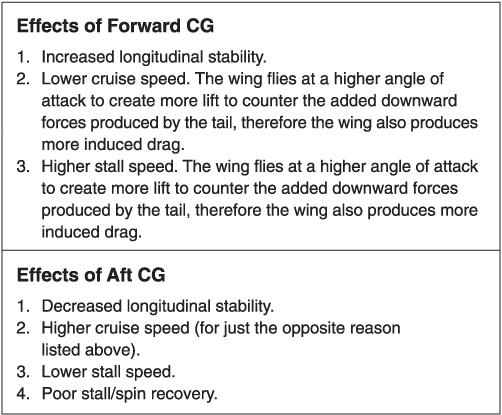
- CG too far forward
- Longer takeoff distance
- Higher stalling speed
- Reduced elevator effectiveness
- Increased stability
- Reduced fuel economy and speed
- Limit imposed by making sure enough elevator authority to hold the aircraft in normal glide with power off / aircraft's landing characteristics are suitable.
- CG too far rearward
- Worse than too far forward
- Unstable
- Reduced elevator effectiveness
- May not be able to recover from a spin
- Limit imposed by stability (making sure aircraft has correct damping) / stall recovery
Aerodynamics
- TBD