Memory Items
Engine Failure
Engine failure during takeoff
Below V1
- Brakes -- Apply
- Thrust levers -- IDLE
Above V1
- VR -- rotate to target pitch attitude
- Climb V2
- Positive rate -- gear up
- At 500' AGL -- autopilot is available
- FMS/Nav source, heading/nav mode, speed mode, bug V2
- 1500' AGL / obstacle clear
- Accelerate V2 + 25 -- flaps up
- Accelerate 200 KIAS
Engine failure during approach
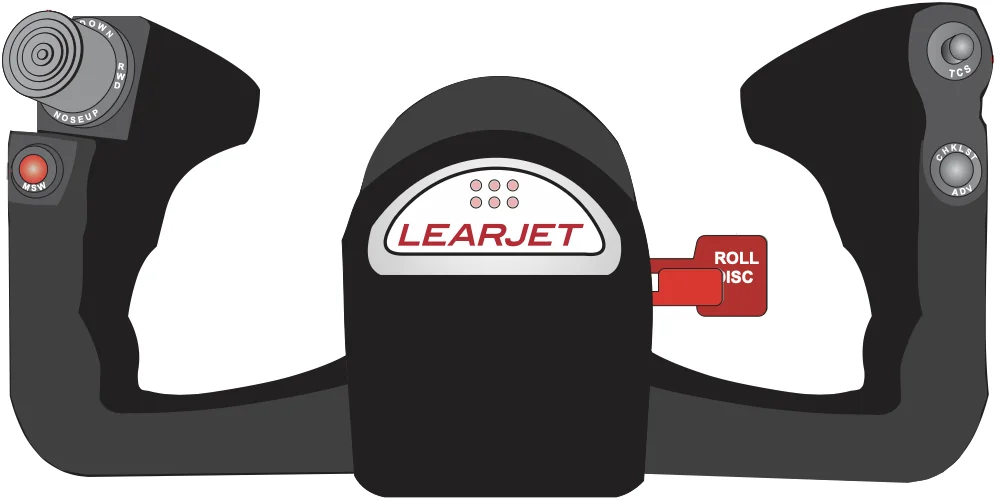
- CWS master switch -- press and release
- Operative engine thrust as required
- Flaps 20°
- VREF + 5
Aborted Takeoff
- Brakes -- Apply
- Thrust Levers -- IDLE
Engine Fire Voice Activates
On the affected engine
- Thrust -- IDLE
- If fire continue more than 15 seconds or there are other indications
- Thrust -- CUTOFF
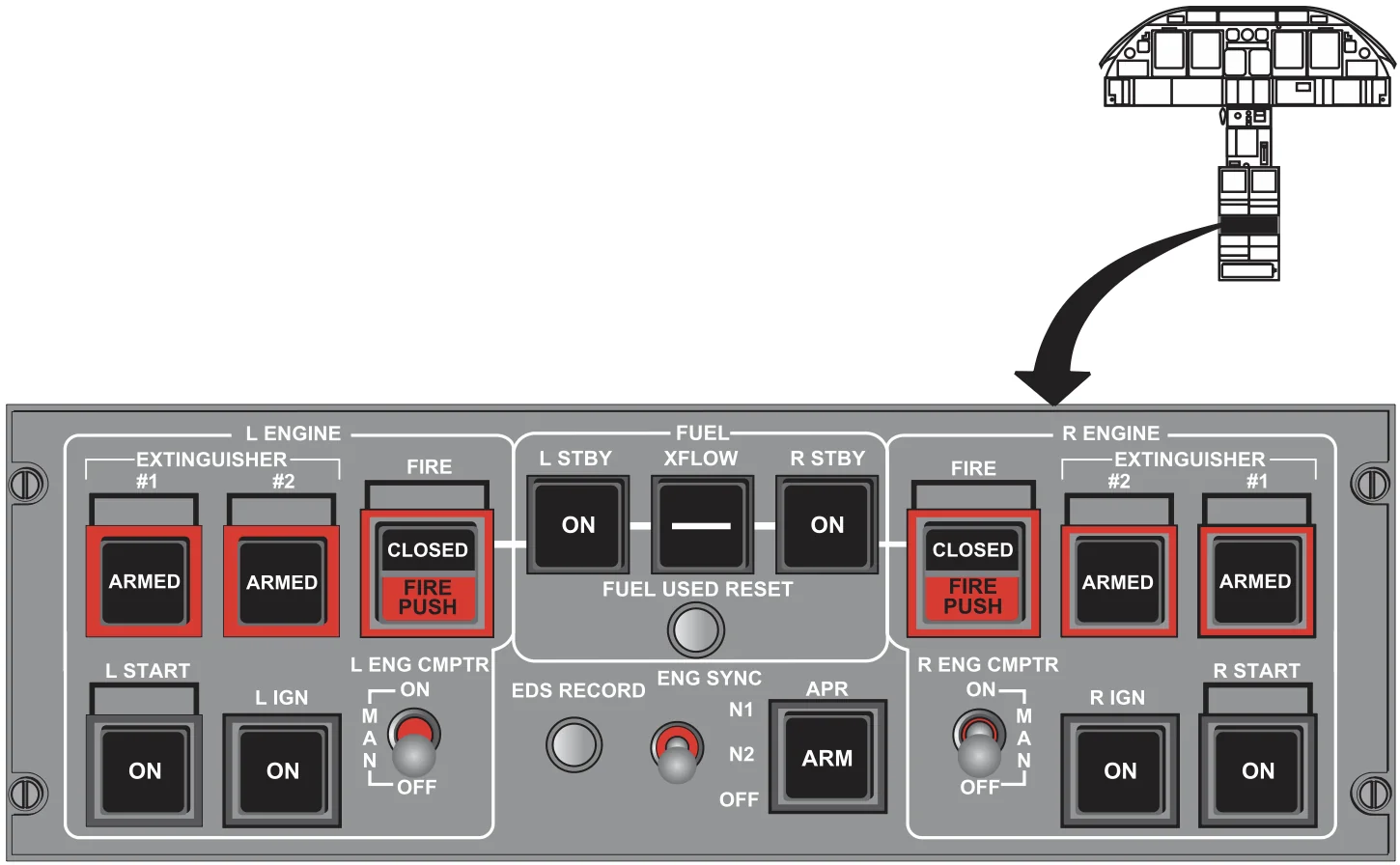
- Fire Switch (lift guard) -- FIRE PUSH
- Extinguisher #1 (lift guard) -- ARMED
Immediate engine airstart
- Thrust -- IDLE
- FUEL STBY switch -- ON
Emergency descent
- "Cabin altitude" voice activates
- Cabin altitude (if applicable)
- Cabin alt (CWP) (if applicable)
- Or cabin altitude exceeds 10,000 ft.
- Crew oxygen masks -- don (100% oxygen)
- Thrust -- IDLE
- Autopilot -- disengage
- SPOILER lever -- EXT
- Descend VMO/MMO (not below minimum safe altitude)
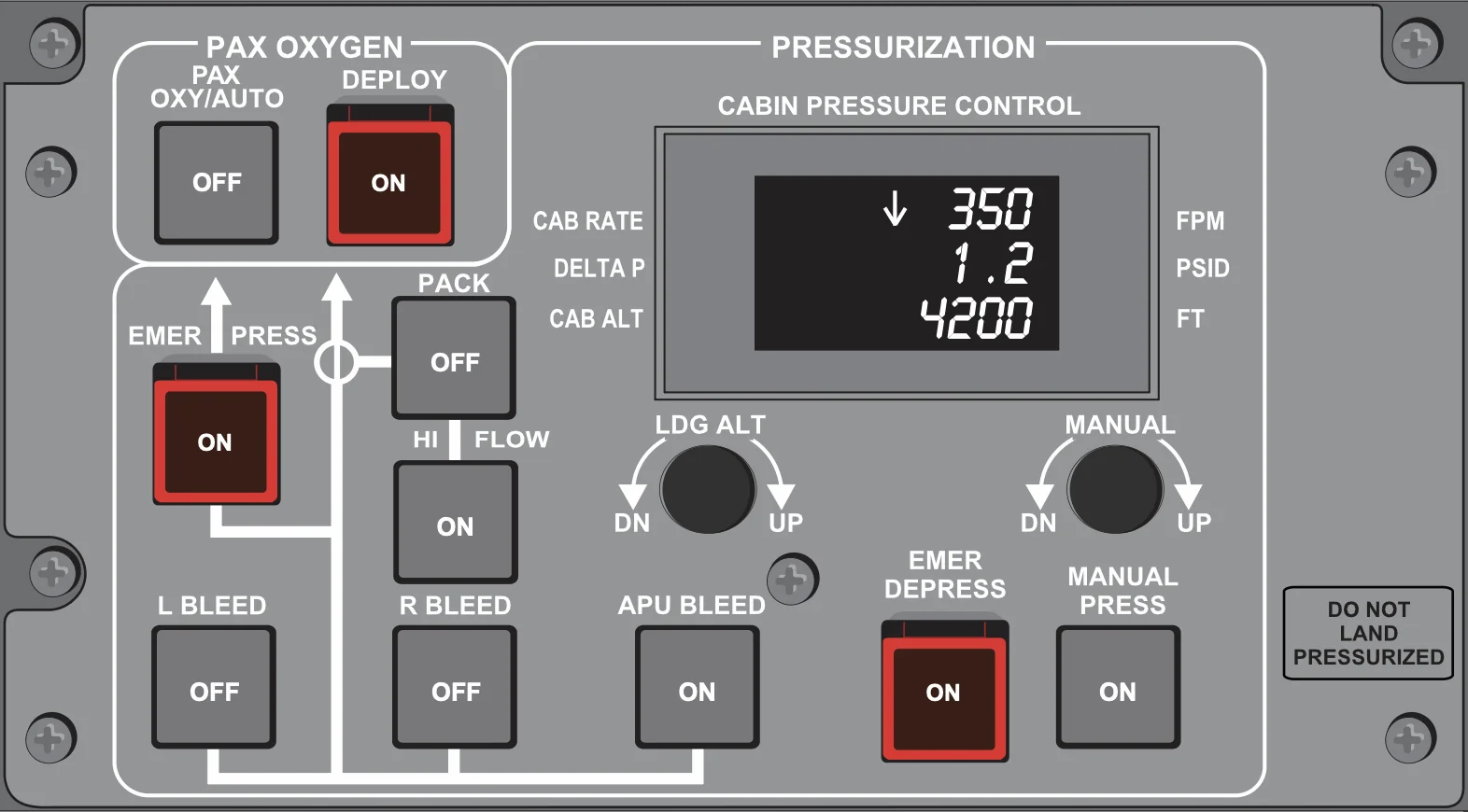
- PAX OXYGEN DEPLOY (lift guard) -- ON
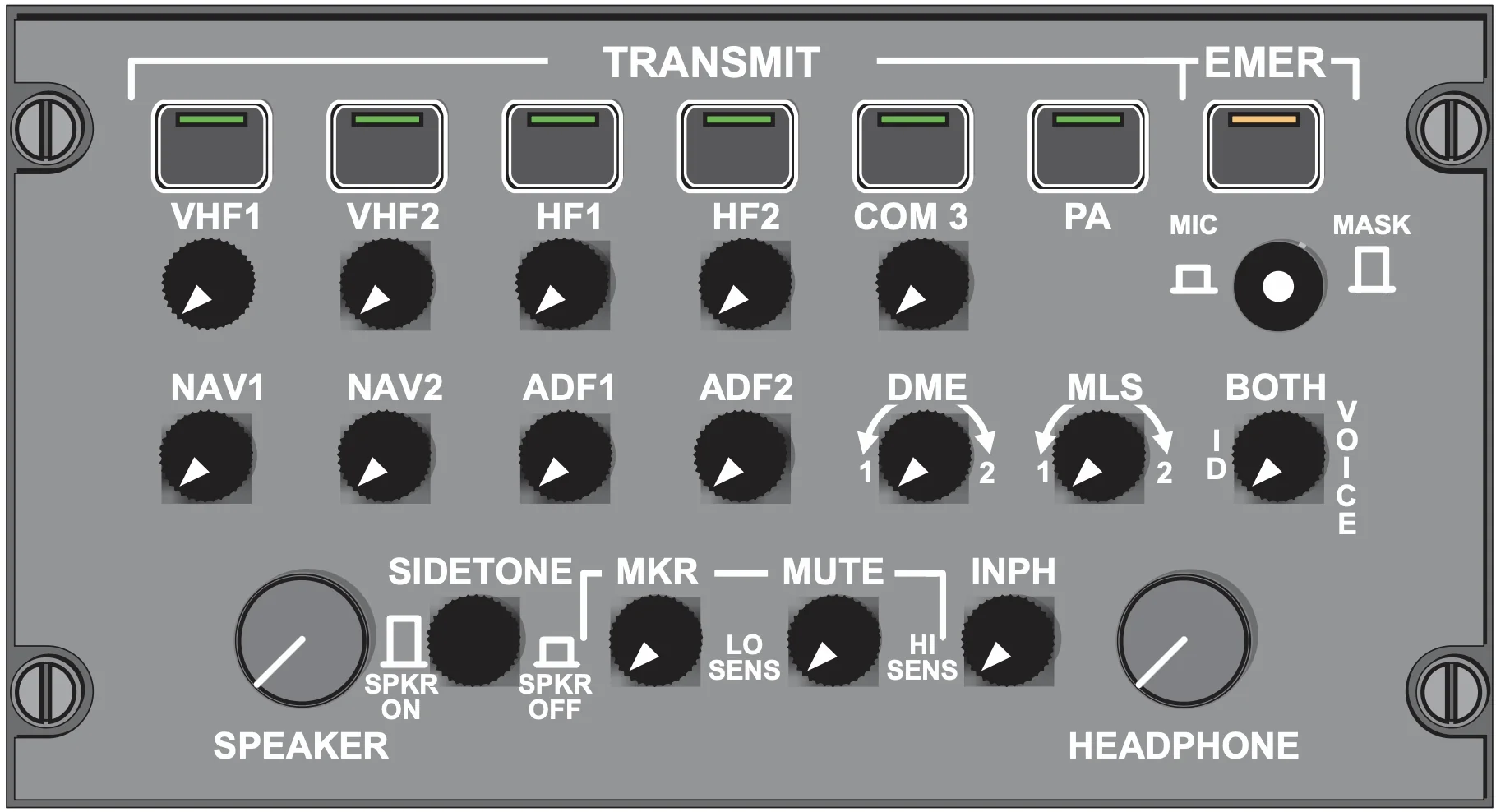
- MIC/MASK switch -- MASK
- INPH switch -- INPH
Cabin / cockpit smoke, fire, or fumes
- Crew oxygen masks -- don (100% oxygen)
- Smoke goggles -- don
- EMER DEPRESS (lift guard) -- ON
- MIC/MASK switch -- MASK
- INPH switch -- INPH
"Overspeed" voice activates
- Recovery from inadvertant overspeed
- Thrust levers -- IDLE
- Autopilot -- disengage
- SPOILER lever -- EXT
- Identify aircraft pitch and roll attitude
- Level wings
- Elevator and pitch trim -- as required to raise the nose
Control Jam
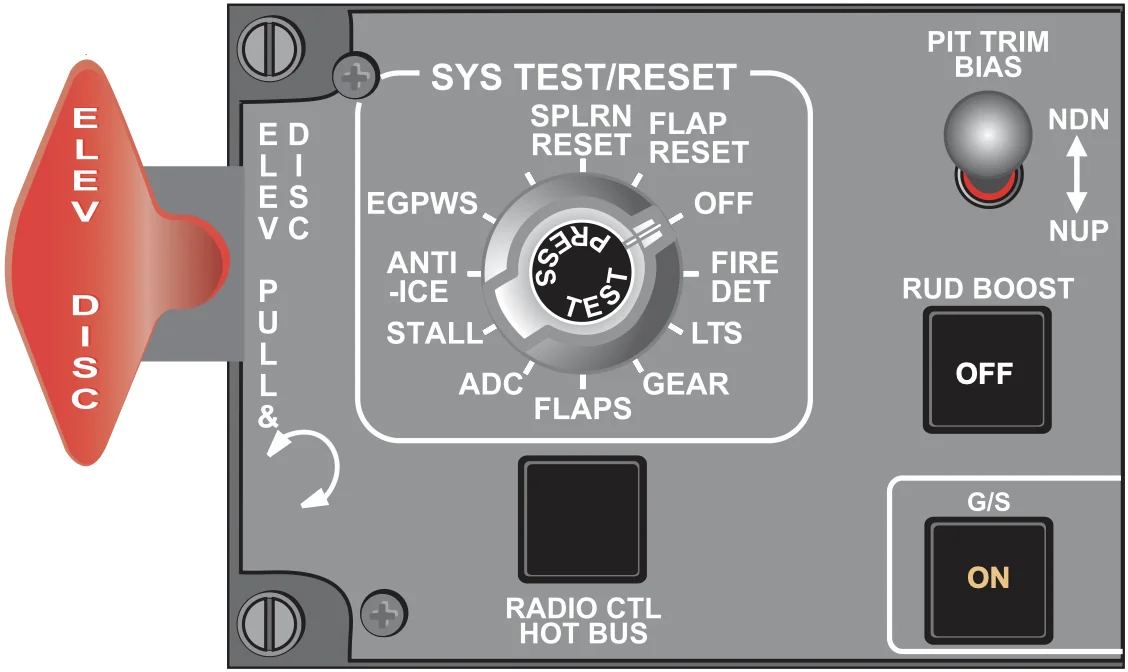
Elevator control jam
- Attitude control -- as required
- Use pitch trim and thrust as necessary
- ELEV DISC handle -- pull and rotate
- The pilot will control the left elevator and the copilot will control the right
- (ELEVATOR DISC white CAS will illuminate)
- Transfer control to that pilot without jam
- Do not apply additional force to the jammed control
- Do not use PIT TRIM BIAS switch
- Leave it centered
Aileron control jam
- Attitude control -- as required
- User rudder and thrust as necessary
- ROLL DISC lever -- PULL
- Pilot -- control aircraft with spoilerons
- Do not use copilot control
- Do not use AIL TRIM
- (ROLL DISC white CAS will illuminate)
Rudder control jam
- Attitude control -- as required
- Use roll control and thrust as necessary
Uncommanded Motion
Pitch axis uncommanded motion
- Control wheel master switch (MSW) -- depress and hold
- Attitude control -- as required
- Thrust levers -- as required
Roll or yaw axis uncommanded motion
- Control wheel master switch (MSW) -- depress and hold
- Attitude control -- as required
Loss of both generators and both main batteries
- L and R BATT switches -- ON one at a time
- L and R GEN circuit breakers -- Set
- Engine N2 -- 80% or above
- L and R GEN switches -- one at a time, depress for approximately 1 second
Emergency braking
- EMERGENCY / PARKING BRAKE handle - pull smoothly
- EMER / PARK BRK white CAS message
Emergency Evacuation
- EMERGENCY / PARKING BRAKE -- Set
- Thrust levers -- CUTOFF
- EMER LIGHTS switch -- ON
- All battery switches -- OFF
- EMER BATT, L BATT, and R BATT
Nosewheel Steering Malfunction
- Control Wheel Master (MSW) -- Depress & Release
- Thrust Levers -- IDLE
Stall
- Lower the pitch attitude to reduce angle of attack.
- Thrust Levers T/O (Manual APR, if Required)
- Level the wings.
- Accelerate out of stall condition.
REV UNSAFE, UNL, or DEP
- "LEFT" OR "RIGHT REVERSER UNSAFE" VOICE ACTIVATES
- L REV UNSAFE R REV UNSAFE
- UNL OR DEP DURING TAKEOFF
During takeoff
Below V1 Speed
- Brakes -- Apply
- Thrust Levers -- IDLE
Above V1 Speed
- Attitude Control -- As Required
- Accelerate to VR. Keep nose wheel on the ground.
- Rotate at VR; Climb at V2.
- Gear. -- UP
- Climb to 1500 feet AGL or Obstacle Clearance Altitude (as appropriate), accelerate to V2 +25, then retract flaps.
Terrain Aural Warning
"PULL UP" "TERRAIN, TERRAIN, PULL UP" "OBSTACLE, OBSTACLE, PULL UP"
- Autopilot -- Disengage
- Press GA button to disengage AP
- Thrust Lever(s) -- Select T/O or APR, As Required
- Increase pitch attitude and climb as required to avoid terrain.
- Pitch up to 40°
- SPOILER Lever -- RET
- Flaps -- Retract (8° or UP), As Required
- Gear -- UP
- Flaps -- UP
Windshear
During Final Approach
Siren (optional), "Windshear, Windshear, Windshear" aural warning and red WIND SHR warning on the PFD are illuminated:
- Immediately initiate AFM go-around procedure
- Except do not retract flaps or landing gear.
- Depressing GO-AROUND button in left thrust lever handle disengages autopilot and selects flight director go-around mode.
- Thrust Lever(s) -- SELECT T/O OR APR, AS REQUIRED
- Rotate smoothly to the go-around/takeoff pitch attitude, allowing airspeed to decrease if necessary. Maintain wings level.
- If the aircraft continues to descend, increase pitch target attitude smoothly and in small increments, bleeding airspeed as necessary to stop the descent. Use stall warning onset (stick shaker) as the upper limit of pitch attitude.
- Maintain escape attitude and thrust and delay retracting flaps or landing gear until safe climbout is assured.
During Takeoff
Siren (optional), "Windshear, Windshear, Windshear" aural warning and red WIND SHR warning on the PFD are illuminated:
- Thrust Lever(s) -- SELECT T/O OR APR, AS REQUIRED
- Maintain takeoff target pitch attitude and wings level, allowing airspeed to decrease if necessary.
- Do not retract flaps or gear.
- If the aircraft continues to descend, increase pitch target attitude smoothly and in small increments, bleeding airspeed as necessary to stop the descent. Use stall warning onset (stick shaker) as the upper limit of pitch attitude.
- Maintain escape attitude and thrust and delay retracting flaps or landing gear until safe climbout is assured.