Performance
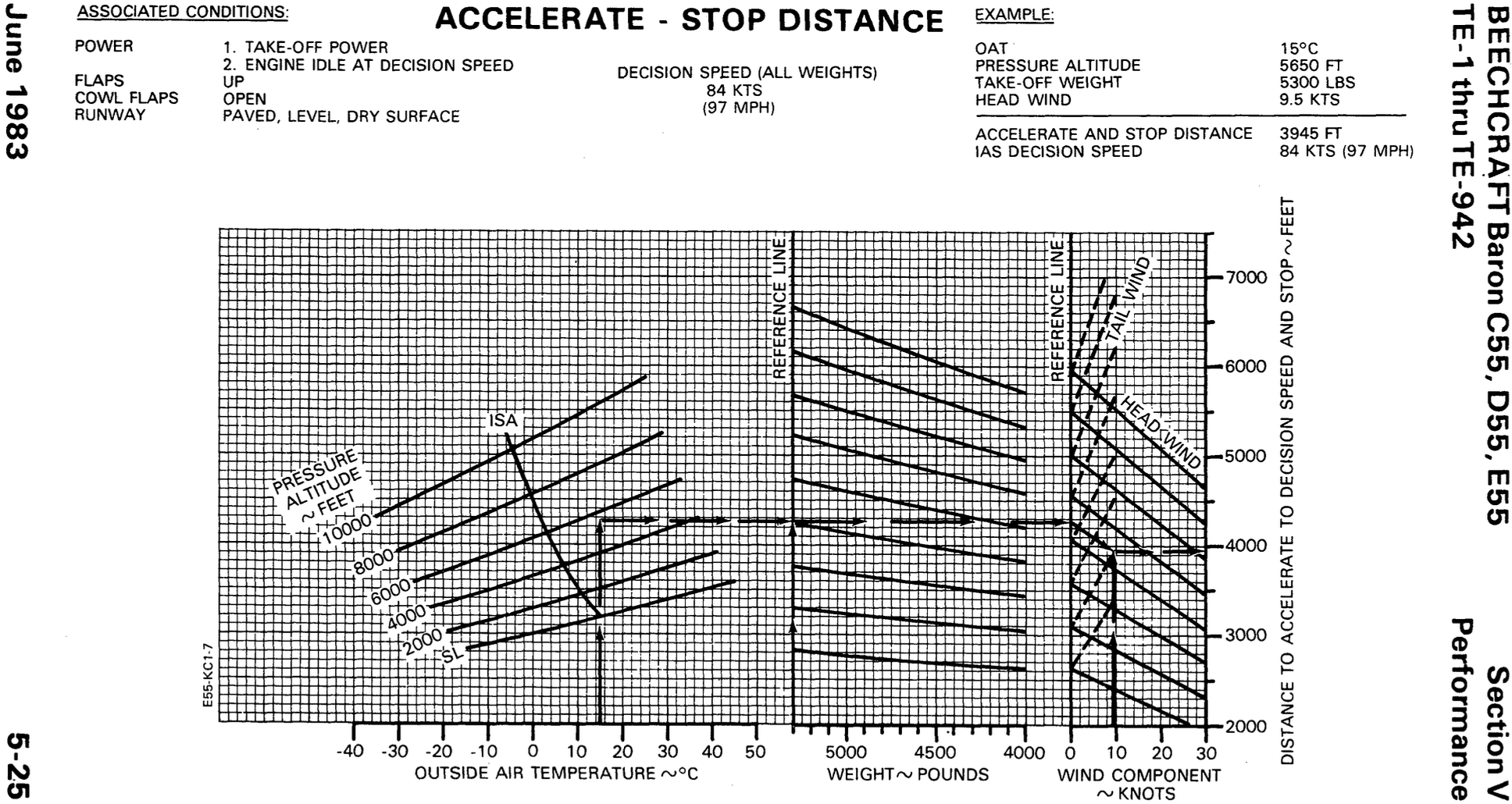
- Accelerate-stop distance on a hot day at fairly high pressure altitude, maximum weight, and no headwind should be less than 5,000 ft.
- It is possible that it is more than this, but 5,000 ft. is a conservative value to use as an upper bound in most "normal" circumstances
- Being as over conservative in determination of a bounding accelerate-go distance results in an inability to climb at all
- Therefore need to be a bit less conservative
- The POH example for accelerate-stop distance resulted in a value of 4,000 ft.
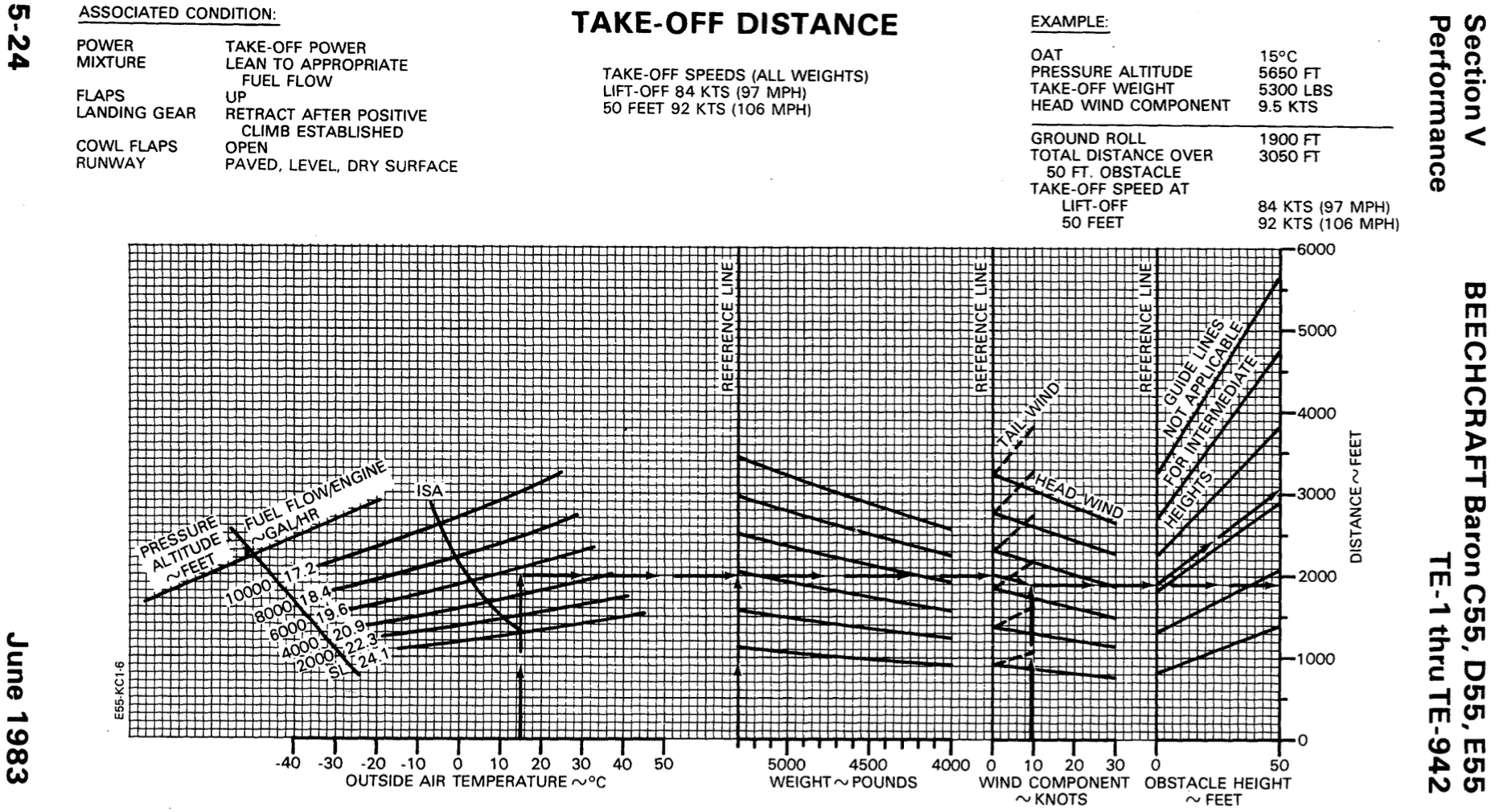
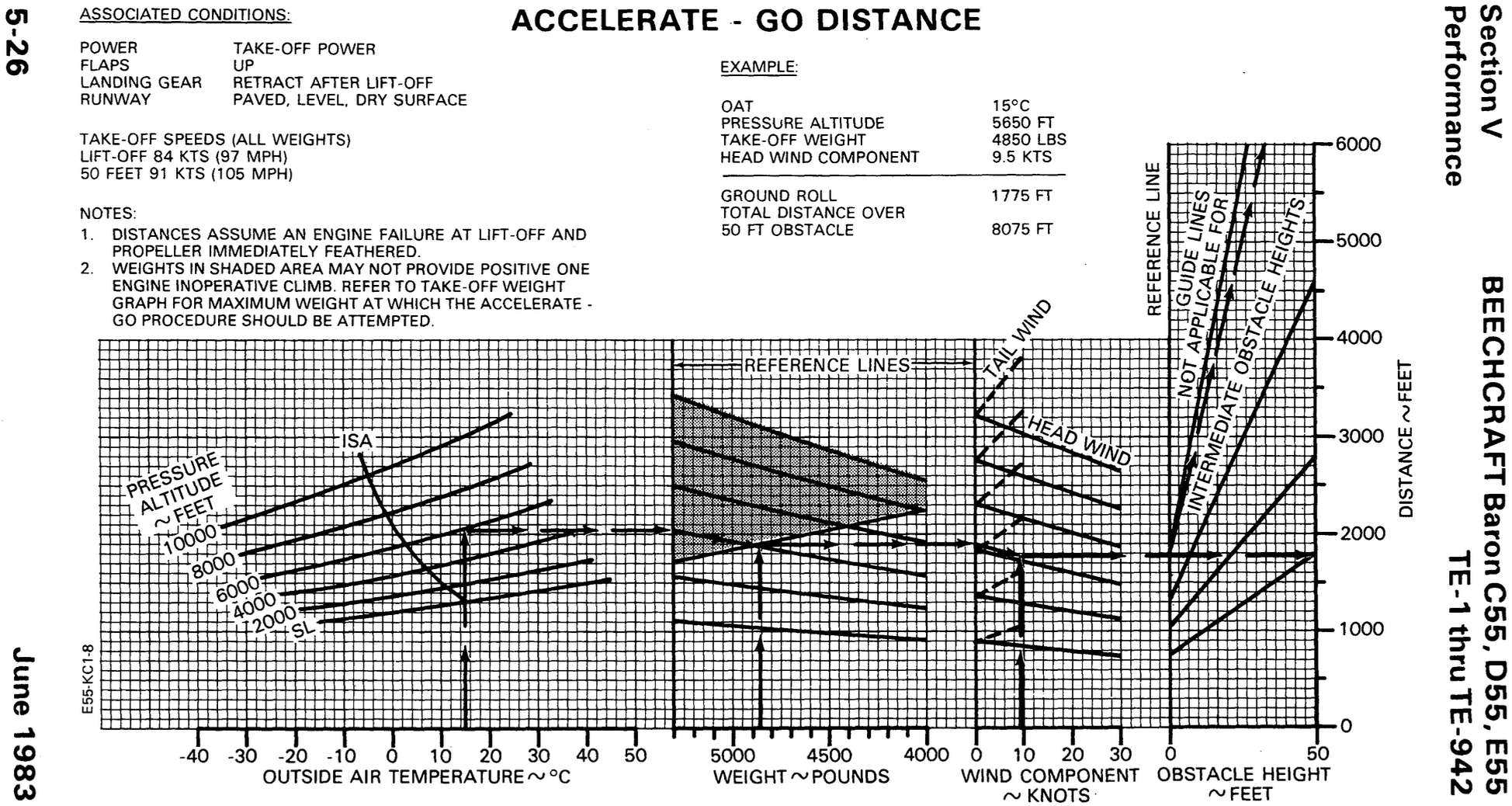
- The POH example for accelerate-go distance is the same as that for accelerate-stop, but 450 lb lighter and this resulted in an accelerate-go distance (clearing 50 ft. obstacle) of 8,100 ft.
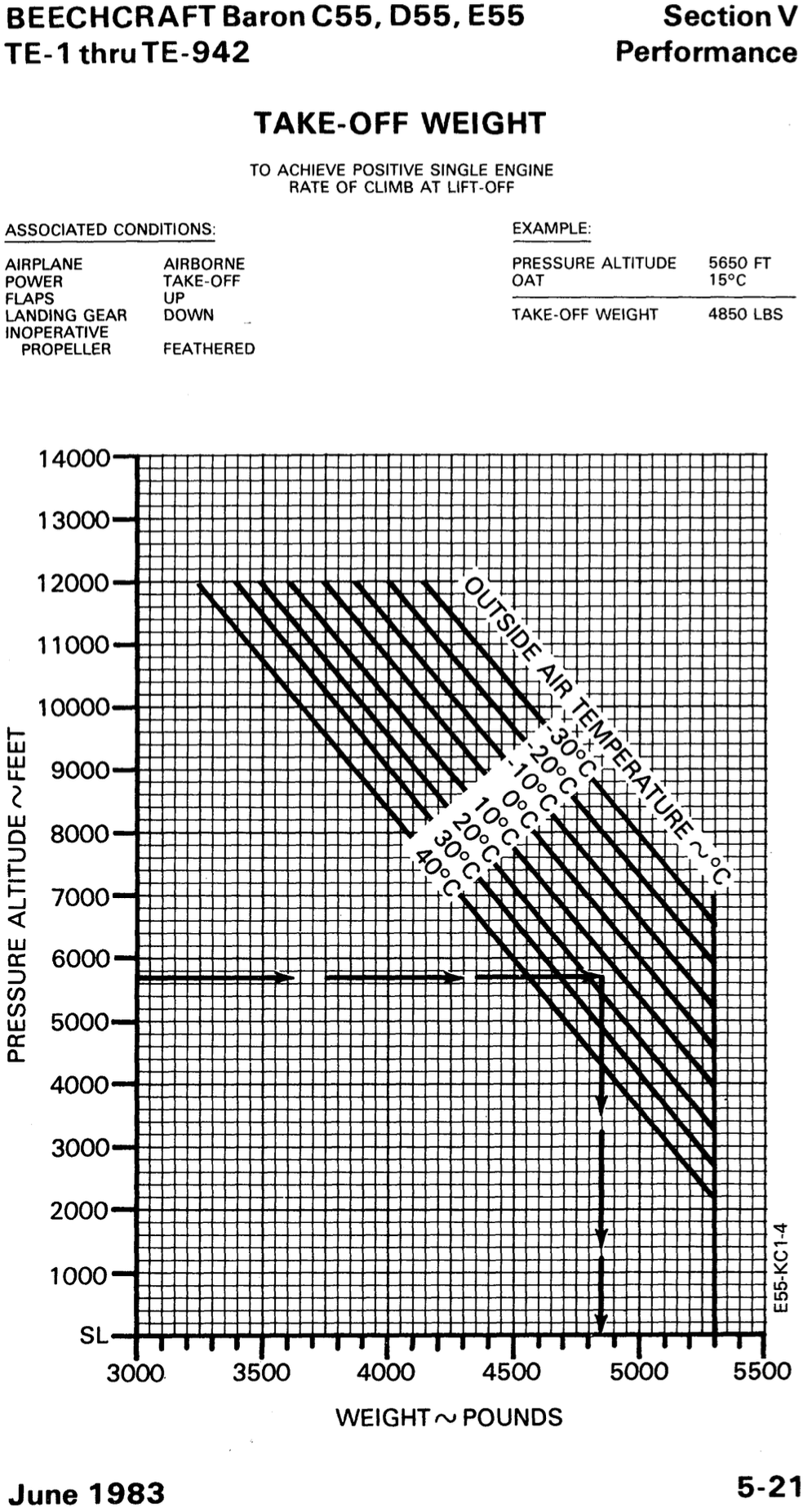
- For our training scenarious out of KADS (95 °F, 2,000' pressure altitude, full fuel with 420 lb of occupants and baggage, no headwind) a more reasonable accelerate-go distance is about 5,500 ft.
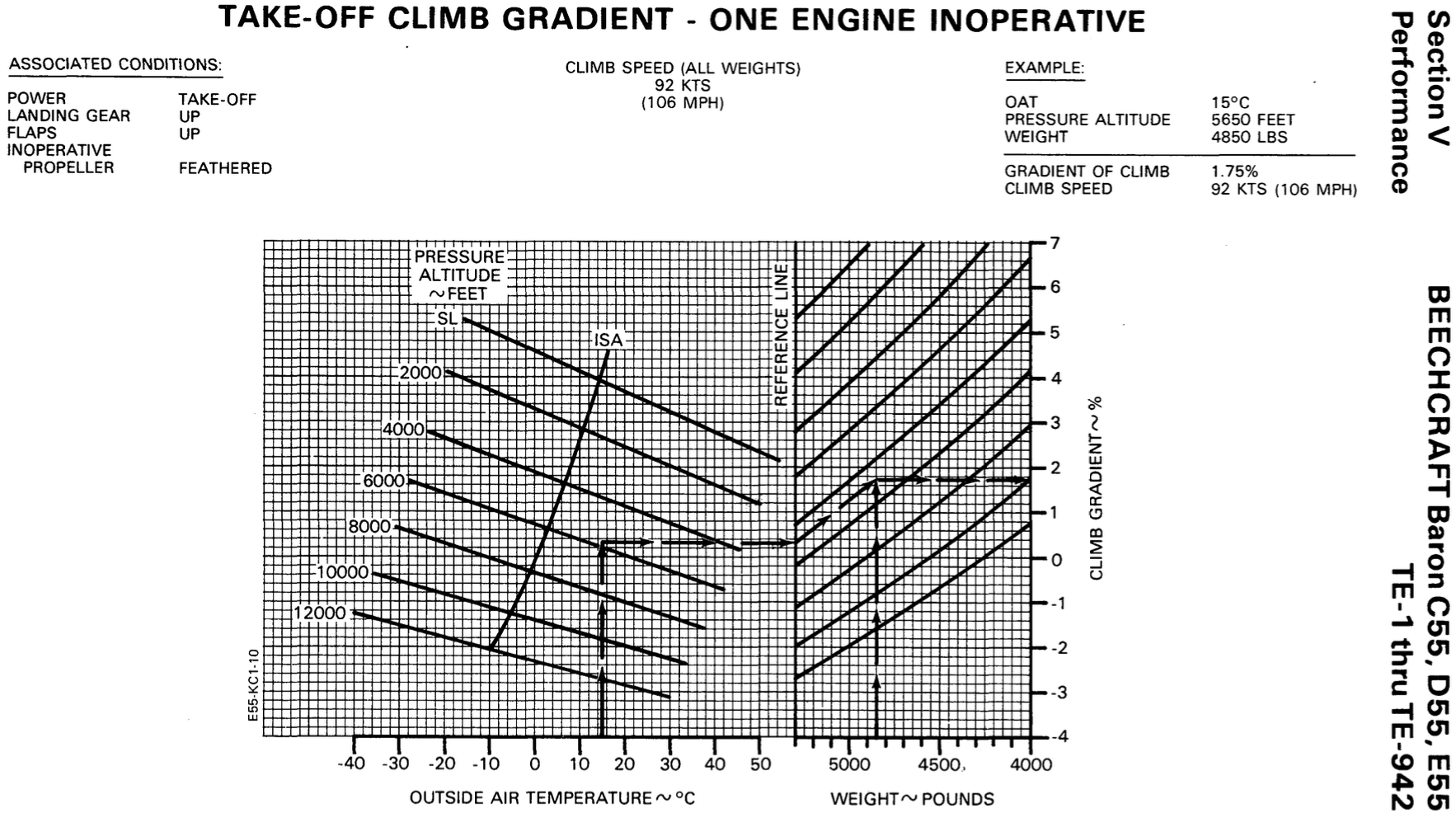
- In this scenario, the OEI climb rate would be just under 500 fpm