Commercial Pilot Study Guide
Area of Operation I. Preflight Preparation
Task A. Pilot Qualifications
What new privileges does a commercial pilot certificate give?
- A commercial pilot may act as PIC of an aircraft carrying persons/property for hire or as PIC of an aircraft for hire.
Can a commercial pilot buy a plane and start charging to fly people from point A to point B?
- No.
- 14 CFR §119 applies to pilots operating or intending to operate civil aircraft as an air carrier or commercial operator, carrying persons or property for compensation or hire.
So specifically what operations can you conduct as a commercial pilot?
- 14 CFR §119.1(e)
- Flight instruction
- Ferry or training flights
- Aerial photography
- Banner towing
- Skydive operations
- And some others
- There are certain operations that can be done under Part 91 when common carriage is not involved
- 14 CFR §91.501(b)
- Ferry or training flights
- Aerial photography
- Pipeline patrol
- Flights conducted by the operator of an airplane for personal transportation or transportation of guests if no charge is made
- And some others
- In addition, this section describes certain things that can be charged for during certain specific operations
Which of the following can you do as a commercial pilot?
- You are hired by a skydive company to fly skydivers
- This is legal under 14 CFR §91.147
- You want to rent a plane to fly somewhere with your friends and split the rental cost and fuel equally
- This is legal under 14 CFR § 61.113(c)
- An aircraft owner wants to pay you to fly them somewhere in their plane
- This is legal under 14 CFR §91.501(b)(4)
- An aircraft owner wants to pay you to fly their friends and family members somehwhere in their plane
- This is legal under 14 CFR §91.501(b)(4) as long as the aircraft owner isn't charging his friends and family for the flight
What is common carriage?
- There are four elements in defining common carriage:
- A holding out of a willingness to
- Transport persons or property
- From place to place
- For compensation
- FAA-AC-120-12A
What is a commercial operator?
Commercial operator (14 CFR §1.1)
means a person who, for compensation or hire, engages in the carriage by aircraft in air commerce of persons or property, other than as an air carrier or foreign air carrier or under the authority of Part 375 of this title. Where it is doubtful that an operation is for “compensation or hire”, the test applied is whether the carriage by air is merely incidental to the person's other business or is, in itself, a major enterprise for profit.
Is a private carrier exempt from getting an air carrier certificate?
- Not necessarily.
- 14 CFR §119.23
- This regulation says that operators engaged in passenger-carrying operations, cargo operations, or both when common carriage is not involved need to operate under either part 125 or part 135 (depending on the size of the airplane)
- 14 CFR §125.5 says an operating certificate is required.
- 14 CFR §119.33 says an air carrier or operating certificate is required.
- The exceptions are in 14 CFR §91.501(b)
How old do you need to be to be a commercial pilot?
- 18 years old.
- 14 CFR §61.123
What aeronautical experience is required under part 61?
- 14 CFR §61.129
- 250 hours total flight time
- 100 Hours in powered aircraft, of which 50 hours must be in airplanes
- 100 hours of a pilot-in-command flight time which includes
- 50 hours in airplanes
- 50 hours in cross-country flight of which at least 10 hours must be in airplanes
- 20 hours flight training (on Commercial Pilot areas of operation in 14 CFR §61.127(b))
- 10 Hours of instrument training (5 hours must be in a single-engine airplane)
- 10 hours of training in a complex airplane or TAA
- One 100 nm 2-hour day cross-country
- One 100 nm 2-hour night cross-country
- 3 hours of check ride preparation in a single-engine airplane within 2 calendar months of the checkride
- 10 hours solo flight (in a single engine airplane)
- One 300nm cross-country flight
- One leg straight-line distance of at least 250 nm from point of departure with 3 points of landing
- 5 hours in night VFR conditions with 10 takeoffs and landings at an airport with an operating control tower
- One 300nm cross-country flight
- Only need 3rd class medical to get certificate (even though 2nd class to exercise privileges)
- 250 hours required
- Only 200 in aircraft, 50 can be in approved ground trainer
- 100 hours PIC
- 50 hours cross country
What documents must you carry when flying?
- A pilot is required to have on them or readily accessible in the plane (PPM):
- P - Pilot certificate
- P - Photo ID
- M - Medical certificate
What is a high-performance aircraft?
- An airplane with an engine of more than 200 horsepower
- 14 CFR §61.31(f)
What is a complex aircraft?
- Retractable gear, flaps, and controllable pitch propeller
- 14 CFR §61.1(b)
What is a Technically Advanced Aircraft (TAA)?
- PFD, MFD, autopilot
- 14 CFR §61.129(j)
With respect to aircraft, what are category, class, and type?
- Different aircraft are organized according to the following definitions 14 CFR §1.1
When is a type rating required?
- A type rating is required by 14 CFR §61.31(a) for
- Large Aircraft - those with a maximum takeoff weight of more than 12,500 lb
- Turbojet powered airplanes
- Any others specified by the FAA
What are the various classes of FAA medicals and their durations?
- First Class
- Required to PIC with an ATP
- Required to be required pilot flightcrew member if 60 years old
- 40 and older: 6 months
- Under 40: 12 months
- Second Class
- Required for commercial PIC privilages
- 12 Months at any age
- Third Class
- Sufficient for the sport, recreational, student, private, and flight instructor ratings
- 40 and older: 24 months
- Under 40: 60 months
What is BasicMed, what are the requirements and limitations?
- Limitations
- 14 CFR §61.113(i)
- For Private Pilot only
- Airplane authorized to carry not more than 7 people or with max takeoff weight not more than 12,500 lb
- Carry no more than 6 passengers
- Fly no higher than 18,000 ft
- Fly no faster than 250 KIAS
- Cannot fly for compensation or hire
- These limitations were updated in November 2024
- Requirements
- 14 CFR §61.23(c)(3)
- Have held a medical at some point after 14-July-2006
- The most recent medical cannot have been suspended or revoked
- Completed medical education course in previous 24 calendar months
- Received physical exam in previous 48 calendar months
- Bring BasicMed checklist to any licensed physician
- Comply with any medical requirements or restrictions associated with their U.S. driver's license
- FAA-AC-68-1A BasicMed
- FAA Updates BasicMed Program
Task B. Airworthiness Requirements
What documents need to be on plane?
How long is registration good for?
- Valid for 7 years
Task C. Weather Information
- TBD
Task D. Cross-Country Flight Planning
- TBD
Task E. National Airspace System
- TBD
Task F. Performance and Limitations
- TBD
Task G. Operation of Systems
- TBD
Task H. Human Factors
- TBD
Weather
Weather Services
Example 1
KIAD 241952Z 31005KT 1/2SM R01R/2000V2800FT FG VV002 07/06 A2946 RMK
AO2 RAE19 SLP978 P0001 T00670061- METAR
241952Z- Issuance time
31005KT- Winds 310 at 5 knots
1/2SM- Half statute mile visibility
R01R/2000V2800FT- RVR Runway 01R is variable between 2000 and 2800 feet
FG- Fog
VV002- Vertical visibility 200 feet
07/06- Temperature 7 °C, dewpoint 6 °C
A2946- Altimeter setting in inches of mercury
- Remarks
AO2- Automated station without manual augmentation
- Can tell the difference between types of precipitation
RAE19- Rain ended 19 minutes past the hour
SLP978- Sea Level Pressure in mbar
- To get Sea Level Pressure need to prepend a
9or10, to get a value that is closest to 1000 mbar - In this case we prepend
9to get9978or 997.8 mbar - If we prepended a
10the value would be too large
P0001- Hourly precipitation in hundredths of an inch (0.01 inches) since last METAR
T00670061- Hourly temperature 6.7 °C and dewpoint 6.1 °C
- The leading
0of each four digit group indicates the values are positive, a leading1indicates the values are negative
Example 2
KDCA 242036Z 14016KT 4SM RA BR BKN019 BKN047 OVC070 17/15 A2943 RMK
AO2 PRESFR P0004 T01670150- METAR
PRESFR- Pressure falling rapidly
- When pressure is rising or falling rapidly it means winds will be strong
Example 3
KRBD 112153Z 18013G25KT 10SM CLR 12/M03 A2982 RMK AO2 PK WND 19026/2122
SLP099 T01171028
Example 4
SPECI KDAL 041140Z COR 30034G68KT 3/4SM R13L/2800VP6000FT +TSRA BR SQ
FEW011 BKN017 OVC023CB 11/10 A2953 RMK A02 PK WND 29068/1134 WSHFT 1121
TSB10 FRQ LTGICCC ALQDS TS ALQDS MOV NE P0012 T01060100SPECI- Special issuance METAR
KDAL- Dallas Love Field
041140Z- Issuance time
COR- Corrected observation (as opposed to automated)
30034G68KT- Winds
3/4SM- Visibility
R13L/2800VP6000FT- RVR
+TSRA BR SQ- Heavy thunderstorms, rain, squalls
FEW011 BKN017 OVC023CB- Clouds
11/10- Temp and dewpoint in Celcius
A2953- Altimeter setting in inHg
- Remarks
A02- Automated station without manual augmentation
- Can tell the difference between types of precipitation
PK WND 29068/1134- Peak wind 290 at 68 knots that occured at 1134Z
WSHFT 1121- Wind shifted at 1121Z
TSB10- Thunderstorms began 10 minutes past the hour (1110Z)
FRQ LTGICCC ALQDS- Frequent lightning in clouds, cloud-to-cloud, in all quadrants
TS ALQDS MOV NE- Thunderstorms in all quadrants moving northeast
P0012- Hourly precipitation in hundredths of an inch (0.01 inches) since last METAR
T01060100- Hourly temperature 10.6 °C and dewpoint 10.0 °C
- The leading
0of each four digit group indicates the values are positive, a leading1indicates the values are negative
Example 1
KIAD 241741Z 2418/2524 10006KT 2SM -RA OVC006 WS020/17040KT
    FM242000 14015G23KT 3SM -SHRA VCTS OVC015CB
    TEMPO 2420/2424 VRB40KT 1SM +TSRA BKN008 OVC015CB
    FM250000 18012G16KT 6SM -SHRA BKN040
    FM250200 20014G21KT P6SM BKN060
FM251300 26018G27KT P6SM BKN050- TAF
241741Z- Issuance time
2418/2524- Valid period
WS020/17040KT- Wind shear 2000 AGL
- Wind 170 at 40 knots at the top of the wind shear layer
VCTS- Thunderstorms in the vicinity
Transponder and ADS-B Requirements
Transponder
- A transponder is a radar beacon transmitter/receiver installed in the instrument panel.
- ATC beacon transmitters send out interrogation signals continuously as the radar antenna rotates.
- When an interrogation is received by a transponder, a coded reply is sent to the ground station where it is displayed on the controller's scope.
- A reply light on the transponder panel flickers every time it receives and replies to a radar interrogation. Transponder codes are assigned by ATC.
- Transponders used in general aviation are mode A
- If it can do altitude encoding it has mode C capability
- Mode C sends pressure altitude to ATC
- Adjusting the altimeter's Kollsman window has no effect on the altitude read by the controller.
- A transponder code consists of four numbers from 0 to 7 (4,096 possible codes)
- Mode S transponder sends/receives some extra data
- Mode S offers improvements over Mode C
- 24-bit addresses instead of 4-bit
- Transmits more data
- Aircraft Collision Avoidance System (ACAS)
- Heading, roll angle, etc.
Requirements
- Must have transponder with mode C in
- Class A, B, and C airspace
- Above 10,000 MSL, except when 2,500 AGL.
- Within 30 nm of class B primary airports (in and above the mode-C veil)
- Within 10 nm of certain designated airports, excluding airspace which is both outside the Class D surface area and below 1,200' AGL
- Flying into, within, or across the ADIZ
Comparison Against ADS-B Requirements
- Mode-C is required in the same places as ADS-B except it is all airspace at or above 10,000 feet MSL, excluding airspace at and below 2,500 feet AGL (not just class E).
- Mode-C is not required in the Gulf of Mexico area specified for ADS-B.
- Mode-C is required into/within/across the ADIZ
ADS-B
ADS-B
A surveillance technology in which an aircraft determines its position via satellite navigation or other sensors and periodically broadcasts it, enabling it to be tracked.
- ADS-B uses plane's WAAS GPS and broadcasts information to other planes and ground stations.
- Ground stations compile and rebroadcast received information.
- This is known as ADS-B Out.
- ADS-B In is the capability for other planes to receive this information as traffic, as well as weather information.
- Acronym
- Automatic - no pilot input required
- Dependendent - requires positon input, e.g. WAAS GPS
- Surveilance - provides aircrafts location, direction, and climb/descent indication
- Broadcast - broadcasts the surveilance information to be seen by others
- Components of ADS-B In
- Traffic Information Services-Broadcast (TIS-B)
- Provides traffic information to planes with ADS-B receivers.
- The traffic includes that which is not broadcasting its own output via ADS-B, because it's able to use radar data and conventional transponder data to understand where aircraft are.
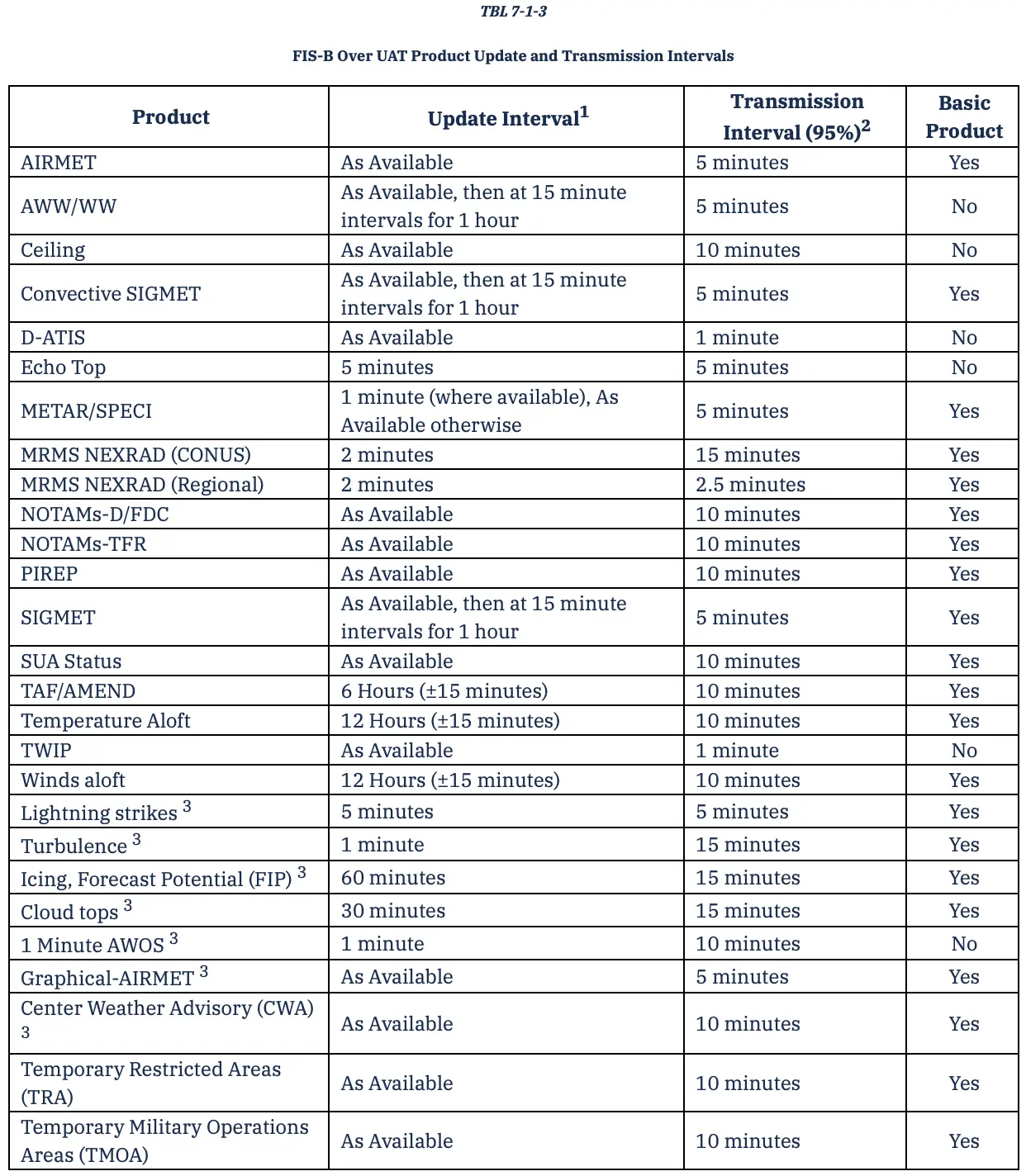
- Flight Information Services-Broadcast (FIS-B)
- Provides NEXRAD graphical weather in (for example in G1000).
- Also provides info on SUA and TFRs.
- Traffic Information Services-Broadcast (TIS-B)
- FAA Automatic Dependent Surveillance-Broadcast (ADS-B)
- FAA Equip ADS-B
- 978 and 1090 MHz
FIS-B
Requirements
- ADS-B is required in:
- Class A, B, and C airspace.
- Class E airspace at or above 10,000 feet MSL.
- Excluding airspace at and below 2,500 feet AGL.
- Within 30 nautical miles of a Class B primary airport (the Mode C veil).
- Above the ceiling and within the lateral boundaries of Class B or Class C airspace up to 10,000 feet.
- Class E airspace over the Gulf of Mexico, at and above 3,000 feet MSL, within 12 nm of the U.S. coast.
- 14 CFR §91.225 - Automatic Dependent Surveillance-Broadcast (ADS-B) Out equipment and use
- 14 CFR §91.227 - Automatic Dependent Surveillance-Broadcast (ADS-B) Out equipment performance requirements
What are SIGMETs and AIRMETs?
- AIRMET (WA):
- Stands for Airmen's Meteorological Information
- Less intense than requiring a SIGMET, used in preflight to enhance flight safety.
- Forecasts valid for 6 hours
- Issued every 6 hours, as well as unscheduled updates.
- Include info about IFR, extensive mountain obscuration, turbulence, strong surface winds, icing, freezing levels.
- Of operational interest to all aircraft, potentially hazardous to light aircraft
- Pilots of heavy aircraft aren't really going to worry about AIRMETs
- Types
- Sierra: describes IFR conditions and/or extensive mountain obscurations
- Tango: Turbulence, sustained surface winds more than 30kts, low level wind shear
- Zulu: Moderate icing and freezing level heights
- Includes forecast of moderate icing, moderate turbulence, sustained surface winds of 30 knots or greater, widespread areas of ceilings less than 1,000 feet and/or visibilities less than three miles, and extensive mountain obscurement.
- https://www.aviationweather.gov/sigmet/help
- The definition here is a bit different than in PHAK, for example
- SIGMET (WS)
- Significant Meteorological Information AIM 7-1-6 Inflight Aviation Weather Advisories
- Weather that is potentially hazardous to all aircraft
- Forecasts valid for 4 hours
- Types
- Severe icing
- Severe turbulence / clear air turbulence (CAT)
- IMC due to sandstorms, volcanic ash
- Convective SIGMET (WST)
- Advises of significant weather due to thunderstorms
- Severe or greater turbulence, severe icing, low-level wind shear
- Hazardous to all categories of aircraft
- Issued hourly at H+55
- Forecasts valid for 2 hours
- Conditions to issue Convective SIGMET
- Severe thunderstorms due to 50 kts or greater surface winds or hail more than 3/4" in diameter
- Tornadoes
- A line of thunderstorms 60+ nm long
- Severe or embedded thunderstorms for 30+ minutes
- Area of thunderstorms covering at least 40% of the area concerned and exhibiting a very strong radar reflectivity or a significant satellite or lightning signature.
- Look up AIRMETs/SIGMETs online
- See also Graphical AIRMETs
Winds and Temperatures Aloft
- What are the altitudes given? MSL or AGL?
- Why are some entries blank?
- Decode some entries.
Textual
- Winds and Temperatures Aloft Forecast - Textual (FD)
- See also the graphical version Winds and Temperatures Aloft Forecast - Graphical (FB)
- See Aviation Weather Center's Winds/Temps Data
- Winds and temps aloft are forecasts based on observations made a few hours prior
- Made twice a day based on the radiosonde upper air observations taken at 0000Z and 1200Z
- Format
DDSSTTwhereDis wind directionSis wind speedTis temperature
- Example
2321-04is wind from 230 at 21 knots and temperature -21 °C - No winds given below 1,000 ft AGL
- No temp is given for 3,000 ft MSL or when 2,500 ft AGL
- Above 24,000 feet all temperatures are negative so minus sign is dropped
- Wind
9900means light and variable (less than 5 kts) - For winds greater than 99 knots, add
50to theDDand subtract 100 from the wind speed to getSSvalues- Example:
7545means winds of 145 knots from 250
- Example:
Graphical
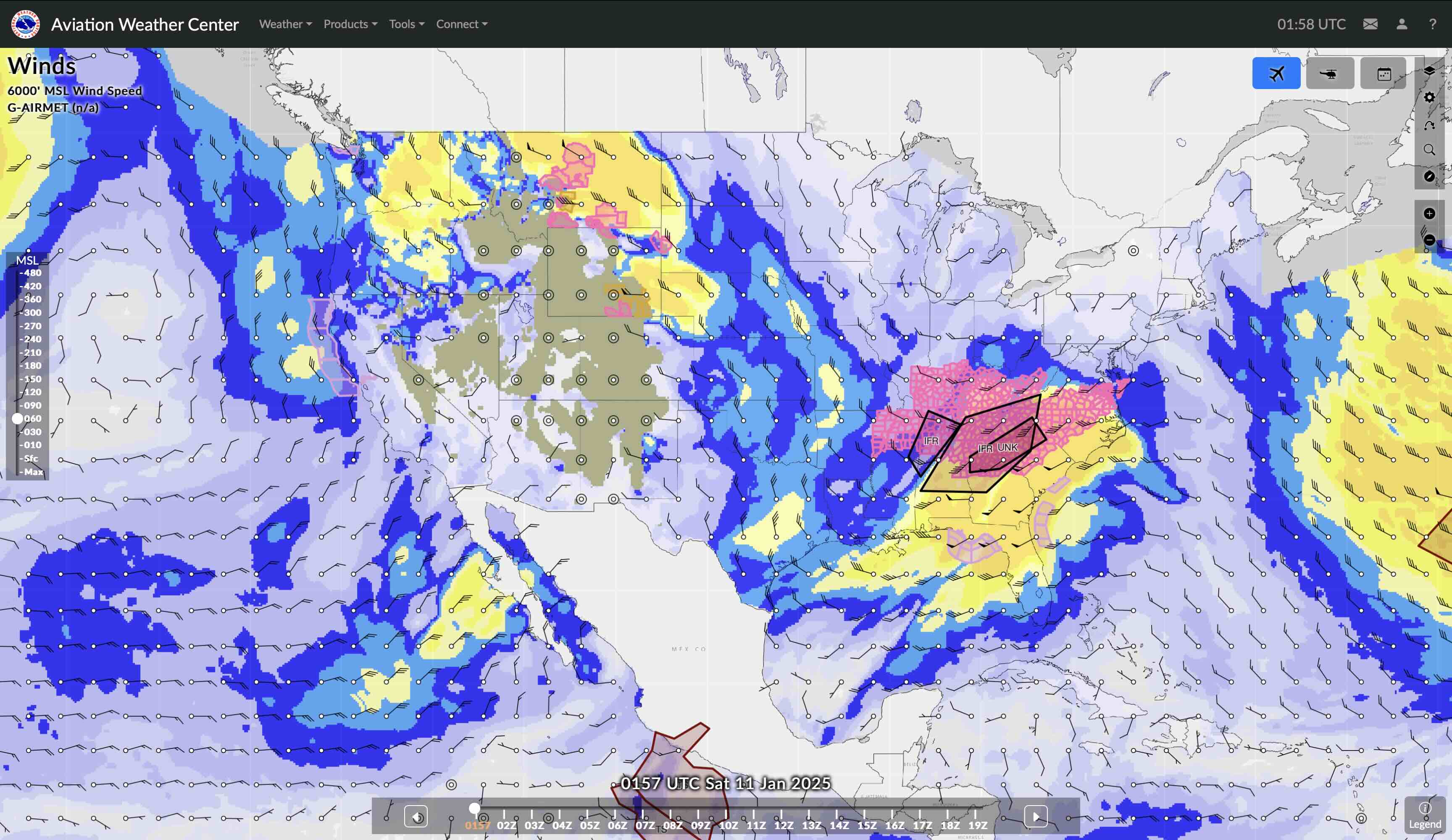
- Winds and Temperatures Aloft Forecast - Graphical (FB)
- See Aviation Weather Center Aviation Weather Center GFA Winds Aloft
Airspace
Describe where the following airspaces can be found. Reference a VFR sectional.
Class E
- AIM 3-2-6
- Any controlled airspace that is not A-D
- Class E airspace below 14,500 feet MSL is charted on Sectional, Terminal, and IFR Enroute Low Altitude charts.
- So technically the default is G up to 14,500 unless otherwise charted
- However, with very few exceptions (see class G airspace below) class E is charted to start at either 700' or 1200' AGL
- So basically the default is that E starts at 1200' AGL except where charted to start at 700' AGL, or where shown to not to start at 1200' AGL.
- This can be seen along the US border, where it shows the start of E at 1,200'
- 700/1200 ft AGL – 18,000 ft MSL (A), up to 12 nm off US coast
- "1200 ft, except where the elephant steps"
- VFR chart Colors
- To surface: dashed magenta
- 700 ft floor: ombre magenta
- 1200 ft floor: ombre blue
- Note: ombre is a French word meaning shaded, where one hue blends to another
- Weather, Aircraft, Pilot Requirements
Class G
Class G
- AIM 3-3
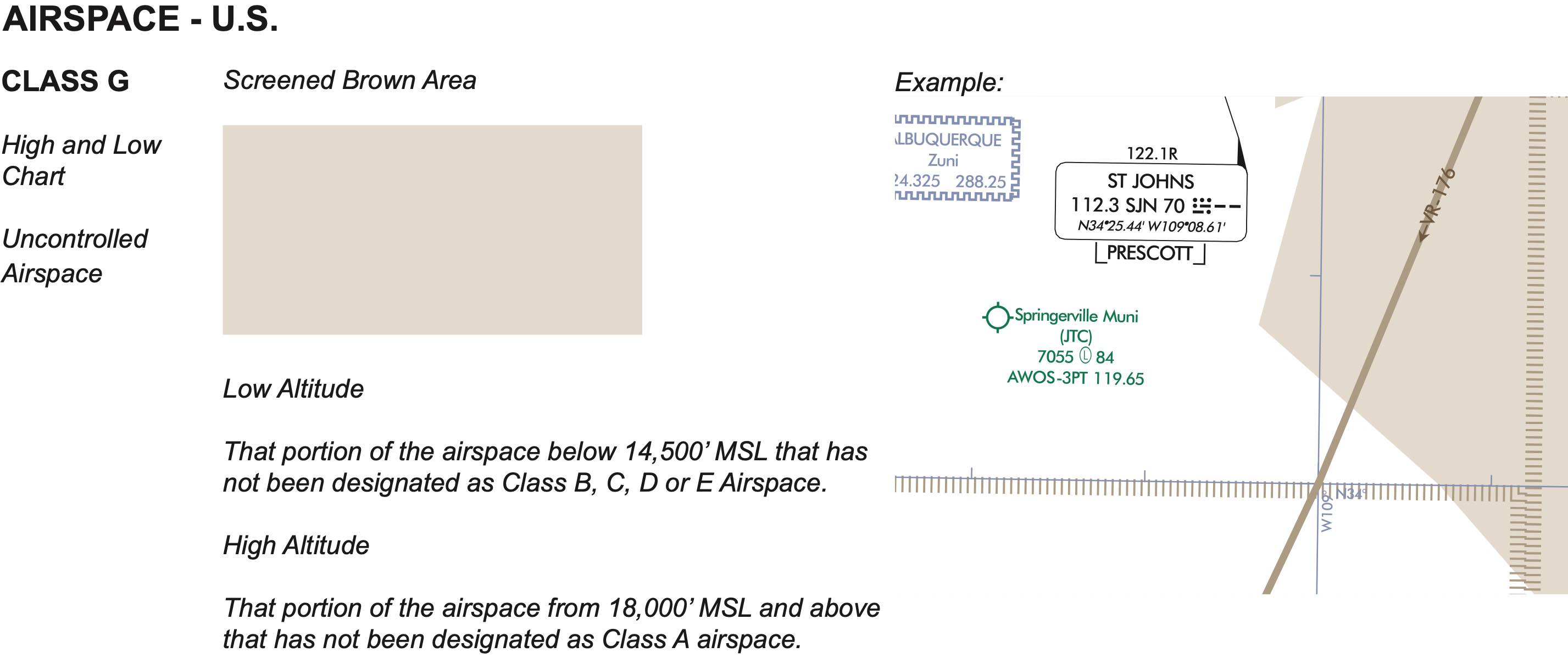
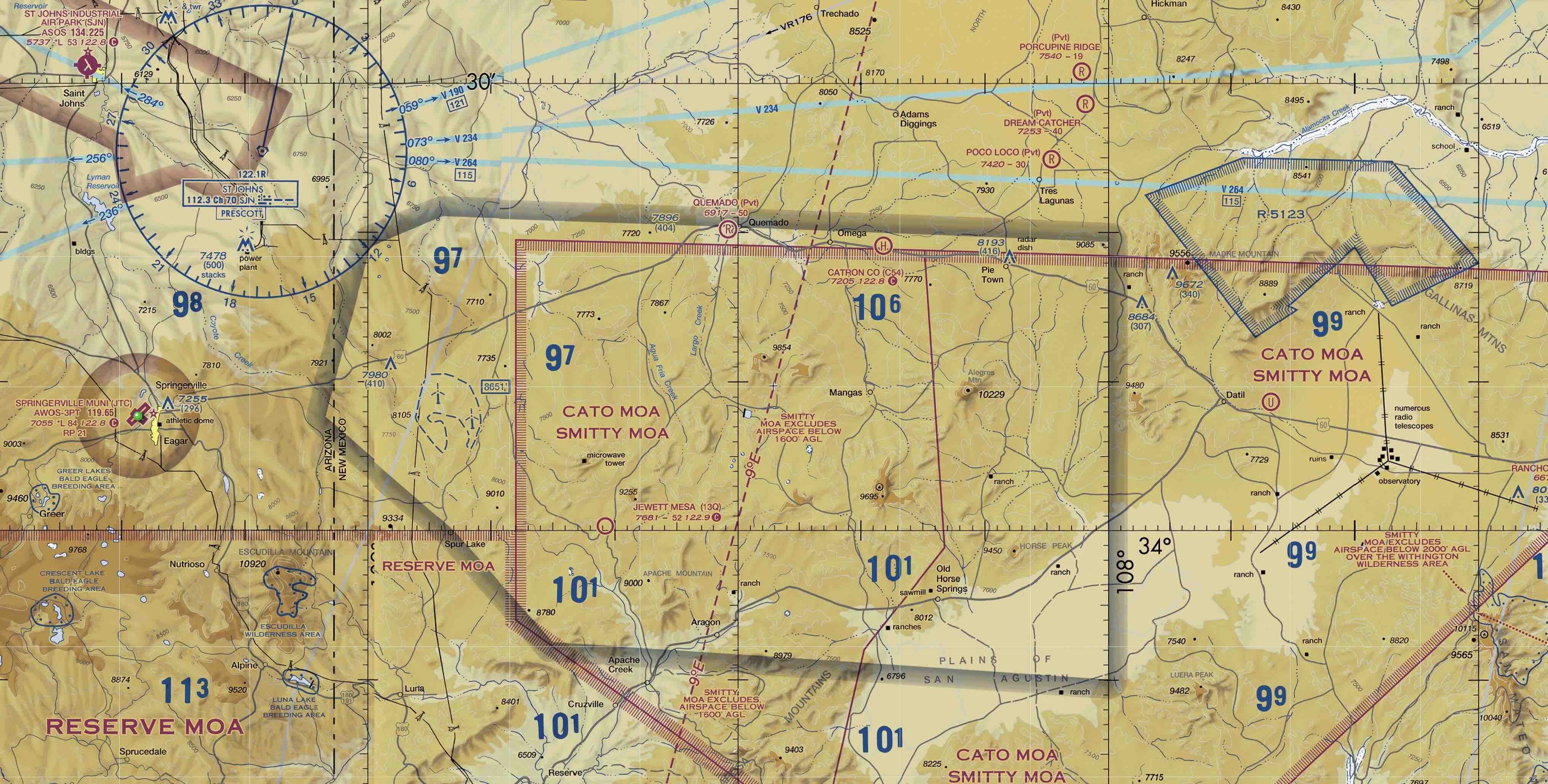
- SFC – Base of class E
- Even though there is no ATC, still minimum requirements to comply with FAA
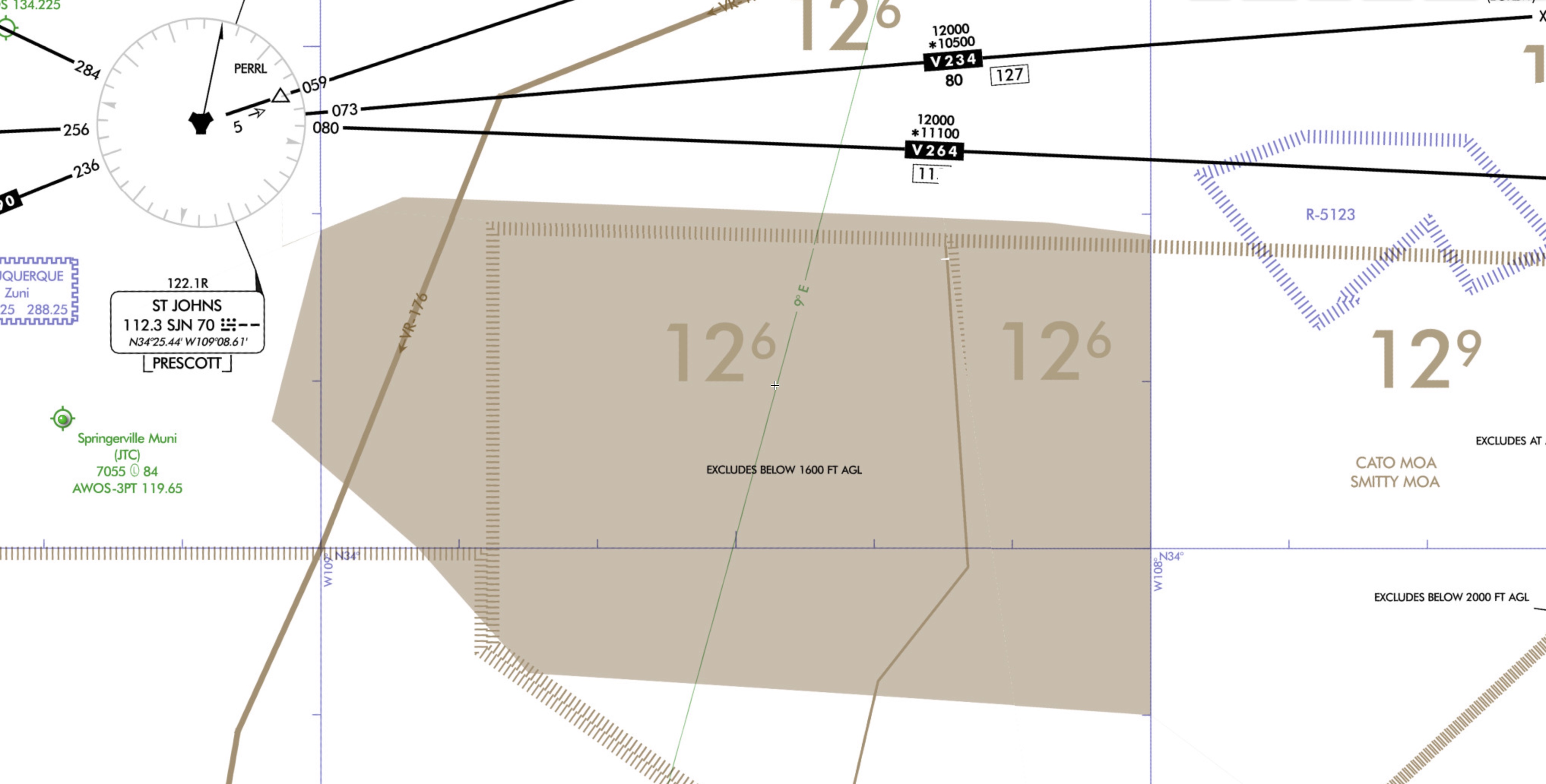
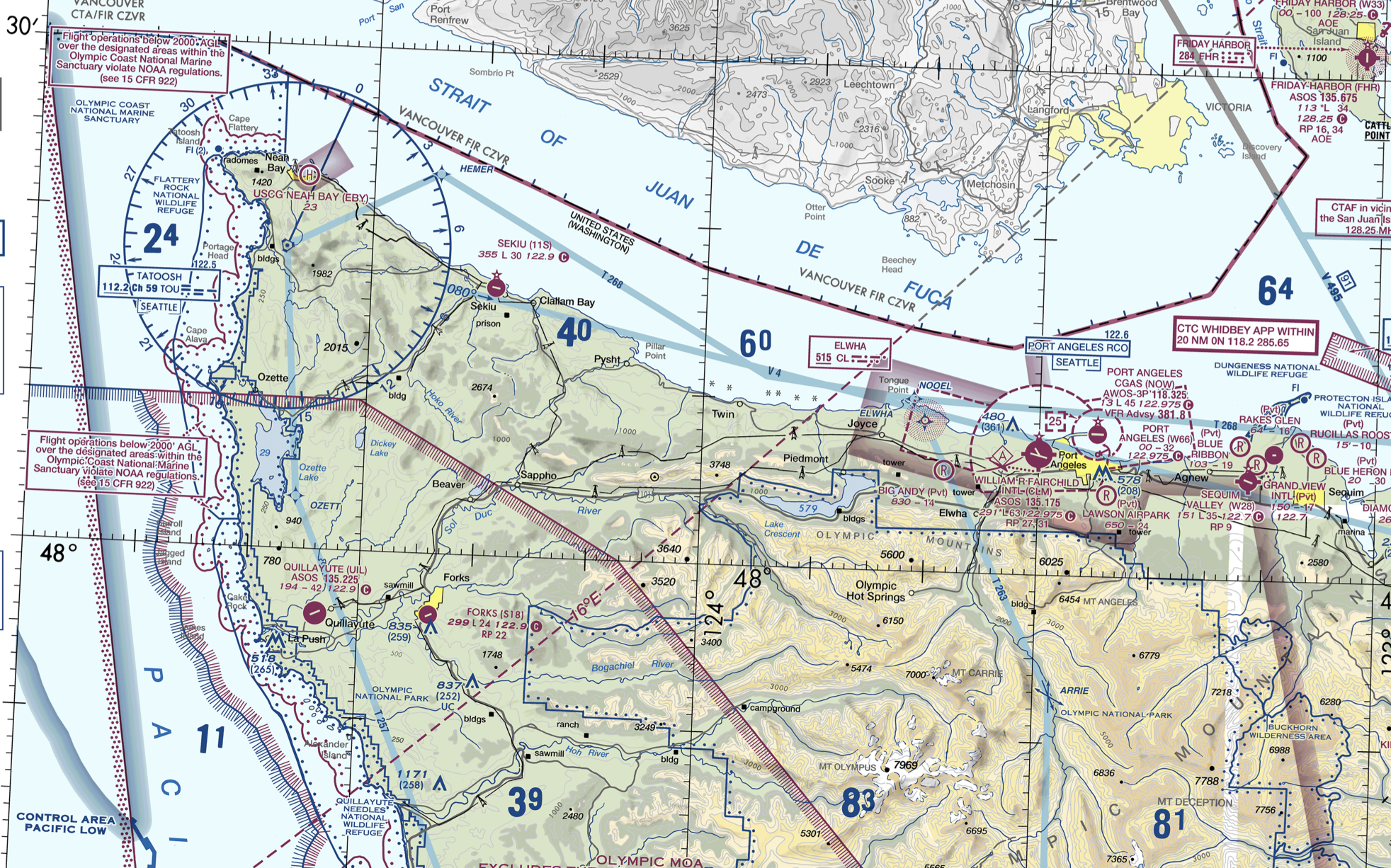
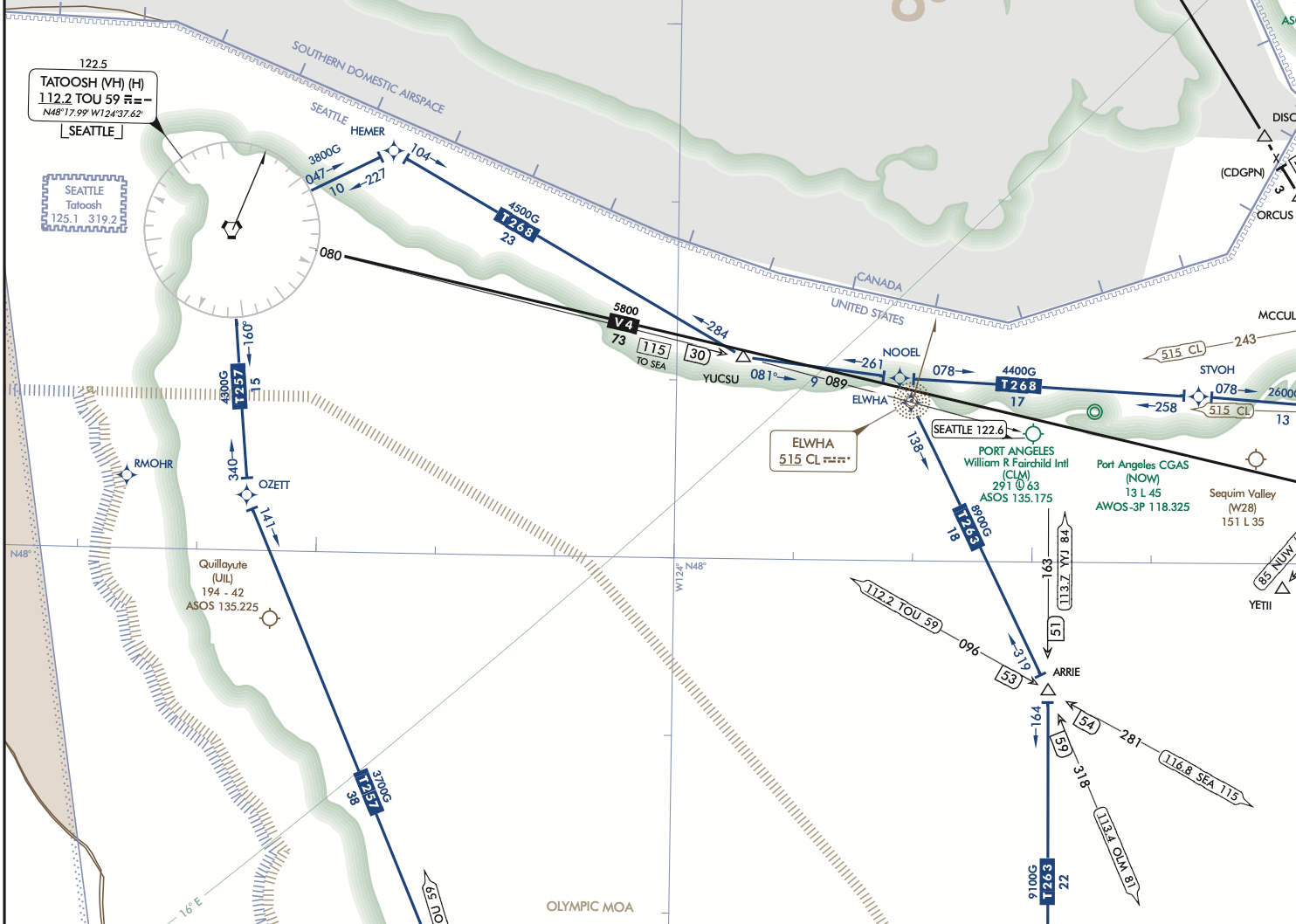
- In certain designated areas class G extends up to 14,500 feet
- This is on VFR charts, but easier to see on IFR charts
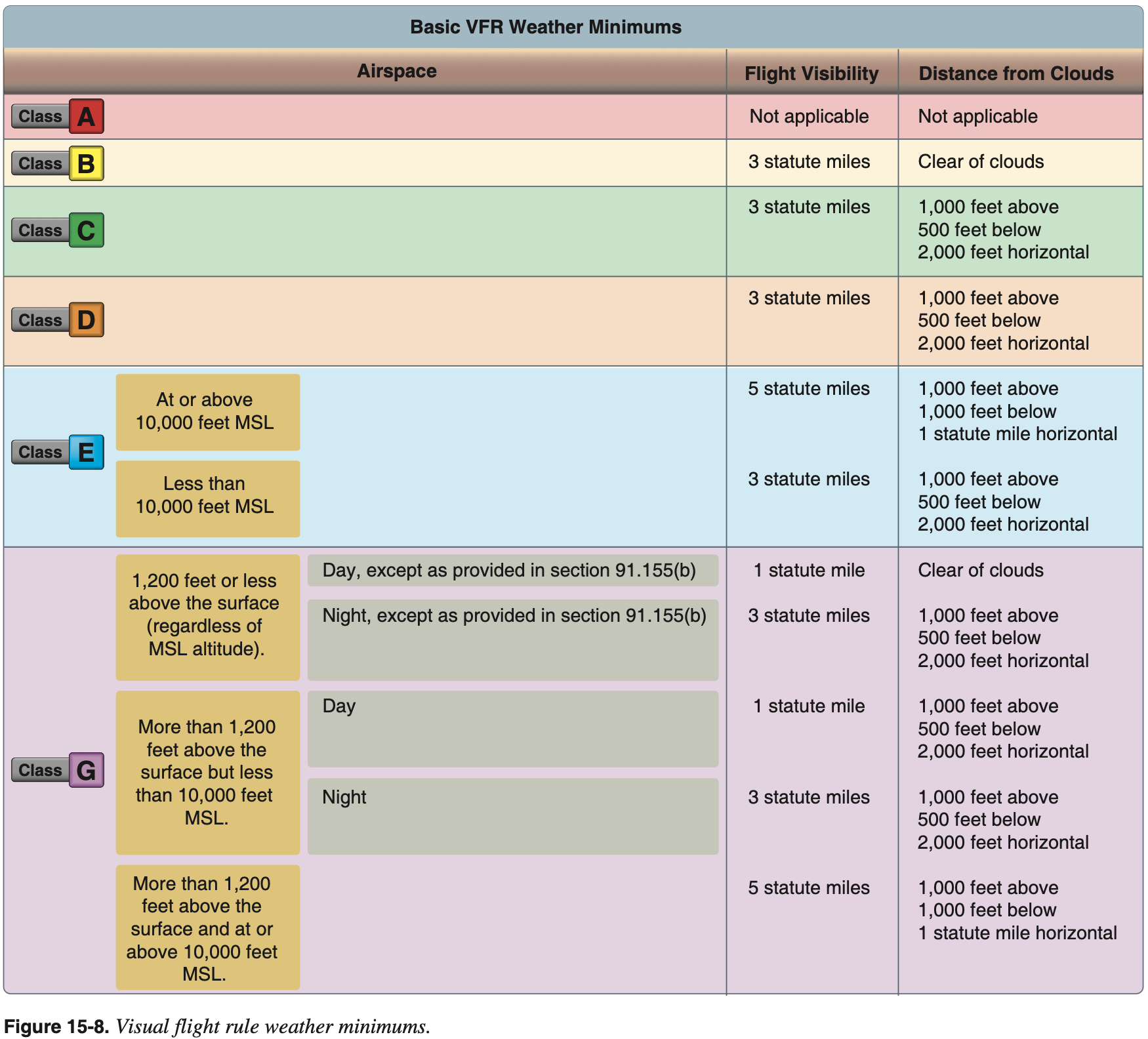
VFR Weather Minimums
Systems
- TBD
Emergency Procedures
Engine Failure
What is the glide ratio of your plane?
- Piper Archer III NXi: approximately 1.88 nm per 1000 feet
- Equivalently: approximately 11.4:1
- So 1000 feet AGL will give a glide range of 11,400 or approximately 1.9 nm
- This is without wind
Unsorted
What qualifications does a safety pilot need? Must they have complex or high performance endorsement, current medical, or flight review?
- Safety pilot only needs a private pilot certificate with category and class ratings appropriate to the aircraft being flown and a current medical (or BasicMed).
- Prior to 2022 a pilot could not use BasicMed when not acting as PIC.
- See 14 CFR §91.109(c) that described safety pilot requirements.
- See 14 CFR §61.23(a)(3)(ii) that says that at least a third class medical is required when acting as a required flightcrew member.
- 14 CFR §61.23(c)(1)(vi) says that a required flightcrew member can use BasicMed when adhering to it's limitations.
- The following are not required
- Current flight review
- Takeoff / landing currency
- Instrument rating
- Instrument currency
- However, the above does impact whether or not the safety pilot can be acting PIC during the flight.
Aeromedical Factors
What is hypoxia?
- See Human Factors